Car keys · Toronto
Ignition Lock Repair
The key slides in fine and turns without any resistance at all, and the dash lights flicker, but nothing catches.
In plain words
Whether the key won't insert, won't turn, turns without engaging anything, or is stuck and refuses to come back out, each version of the symptom points toward a different part of the mechanism. A key that spins loosely usually means something has disconnected inside; a key that won't insert usually means the barrel or the key itself is the obstacle. Naming the exact behaviour on the phone lets the locksmith bring the right tools before ever touching the vehicle.
How the visit goesHalf the key is still in your hand. The other half stayed behind in the ignition when it snapped, and now the dash won't light and the wheel won't unlock no matter how carefully you nudge what is left.
Ignition Lock Repair
How the visit goes
Mechanical fault or electronic fault
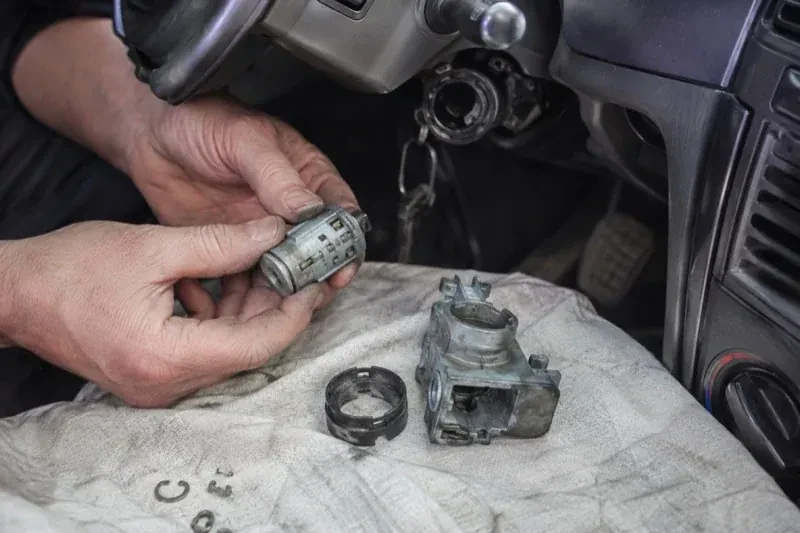
A cylinder that turns cleanly but leaves the vehicle silent makes a mechanical keyway fault less likely, though the cause can still be the immobilizer, the transponder chip, the wiring behind the switch, or an unrelated starting fault such as the battery, starter or park/neutral circuit. The locksmith checks whether the barrel physically moves through accessory, on and start, whether the steering lock disengages, and whether dash lights respond at each position. Where the mechanical side checks out cleanly, the remaining question is named and set aside as separate, dealer-level work rather than folded into the same repair.
Clearing grit, moisture and old grease
A barrel that has gone stiff from road salt, winter grit or years of old grease is opened, cleaned and treated with whatever lubricant the vehicle's own service instructions call for. Water that has found its way into the keyway is dried out fully before the cylinder is reassembled, so trapped moisture is not left sitting against the wafers to start the same problem again next season.
When an electronic step still remains
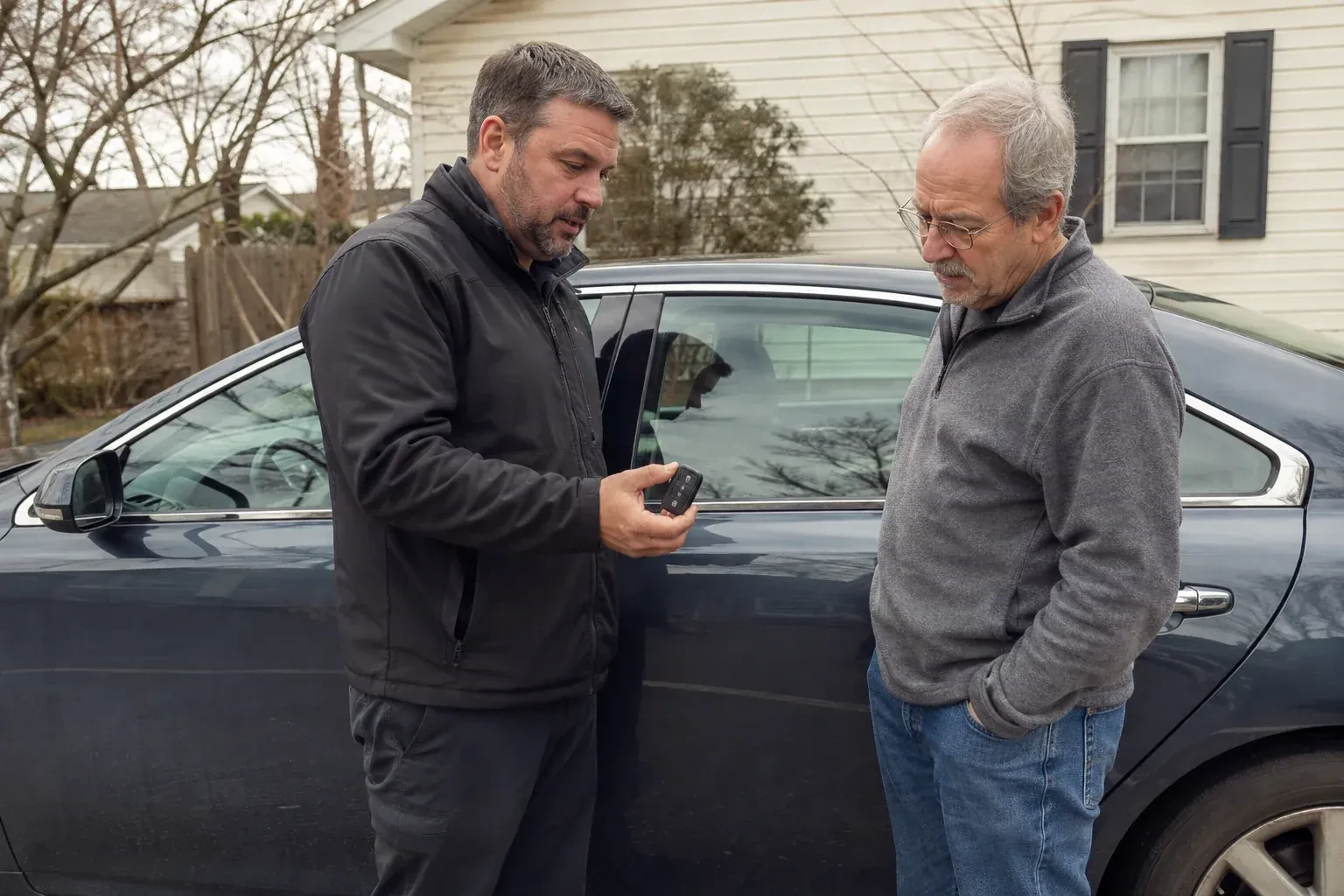
If the assessment turned up a separate immobilizer, transponder or wiring question alongside the mechanical repair, you leave knowing exactly what that remaining piece is and who is equipped to finish it, an automotive locksmith, a dealer or an automotive electrical specialist, rather than it being quietly left unresolved. The mechanical side of the ignition is finished and tested; the electronic side is named clearly so it can be booked on its own separate terms.
Ignition Lock Repair
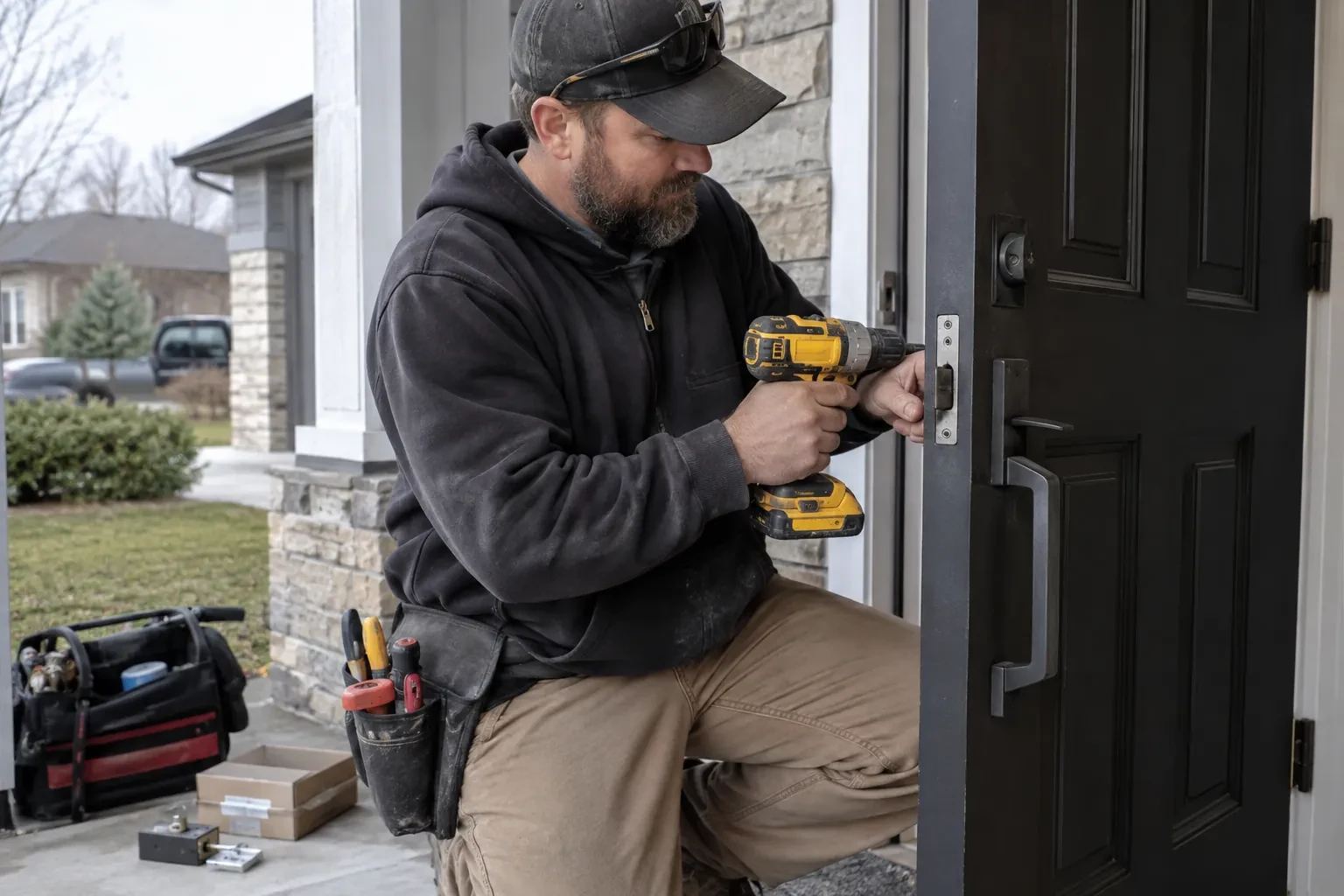
In the van
Dry graphite or PTFE lubricant
Cylinder decoder
Key code reader
Trim clips and fasteners
Broken key extractors
Ignition Lock Repair
What affects the quote
Vehicle make, model and column design
How the ignition assembly is built varies by vehicle, a simple housing reached with a few steps, or a column locked down with shear bolts and trim that has to come off carefully. That difference in access shapes how much time the repair takes.
Distance to where the vehicle is
Travel is part of every visit, and a vehicle parked across town takes a different amount of driving time to reach than one nearby, which factors into how the visit gets arranged.
Aftermarket wiring near the ignition
A remote starter, an alarm, or other aftermarket wiring tied into the column changes what the locksmith has to work around and identify correctly before the mechanical repair can proceed safely.
What to have ready
- Is the key stuck and unable to be removed?
- What is the vehicle's year, make and model?
- Do you have the vehicle permit or proof of ownership handy?
Ignition Lock Repair: questions
QuestionsMy car is older and uses a plain metal key. Can the ignition still be repaired?
Yes, older mechanical ignitions are generally straightforward to service, since there is no transponder chip or immobilizer layer to work around. Worn wafers, a tired spring, or a housing that has loosened over the years are addressed directly, and a fresh key is cut from the current pinning or the vehicle's key code once the barrel itself has been sorted out.
What is actually different between ignition lock repair and dealer key programming?
The lock cylinder is mechanical: a key physically turns it through accessory, on and start. The immobilizer and transponder system is electronic: it recognises a chip inside the key before allowing the engine to run. A locksmith services or replaces the physical cylinder; programming a chip to the vehicle's electronic system is separate work that a suitably equipped automotive locksmith, a dealer, or an automotive electrical specialist can handle.
Can a key that snapped off inside the ignition be removed without damaging anything?
In most cases, yes. Hooked and spiral extraction tools reach in and draw the broken piece out along the path it entered, rather than pushing it further in. Once it is clear, the cylinder is checked for the wear that likely caused the break in the first place, and a fresh key is cut to replace both broken pieces before the vehicle is handed back to you.
Related services
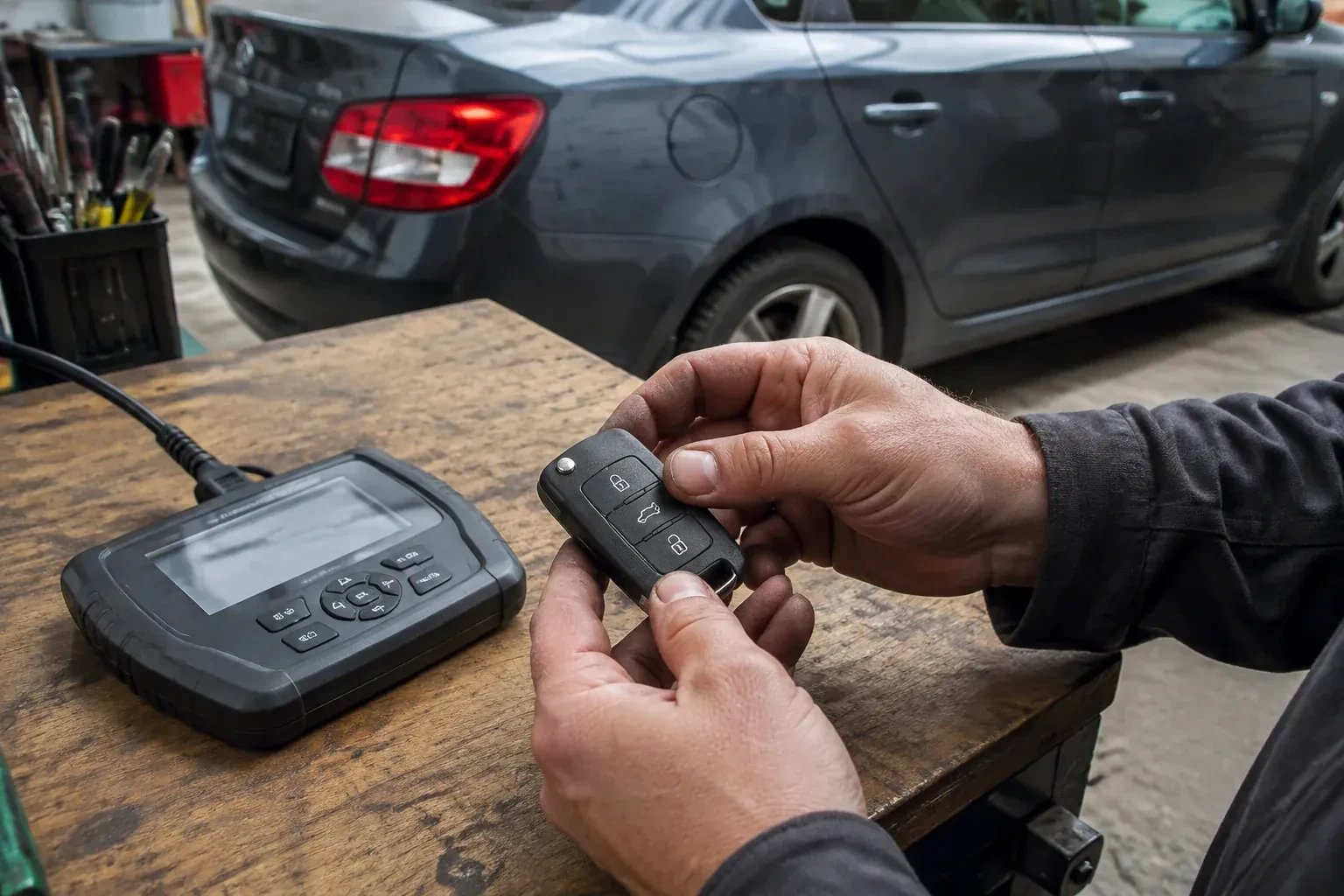
- Car Key ReplacementThe fob went through the washing machine in a jacket pocket.
- Spare Car Key DuplicationThe paperwork for the used car changed hands last week, and the previous owner mentioned, almost as an afterthought, that a second key never turned up.
- Key Fob ProgrammingThe remote clicks the way it always has, but the vehicle no longer locks, unlocks or answers with its usual chirp.