Locksmith in The Annex, OntarioExit doors, closers,and hardware that lasts
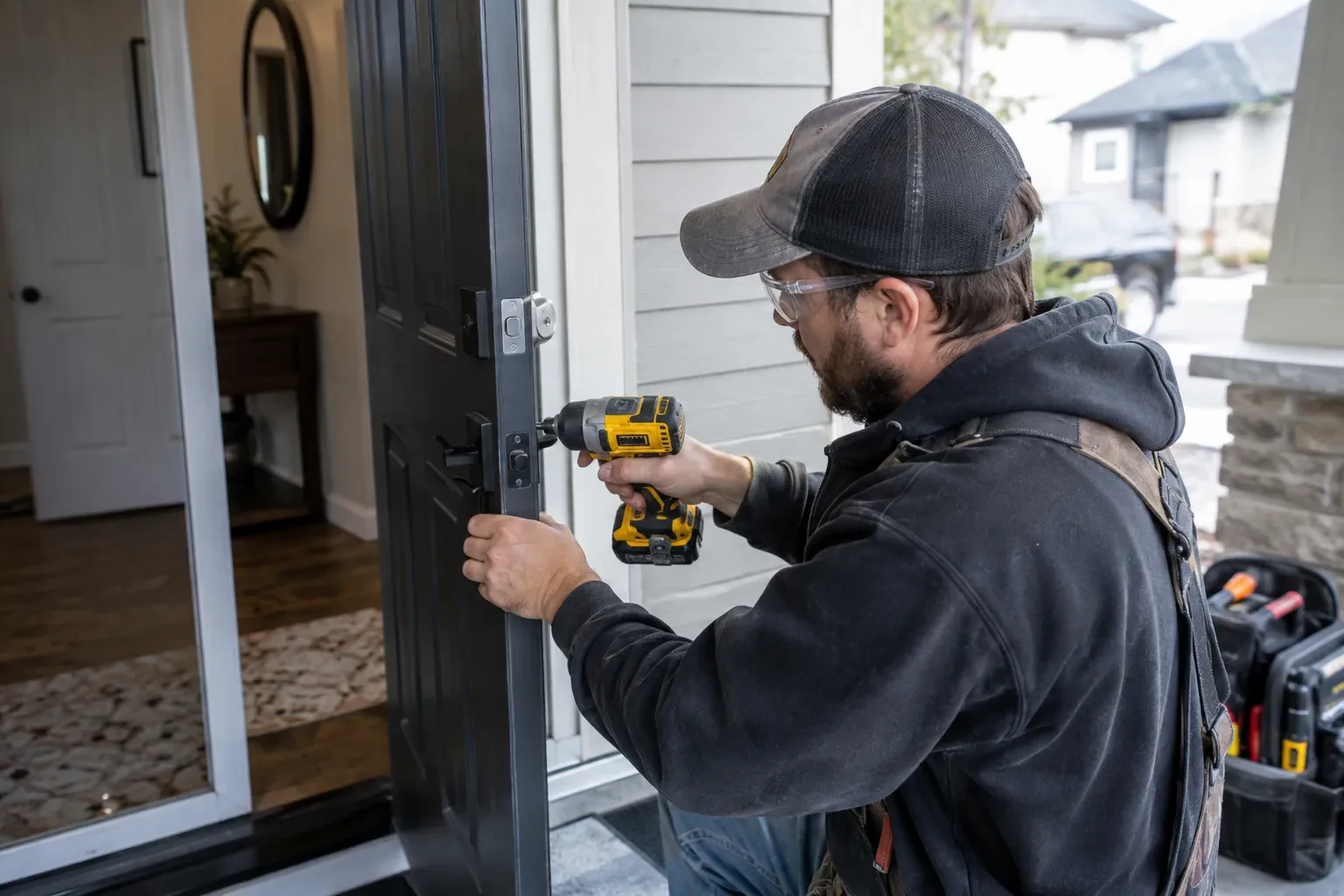
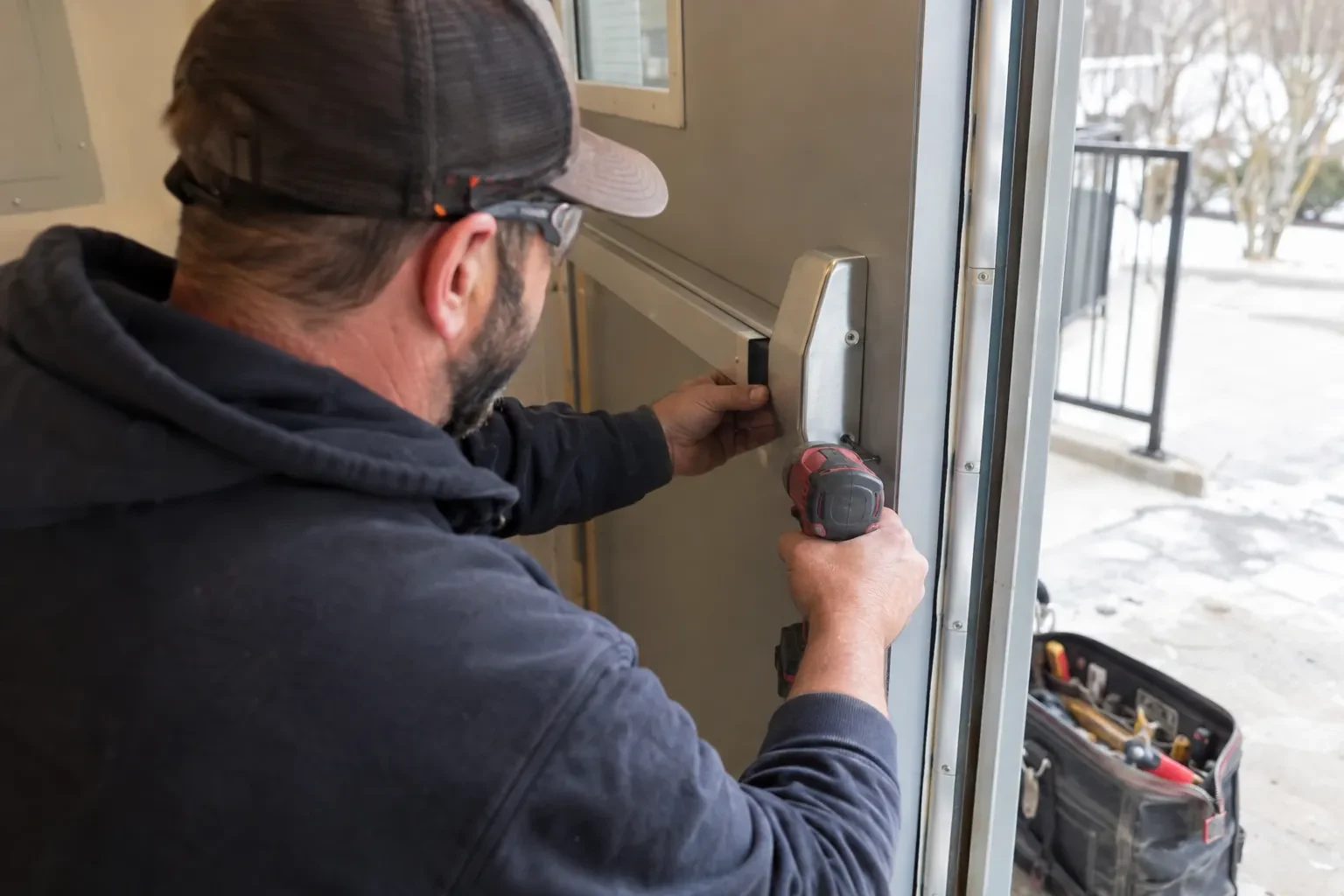
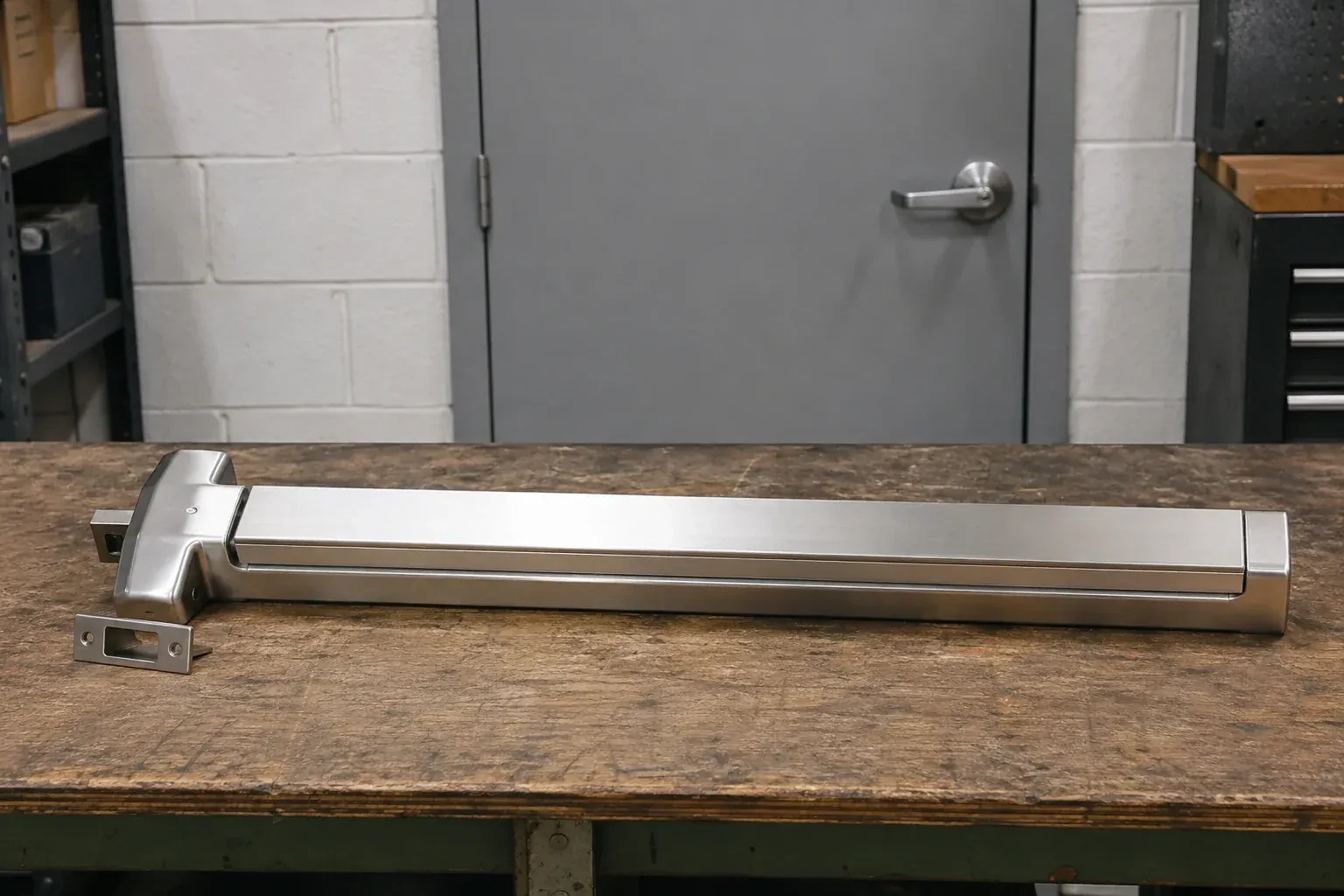
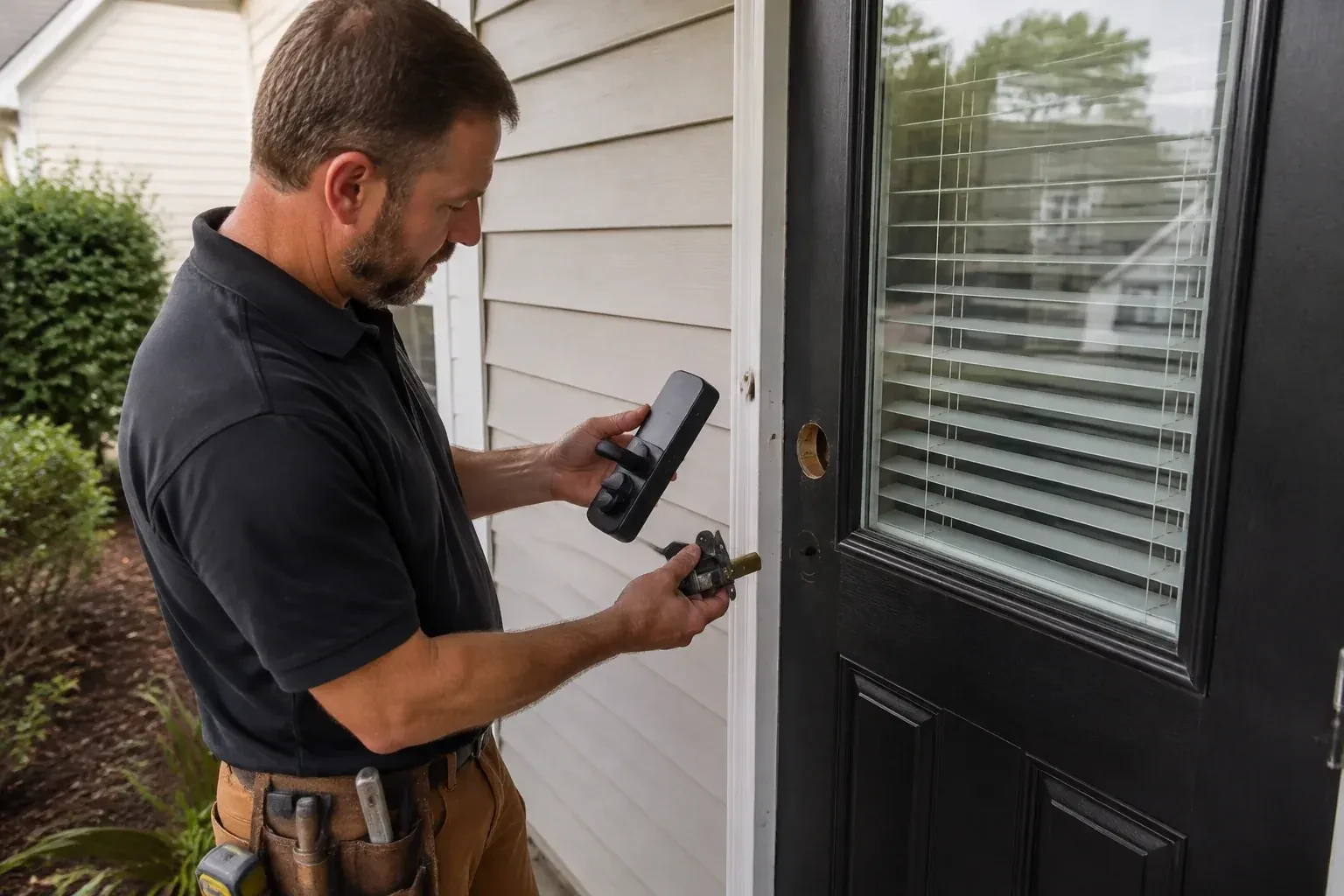
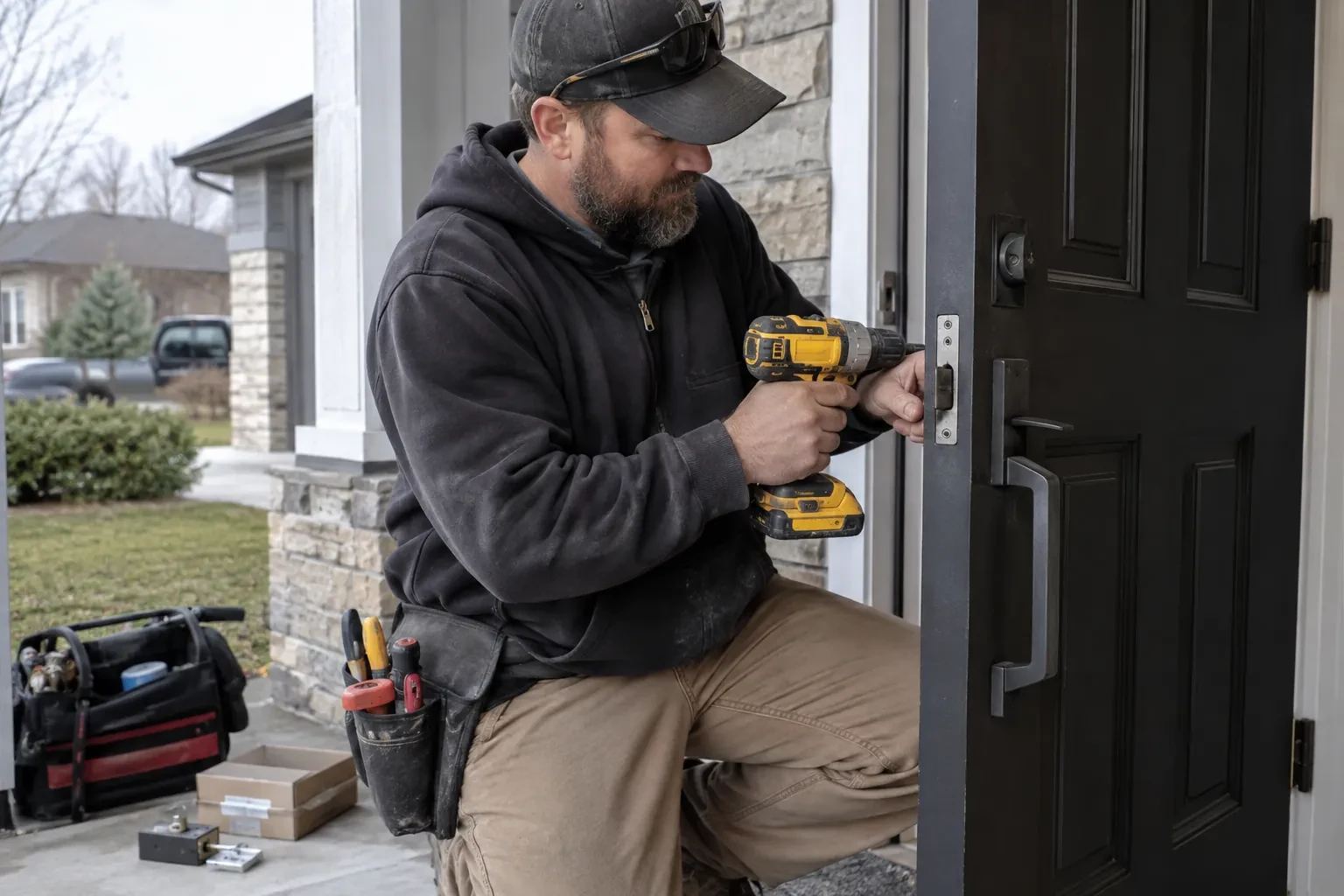
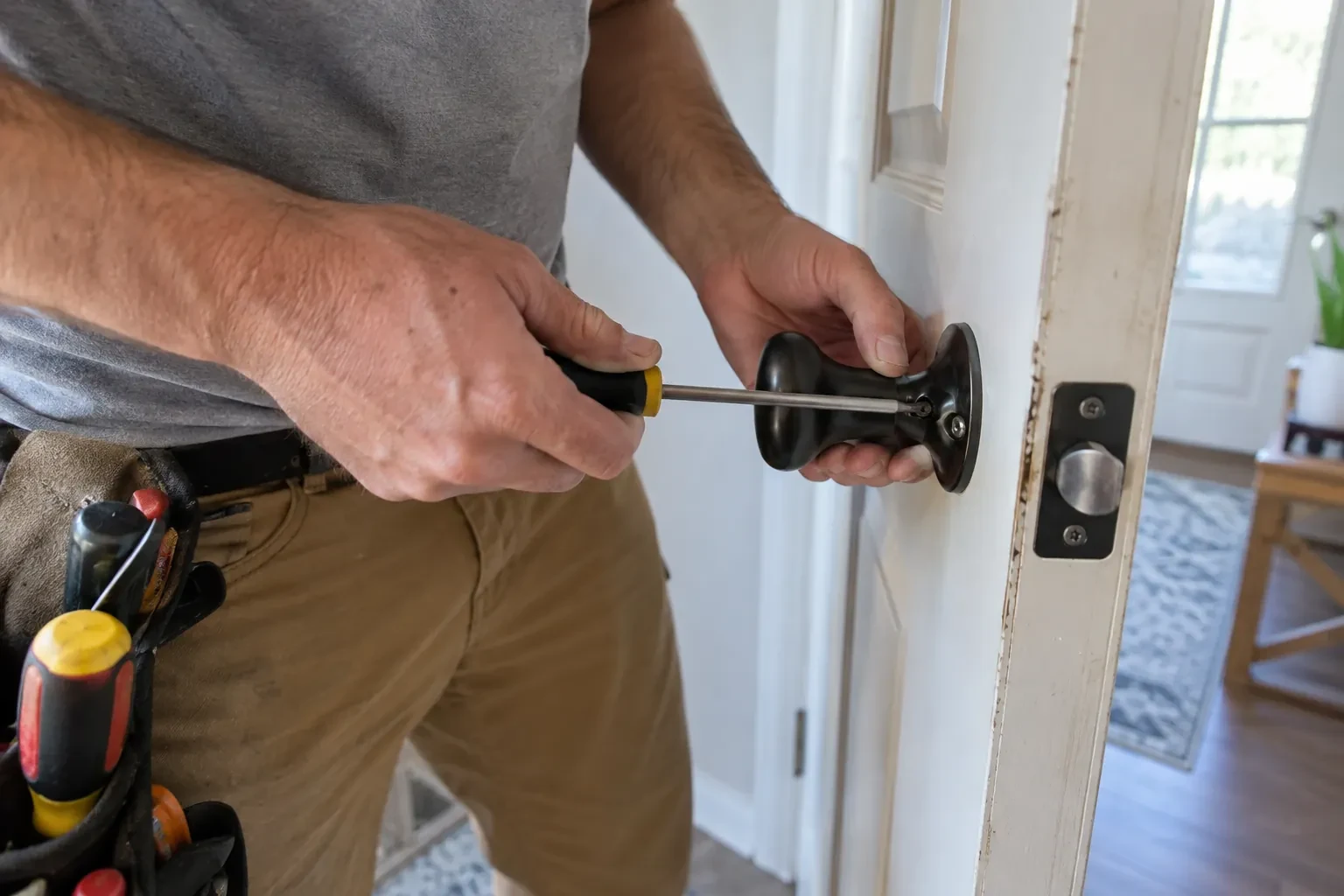
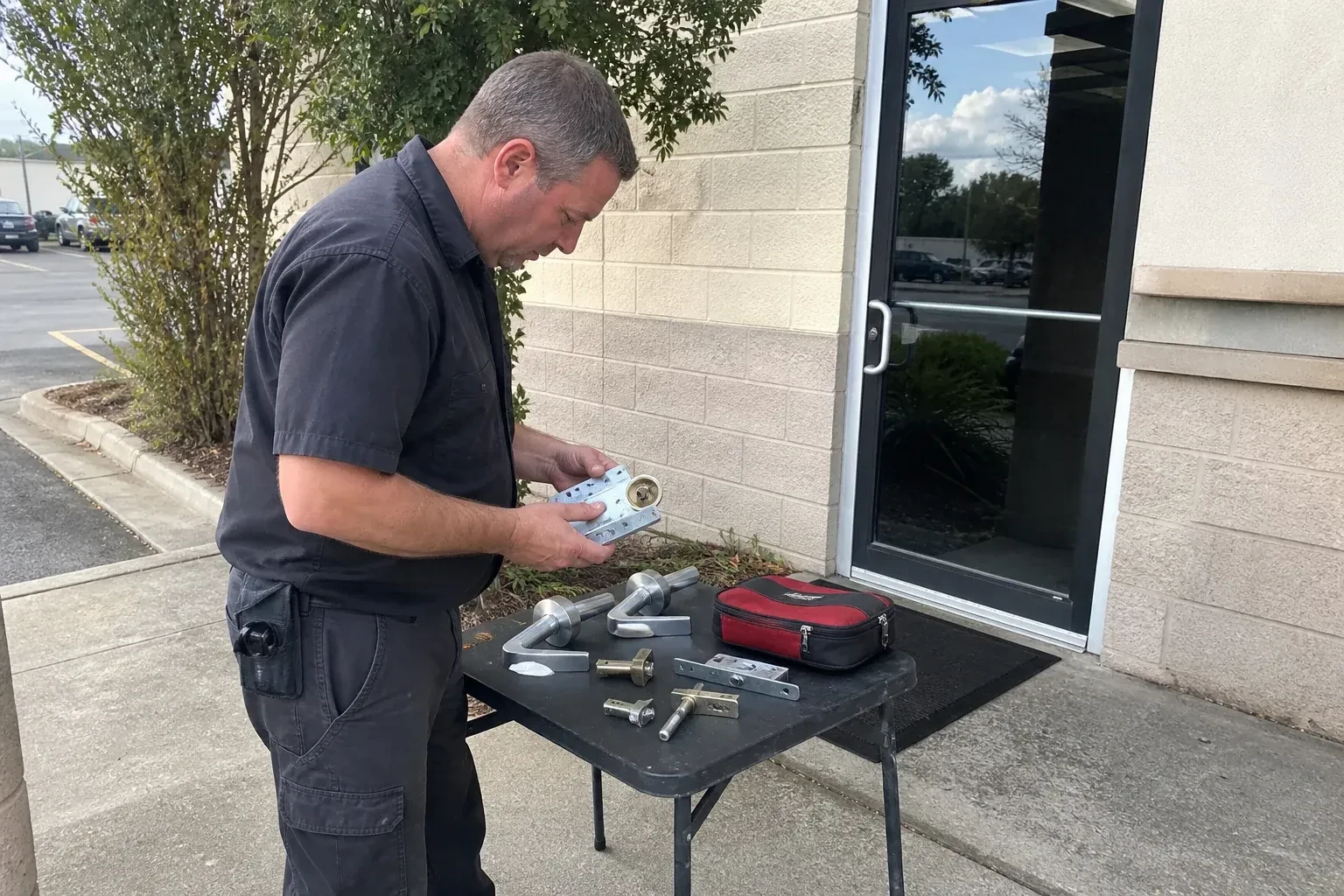
Commercial doors in The Annex take a beating: hundreds of openings a day, deliveries, weather, the odd kick. We fit lever sets, closers, push bars and deadlatches built for that traffic, adjust them so the door shuts and latches on its own, and come back to service them before they fail.
Commercial doors in The Annex take a beating: hundreds of openings a day, deliveries, weather, the odd kick. We fit lever sets, closers, push bars and deadlatches built for that traffic, adjust them so the door shuts and latches on its own, and come back to service them before they fail.
One key, every door, no fuss.
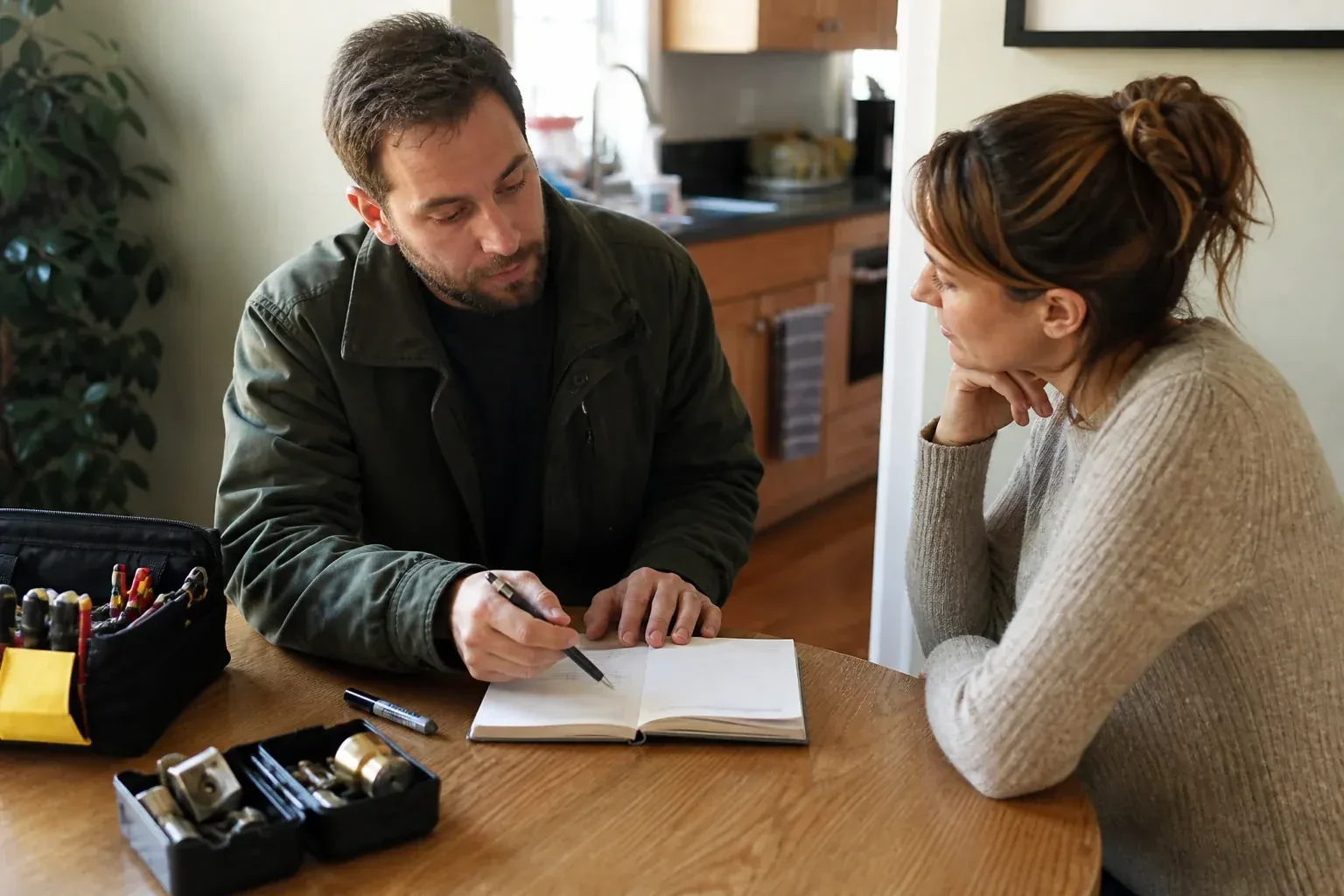
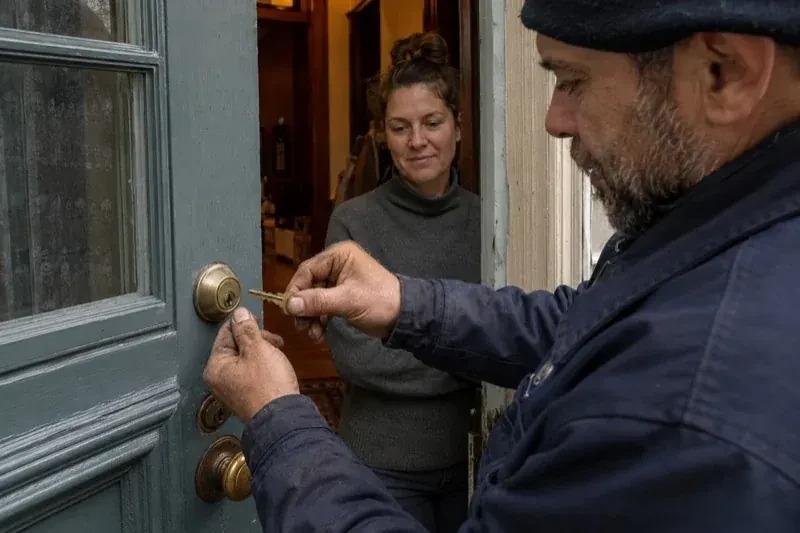
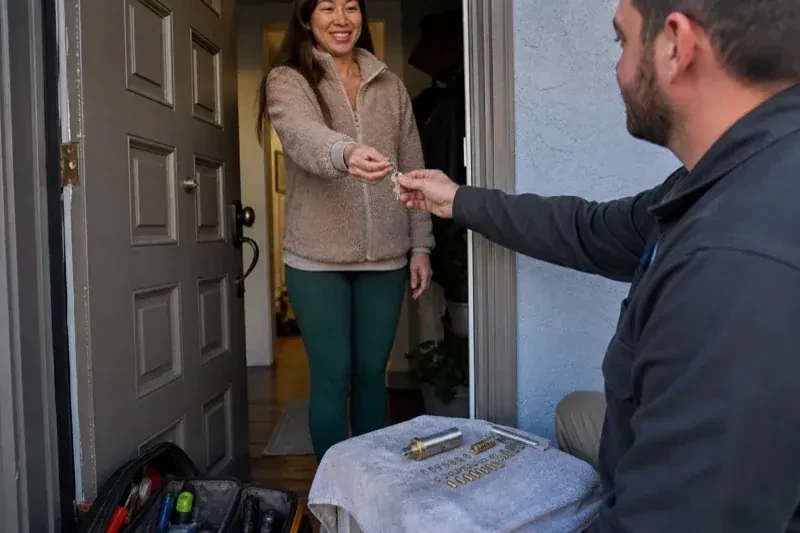
For businesses in The Annex we keep records. Which cylinders were pinned to which key, how many keys were cut, which doors carry a master, when the closers were last adjusted. That paperwork lands in your inbox after the visit so the next staff change or the next audit is a matter of reading a page rather than calling around.
Offices and clinics in The Annex often need access managed for a changing group of people. We set up master-key systems, install keypads or card readers where they make sense, and keep mechanical locks working alongside the electronics. The aim is a system the office manager can run without calling us, backed by hardware that closes and locks properly every time.
28years in business
24/7open every day
Explained before any tool comes out. You will hear what we found, what we suggest and why, before anything is changed. If you want a minute to think, take it.
Choices, not a single answer. Most problems have more than one fix. We lay out the practical options and the trade-offs, then let you choose the one that fits your home and budget.
A tidy doorstep. Shavings swept, packaging taken away, the old hardware offered to you or disposed of. The only sign we were there is a lock that works.
The services below cover most of what a door in The Annex can throw at you. Some are urgent, like a lockout or a snapped key. Others are planned, like upgrading to a high-security cylinder or setting up a master key system for a small building. Each one is explained in plain terms so you know what to expect.
About 58% of homes in Toronto were built in 1980 or earlier, according to the 2021 Census.
Older homes
Older doors are usually thicker and made of solid wood, which is good news. They take a deadbolt well, hold longer strike screws, and reward reinforcement. The locksmith measures the thickness and backset so new hardware fits without fresh holes.
Single-detached houses make up about 23% of homes in Toronto (2021 Census).
Suite doors in buildings often have a viewer, a chain and a deadbolt fitted at different times. A locksmith can tidy that into one sound arrangement, with a properly set deadbolt and a strike that holds, without altering the door's face.
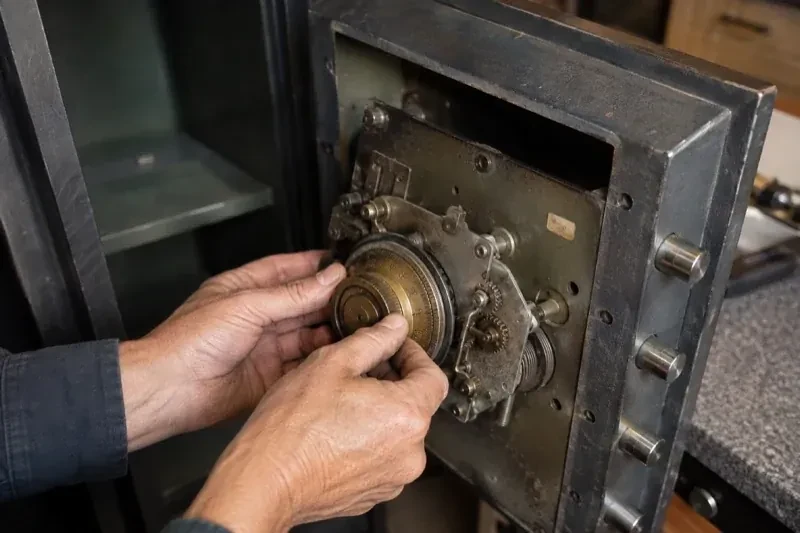
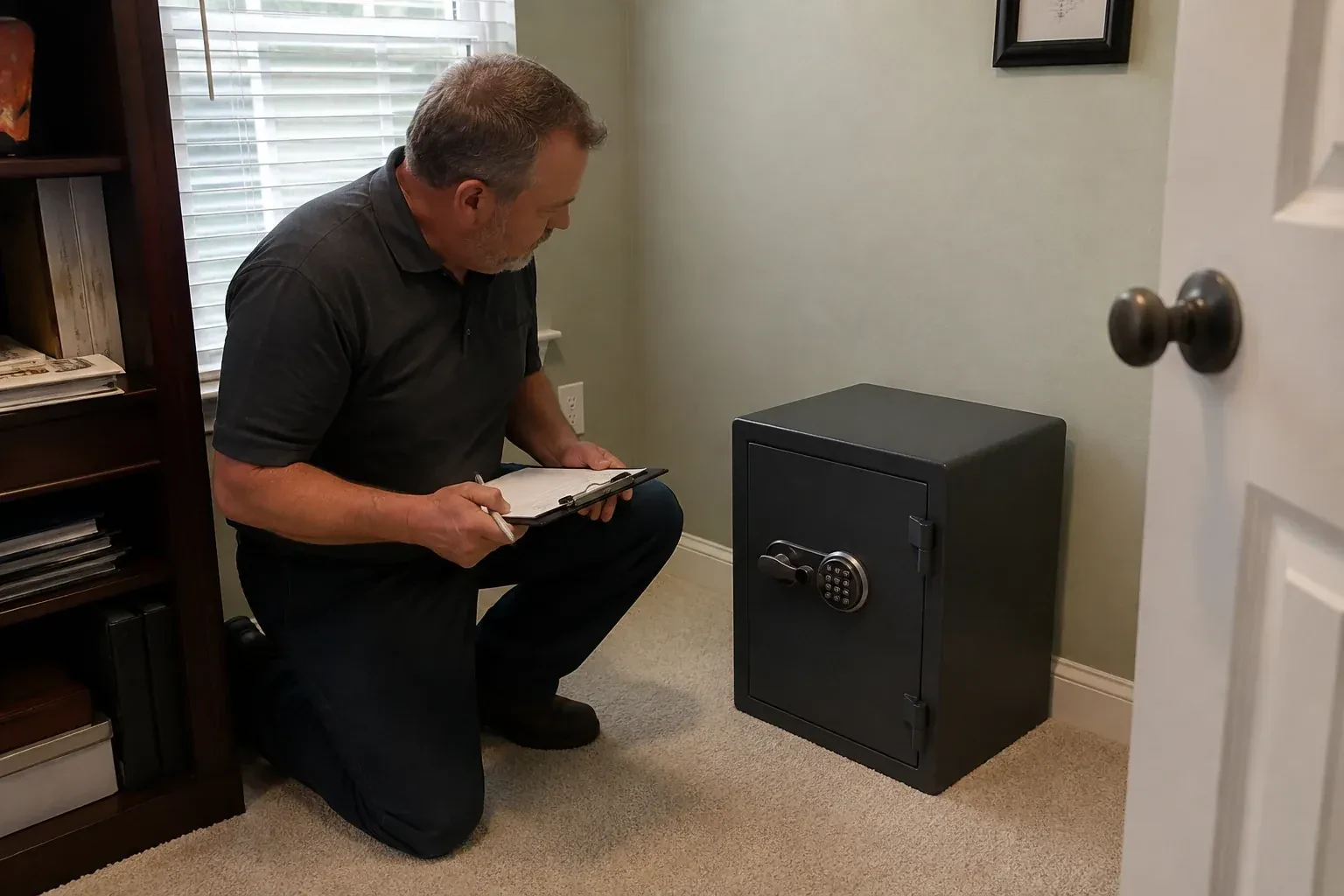
Safes are high security for the things inside a room rather than the room itself. We install, bolt down, open and reset them for homes and businesses, and advise on where a safe helps and where a better door helps more.
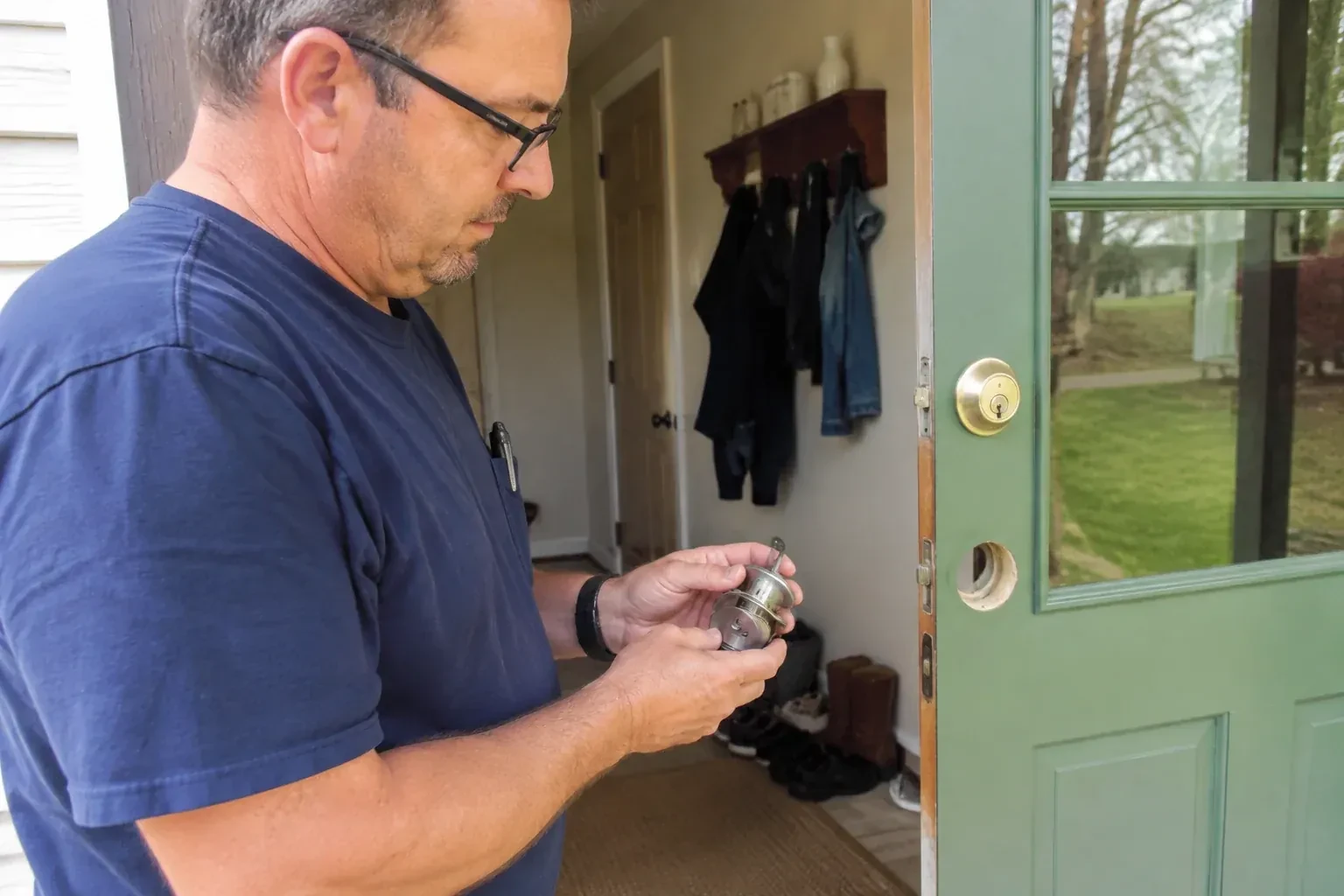
You bought a keypad deadbolt online and pulled the old one off, only to find the hole in the door is a different size and the bolt latch sits at a backset the new kit does not list.
The new manager took over the shop last month and only now needs the back-office safe open, but the combination the previous owner was supposed to leave in writing never turned up anywhere in the handover file.
The keypad on the office safe blinks a low-battery warning every morning now, and whoever notices it first quietly hopes someone else deals with it before the batteries finally give out mid-week.
Which fix fits?
The padlock on the shed has been stiff all summer.
WhyBroken key extraction is the removal of a snapped key piece from a lock so it can go back to work.
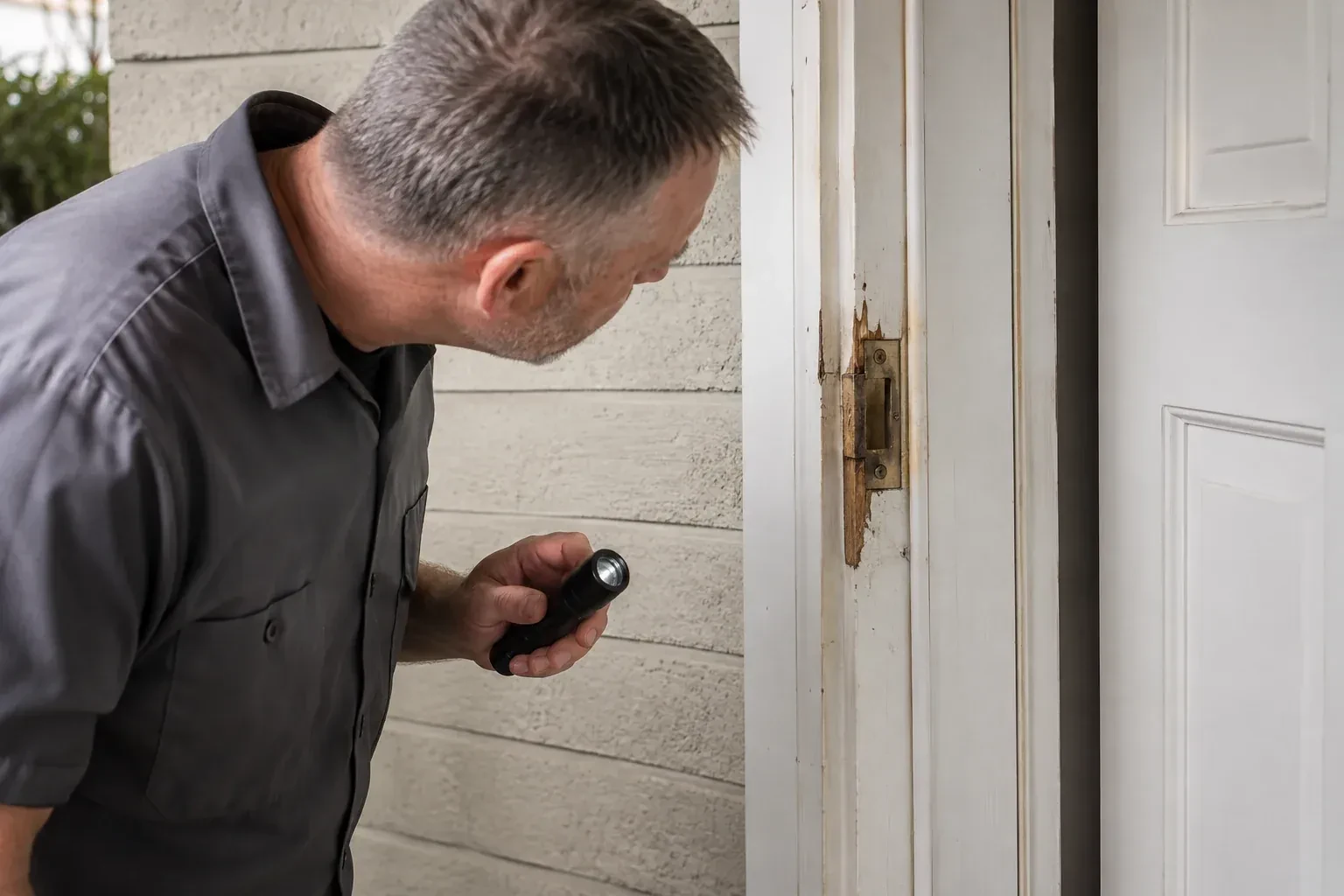
Police have come and gone, the occurrence number is on a sticky note, and you are standing in a cold hallway looking at a splintered frame, wondering how the house gets locked before everyone tries to sleep.
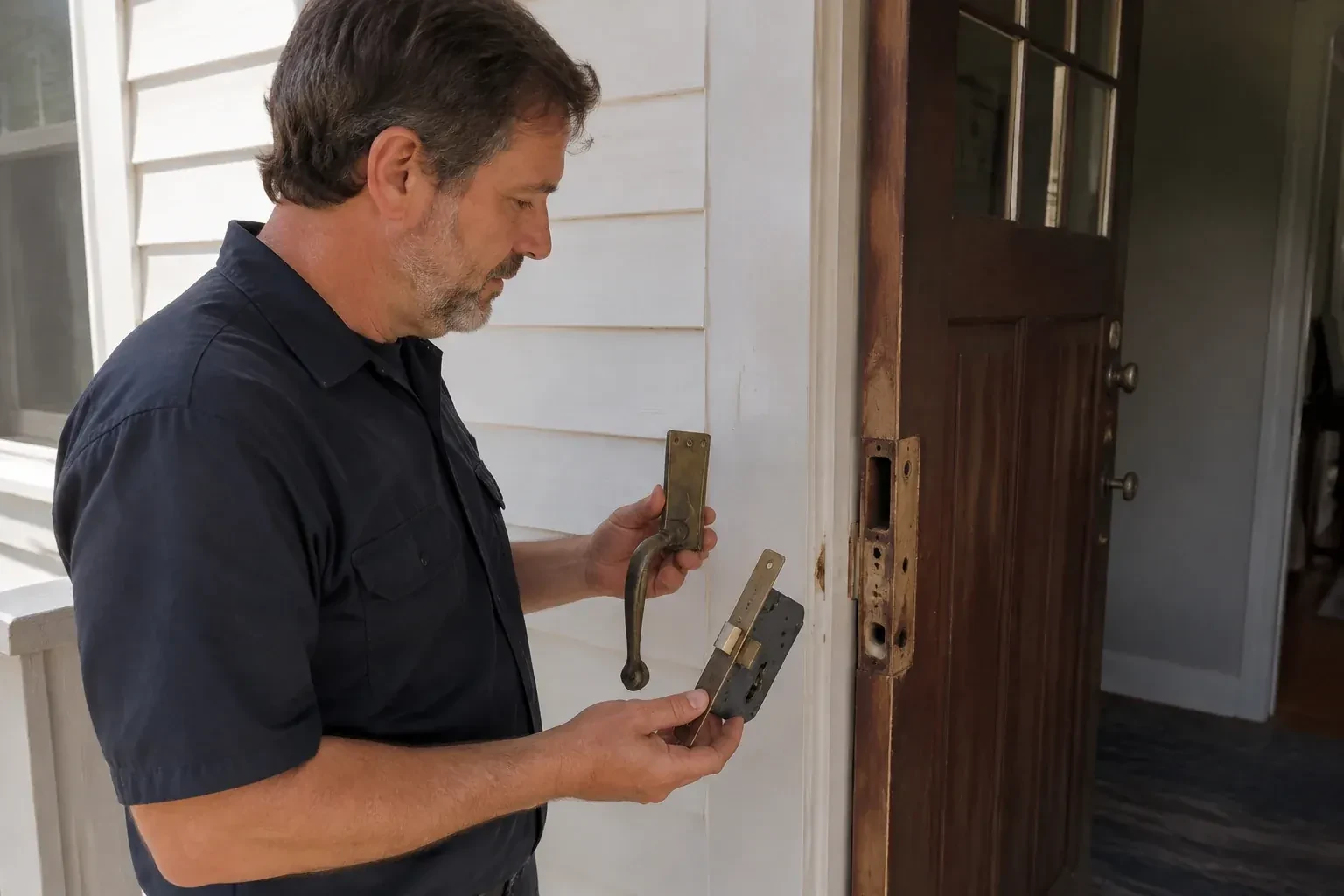
WhyOn storefronts, offices and older houses the hardware is often a mortise lock with a lever, and the jam is frequently inside the case, not the cylinder.
You bought a house with its original hardware and a bag of loose keys.
WhyWhen several households share one street gate or one building entry, a lock change on its own solves little if half the keys in circulation still work afterward.
You have lost count of how many people have had a key to your house over the years: cleaners, a contractor, a former partner, the previous owner's family.
WhyThe service begins with a conversation about what the door protects and what worries you, then a close look at the door as a whole: the cylinder, the bolt, the strike, the frame, the hinges and any glass nearby.
Someone at the front counter always has to unlock the side door by hand before the lunch rush, because the round doorknob out there was never meant to be an exit for a room this size.
WhyA code trigger usually starts the conversation: an occupant load over a threshold, a fire inspector's note, or a new use for a room that used to hold far fewer people.
You stepped out at the pump to pay inside, the passenger locked their door out of habit, and the driver's door caught behind you.
WhyWhat is actually possible depends on whether a working key still exists somewhere.
How a visit goes
Describe the property, the hardware and what has changed, and the visit starts from what you have seen.
1
2
3
01
Listening to the door's history
Has it been forced, does it drag, who has had keys? Those answers tell us whether the frame, the cylinder or the key list needs attention first.
02
Reinforcing what takes the blow
A box strike and three-inch screws into the studs, long hinge screws, and filled holes where the wood has split, before any cylinder is changed.
03
Testing every key in every lock
Doors open, doors closed, both sides, then a push on the locked door to feel for play. We finish by writing down what was fitted.
Good days. Start with a turn.
1/9Broken Key Extraction
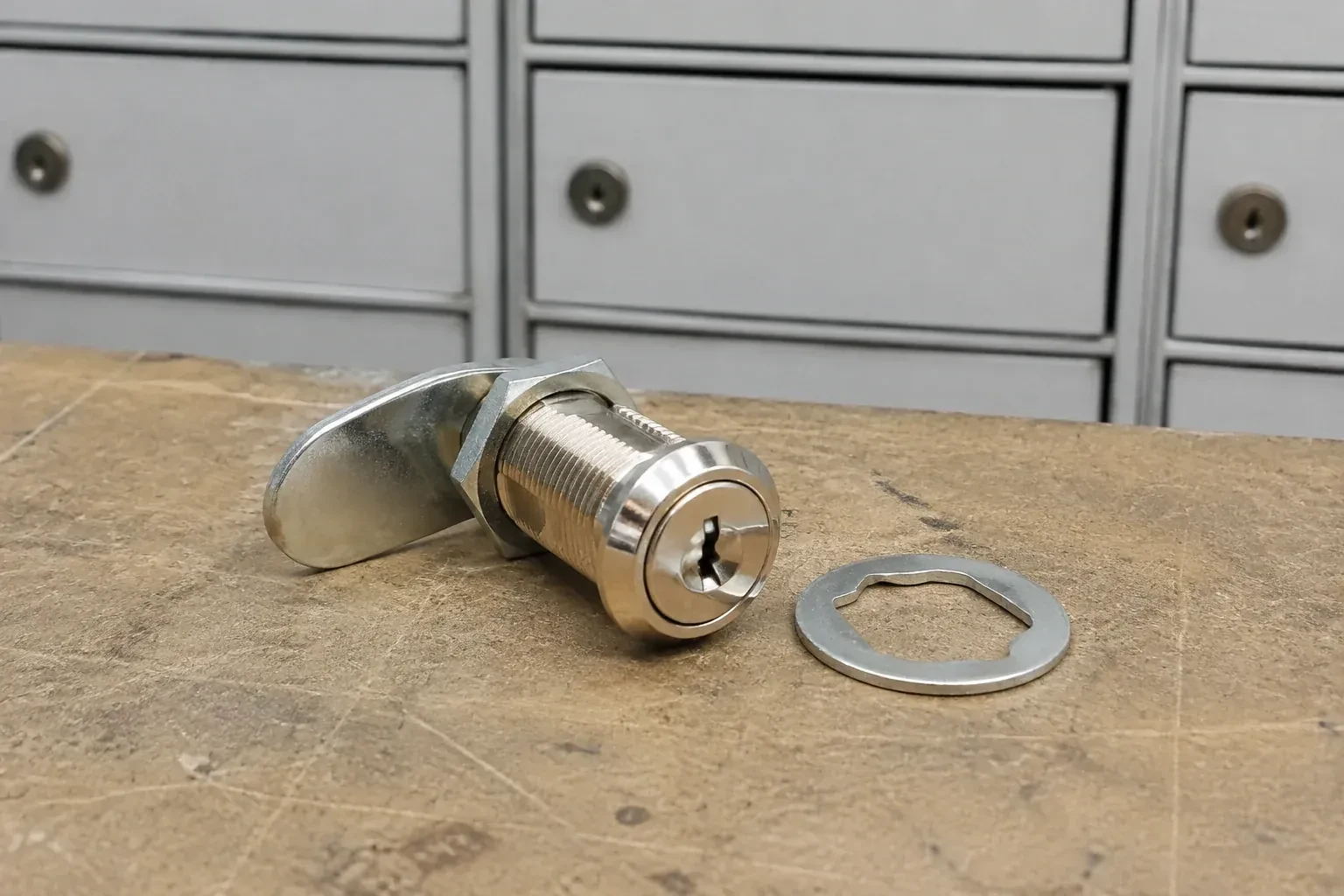
The padlock on the shed has been stiff all summer. Today the key twisted, cracked at the tip, and left the end buried deep in the keyway. The rest came out in your hand, and the padlock is still closed.
Police have come and gone, the occurrence number is on a sticky note, and you are standing in a cold hallway looking at a splintered frame, wondering how the house gets locked before everyone tries to sleep.
The old mortise lock on the front door of the house turns the key halfway and stops with a dull clunk. It has been getting harder for months, and the brass key is starting to show a bend.
You bought a house with its original hardware and a bag of loose keys. Some open interior doors, some fit nothing, and the front door lock has a keyhole shaped for a key you do not have. You would like the original lock kept and made to work.
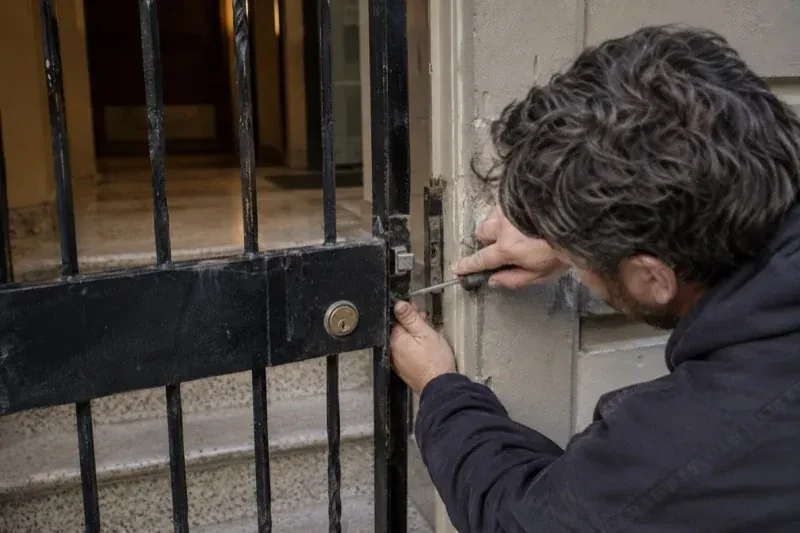
The gate to the side yard used to close with a satisfying click. After a winter of frost heaving the fence post, the latch now sits a full inch below where the strike is waiting for it, and the gate swings free no matter how hard it is pulled shut.
You have lost count of how many people have had a key to your house over the years: cleaners, a contractor, a former partner, the previous owner's family. The lock still works, but you no longer know who else it works for.
Someone at the front counter always has to unlock the side door by hand before the lunch rush, because the round doorknob out there was never meant to be an exit for a room this size.
You stepped out at the pump to pay inside, the passenger locked their door out of habit, and the driver's door caught behind you. The engine is off, the keys are in the ignition, and the line of cars behind you is growing.
After a winter under a cover, the steering lock will not budge. The key seats fully in the barrel, but turning it meets a wall of resistance that no amount of wiggling moves past.
Part of the key is sticking out. Can I just pull it with pliers?
If a good length shows and the plug is at its normal rest position, a firm straight pull sometimes works. The risk is pushing instead of pulling, or twisting, which drives the piece deeper and can bend a pin. If it does not come on the first gentle try, stop there and leave it for extractor tools, which grip the cuts without loading the cylinder.
Will my insurer want to see the damage before it is repaired?
Insurers ask policyholders to document the loss, keep damaged property and hold on to receipts, and a securing visit is expected rather than discouraged, because an open door invites more loss. Photograph everything as found, keep the broken hardware in a bag, keep the invoice, and call your insurer as soon as the house is safe. The adjuster can see the old parts and the photos; the door itself need not stay open.
The thumb-turn is stuck from inside and we need that door to get out. What should we do?
Use another exit for now and call. From the inside the fault is usually a bolt pinned by the frame or a bent spindle, both of which the locksmith frees without damage. A main exit door should open from inside without a key or special knowledge, so the repair leaves the door doing exactly that, and if the hardware on it was the wrong type for an exit, a thumb-turn deadbolt is suggested.
Do I need to prove I own the house before you work on the lock?
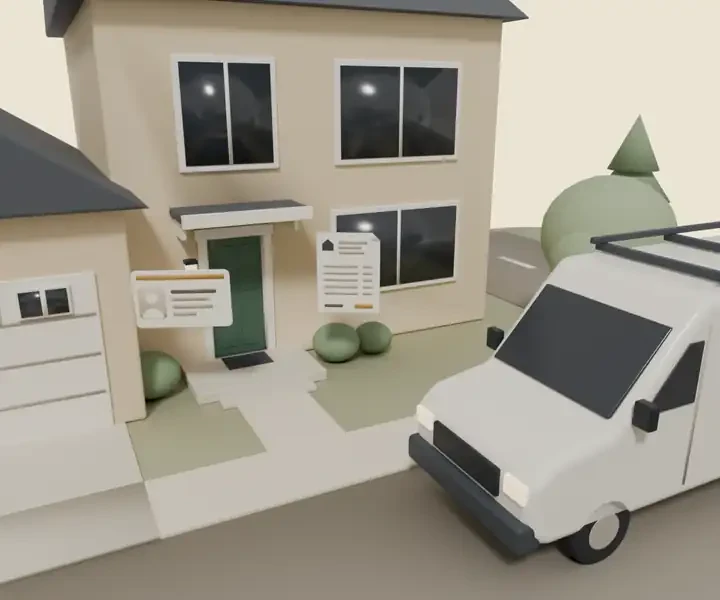
Yes, and it is a normal part of any lock or key work. Photo identification together with something that ties you to the address is enough. If you rent, the locksmith will ask who should receive the keys, because landlords and tenants in this province are expected to agree on lock changes and share keys. This check takes a moment and it protects every household the locksmith is asked to work for.
I rent my unit. Can I request gate or entry lock service myself?
You can certainly call about a problem you are experiencing, such as a side gate that will not latch or a buzzer that stopped working, and the locksmith will look into it. Where the fix touches the shared entry everyone in the building relies on, rather than something specific to your own unit, the work is usually coordinated with whoever manages the property, since a rekey or replacement there affects every current resident, not just the person who noticed the problem first.
What information helps before the visit?
A photo of each door's lock from inside and outside, the type of door, whether there is glass nearby and roughly how many keys are in circulation. For a business, a sketch of the doors and who needs to reach each area saves a great deal of time. Mention any door that sticks, has been forced or has a closer or push bar on it. With that, the locksmith arrives with the right formats and a plan to discuss.
Do exterior exit doors need anything different from interior ones?
An exterior device faces weather an interior one does not: temperature swings, moisture and road salt tracked up to the door in winter. The device, strike and trim chosen for an exterior opening account for that exposure, and more frequent cleaning and light lubrication keeps an exterior crossbar releasing smoothly through a whole winter season.
What should I have ready when I call?
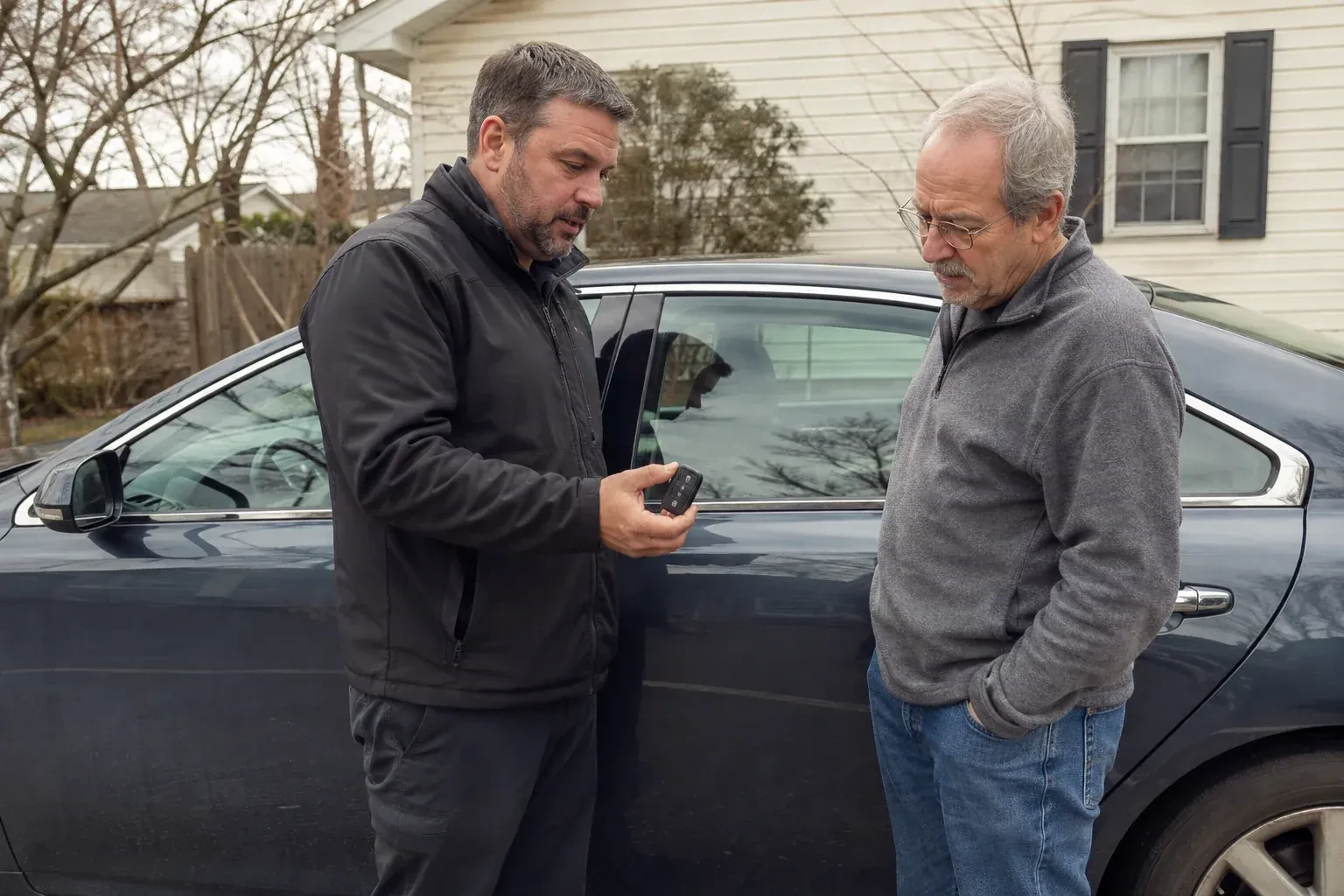
The make, model and year of the vehicle, the colour and plate if you can see it, exactly where the car is parked and how to reach it, and where the keys are: on the seat, in the trunk, lost, snapped, or in a fob that has gone quiet. Say whether anyone or any animal is inside, whether the car is a rental or a company vehicle, and whether your identification is on you or in the glovebox.
What should I have ready before you arrive?
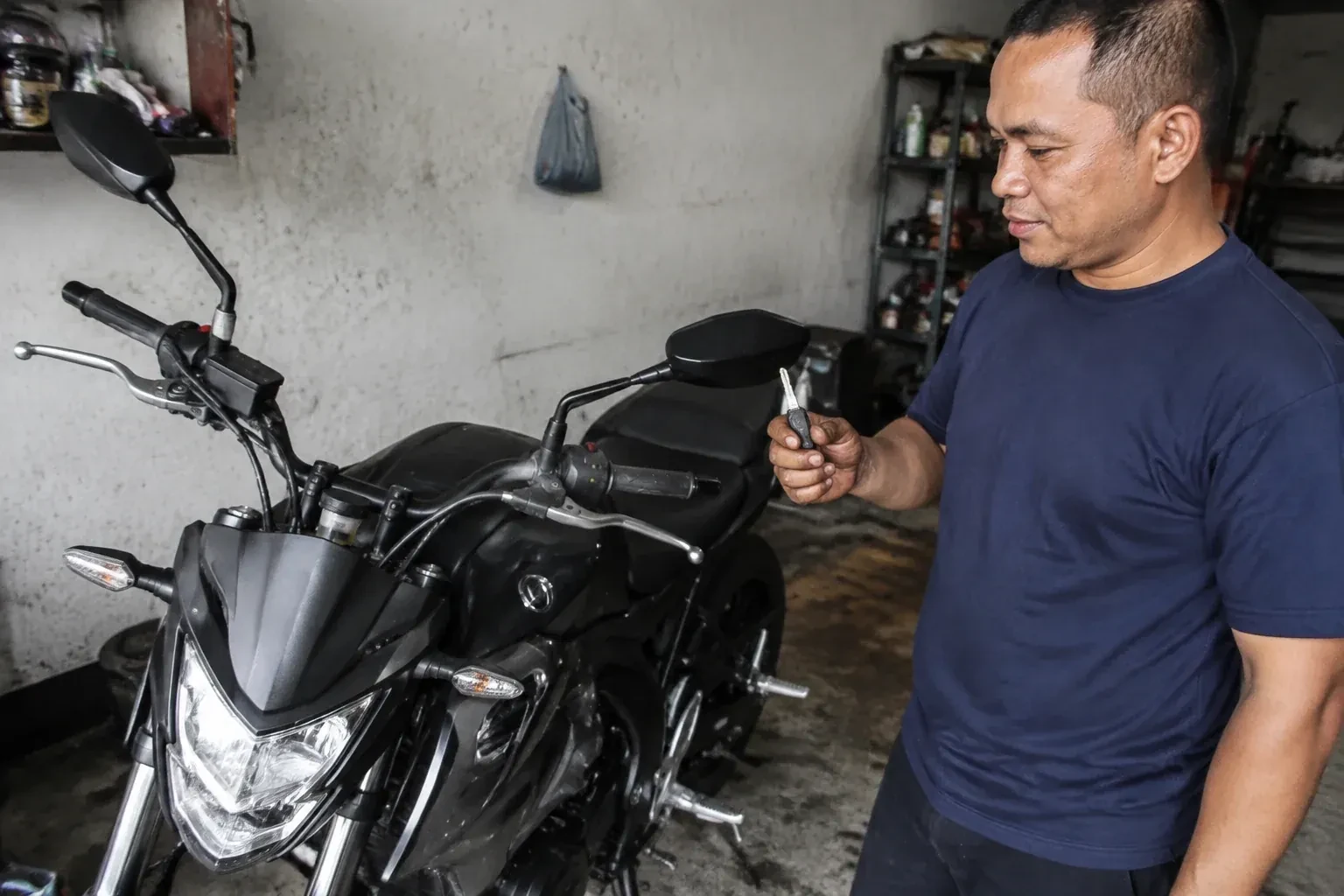
The make, model and year if known, the VIN if it is accessible, which locks are involved, and whether the engine cranks but does not start, which can point toward an immobiliser issue among other ordinary starting-system causes. Mentioning whether any key at all still exists, even a broken or poorly cutting one, changes what equipment comes along, since working from a key is a different job than decoding a lock with nothing to reference.
Request a visit
For businesses in The Annex we keep records. Which cylinders were pinned to which key, how many keys were cut, which doors carry a master, when the closers were last adjusted. That paperwork lands in your inbox after the visit so the next staff change or the next audit is a matter of reading a page rather than calling around.