Commercial · Toronto
Commercial-Grade Lock Replacement
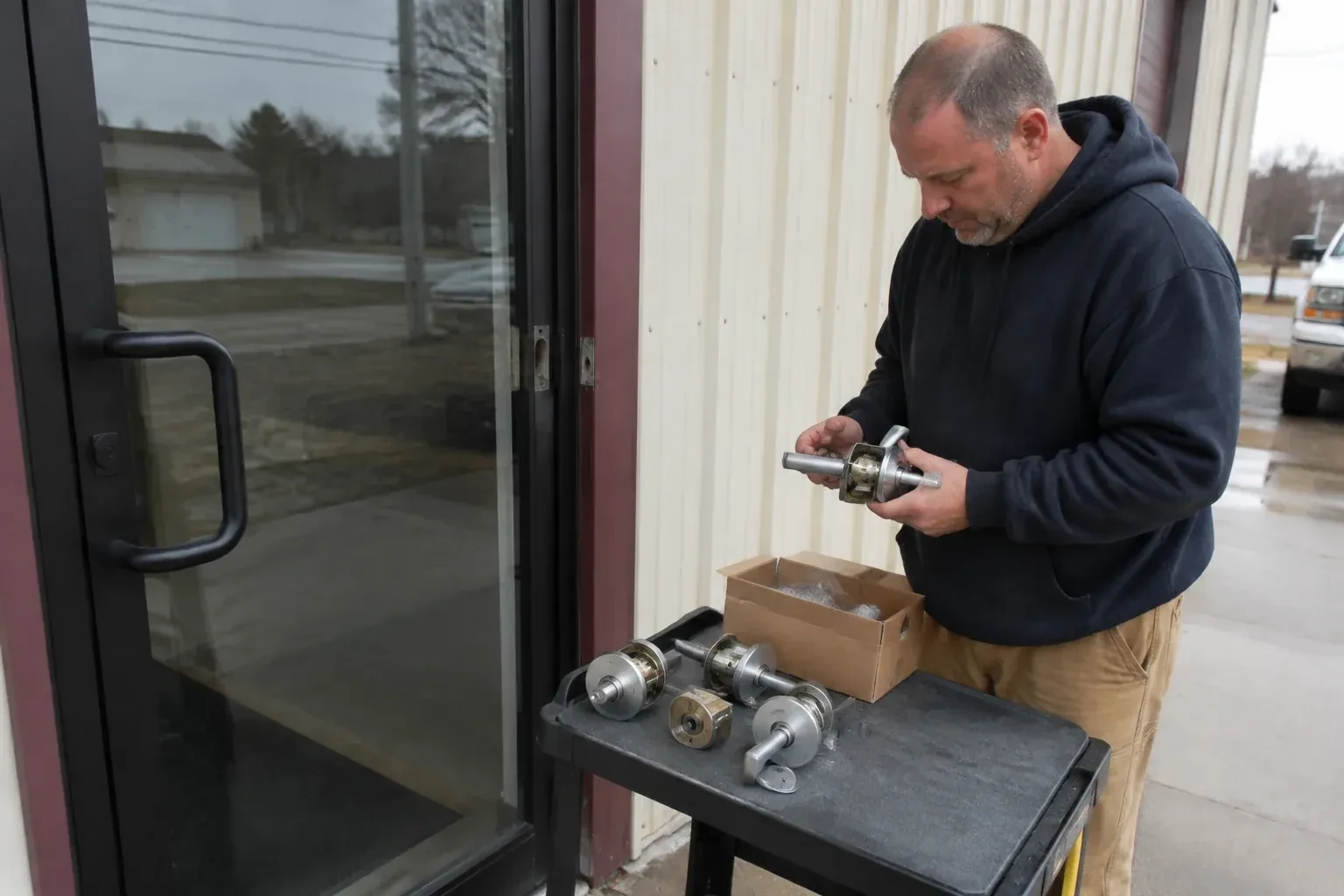
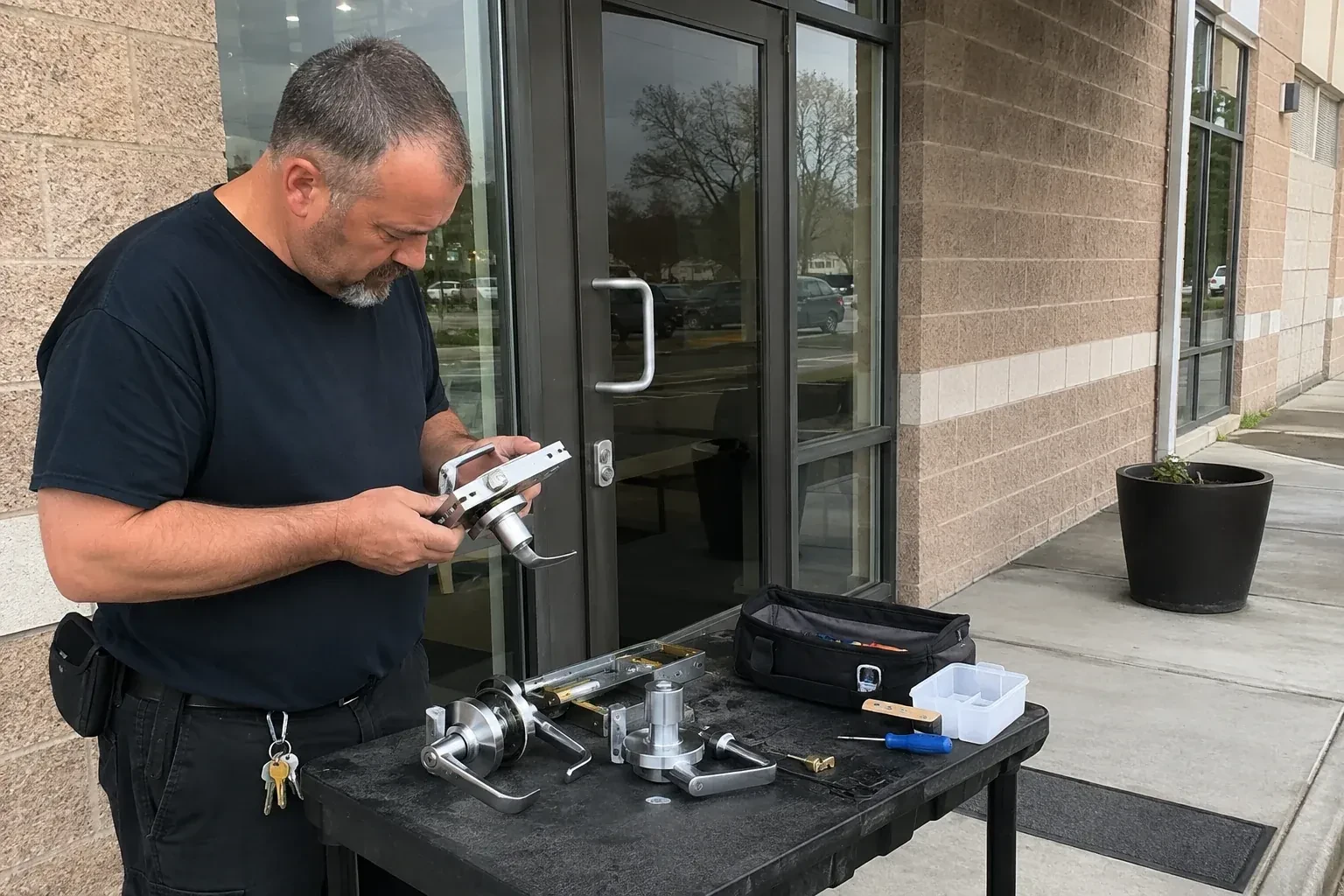
At closing time the hookbolt on the storefront door catches the keeper only on the second or third try, and one employee has started giving the door a shoulder to force it home.
In plain words
Think of it as re-equipping a door for the job it actually does rather than swapping one lock for a similar one. A back door taking deliveries all shift needs different internals than a quiet office entrance, and a storefront's aluminum frame needs a narrow-stile lock a wood door was never built to accept. The locksmith matches lock body, cylinder and strike to the door's real prep and real use, decides with the business whether the new hardware joins an existing master key system or starts a new one, and leaves the opening cycling cleanly from both sides before the visit ends.
How the visit goesA new tenant moved into the unit next door, and the property manager just found three different cylinders on three doors, none of them cut to the same key.
Commercial-Grade Lock Replacement
How the visit goes
Checking for a fire rating or an exit requirement
Some commercial doors are part of a fire separation or a required exit route, and that status changes which hardware is legal to install on them. The locksmith looks for a fire label on the door and frame, checks whether the opening serves an assembly space or a high-occupant-load area that calls for listed, push-type release hardware, and confirms whether the door is required to close and latch on its own. None of this is guesswork; it is read directly off the door, its label, and the building's own occupancy information.
Matching the cylinder to the business's key system
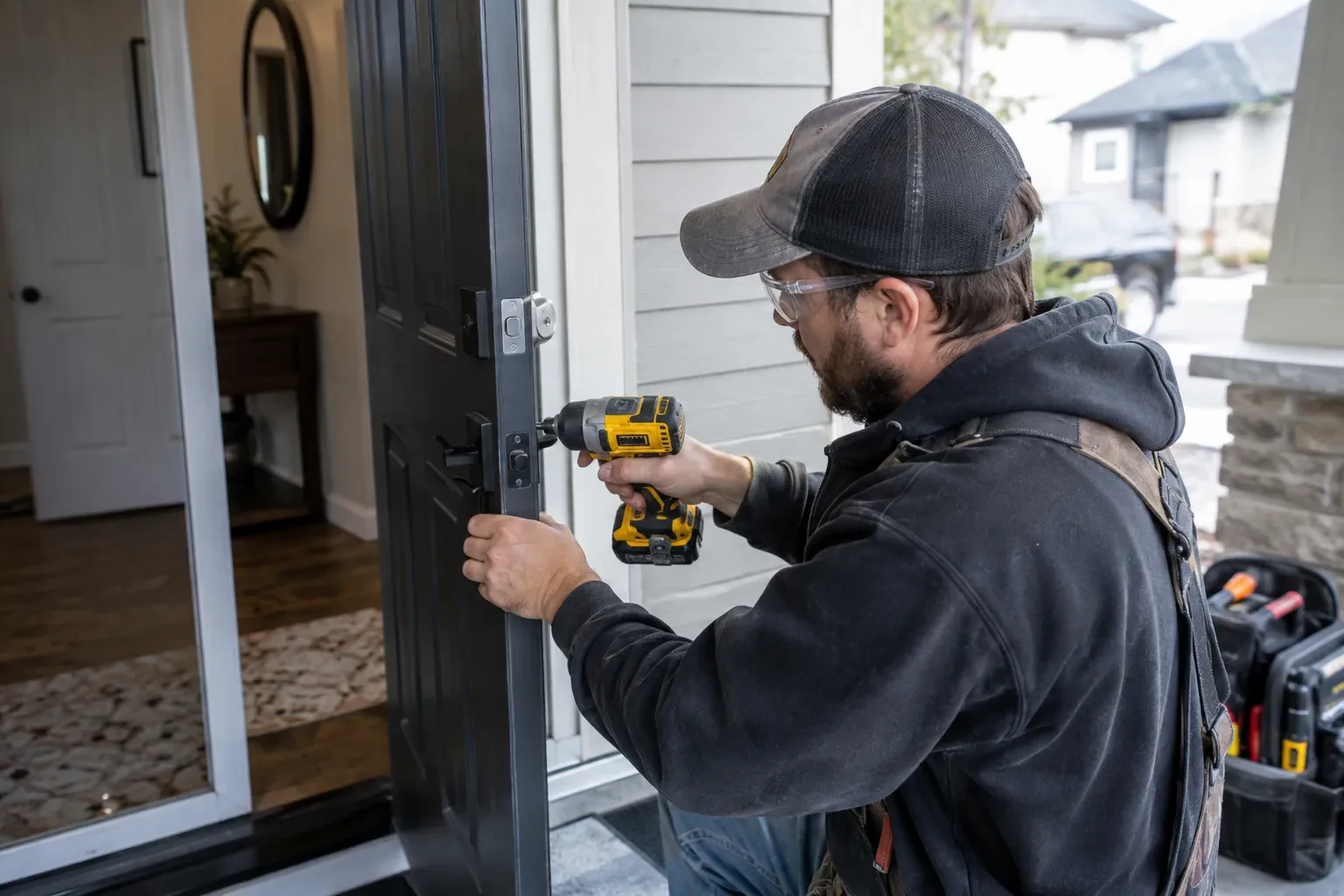
The cylinder installed is the one agreed during the assessment: keyed into an existing master or grand-master system, set up as a new interchangeable core the business can rekey itself later, or cut to a restricted keyway that limits who can order duplicate keys. Where several doors are being brought onto one system in the same visit, cylinders are combinated so a single key or a defined set of keys operates every door that is supposed to share access.
A storefront that closes the way it should
For a narrow-stile or glass storefront door, the finished job means the hookbolt or deadlatch engages fully across its travel every time, without the shoulder-check that a worn or mismatched lock used to need. Staff closing up for the night can throw the lock once and trust it caught, and the business is no longer relying on a habit of double-checking a door that should simply work. The hardware's finish is also suited to public-facing use, holding its appearance under daily handling.
Commercial-Grade Lock Replacement
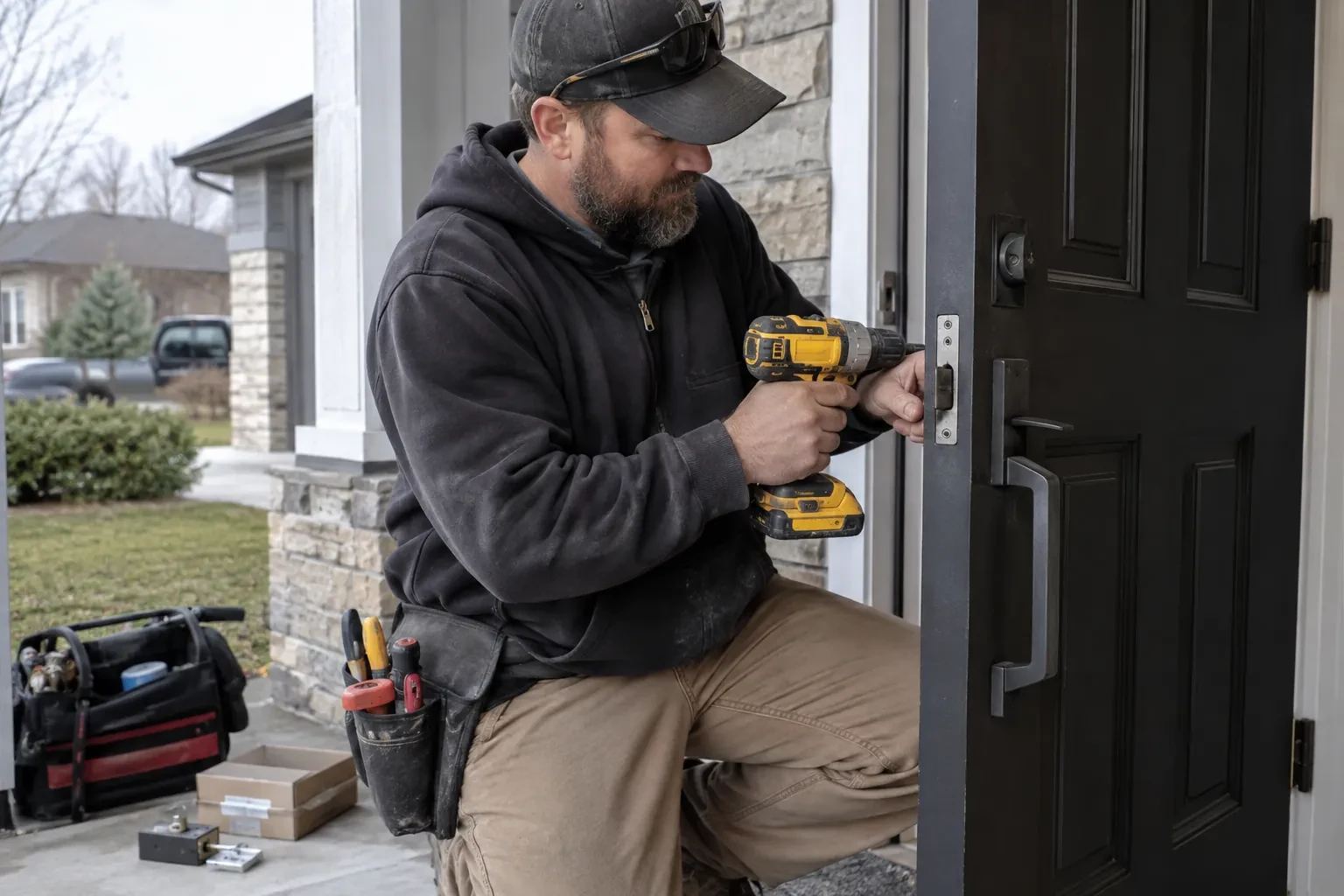
In the van
Mortise prep and installation tools
Heavy-duty cylindrical lockset
Mortise lock body
Hookbolt and deadlatch hardware
Listed panic or exit hardware
Commercial-Grade Lock Replacement
What affects the quote
Grade and duty rating of the lock
Hardware built for higher cycle counts and rougher daily handling costs more than a lighter-duty equivalent, and the right grade for a busy delivery door is not the same as for a quiet interior office.
Site access and building type
A ground-floor storefront is the simplest case to reach and work on. A unit inside a larger building with its own access rules, or a site requiring coordination with building management, can add steps the quote takes into account.
Fire-rated or listed hardware requirements
A door that is part of a fire separation needs hardware listed for that specific rating, which is a narrower and typically costlier category than general-purpose commercial hardware, and the quote reflects that requirement rather than a standard substitute.
What to have ready
- How many keys will need to be cut and issued?
- Is there an electric strike, maglock or card reader already on this door?
- What kind of door is it: solid, hollow-metal, wood, or aluminum storefront?
Commercial-Grade Lock Replacement: questions
QuestionsWill replacing the lock affect my alarm or access-control system?
It can, if the door already carries a door position switch, an electric strike or a card reader, so the locksmith checks for that wiring before starting and reconnects and tests it alongside the new mechanical hardware. The goal is a door where the mechanical lock and the electronic system agree with each other rather than one working around the other.
What information should I have ready before the visit?
It helps to know roughly what is on the door now, knob, deadbolt, exit device or something else, whether other doors on the property share a key with it, and who in the business can authorize the work and sign off on keys. Photos of the current hardware and any fire label on the door are useful if you can get them ahead of time.
Can you upgrade hardware without re-cutting the door or frame?
In most cases, yes. Replacement hardware is chosen to fit the door's existing mortise pocket, bore pattern or narrow-stile prep, so the visit does not usually involve altering the door itself. Re-cutting only comes up when the business specifically wants to change hardware type, for example moving from a knob-and-deadbolt pair to a single mortise lock body.
Related services
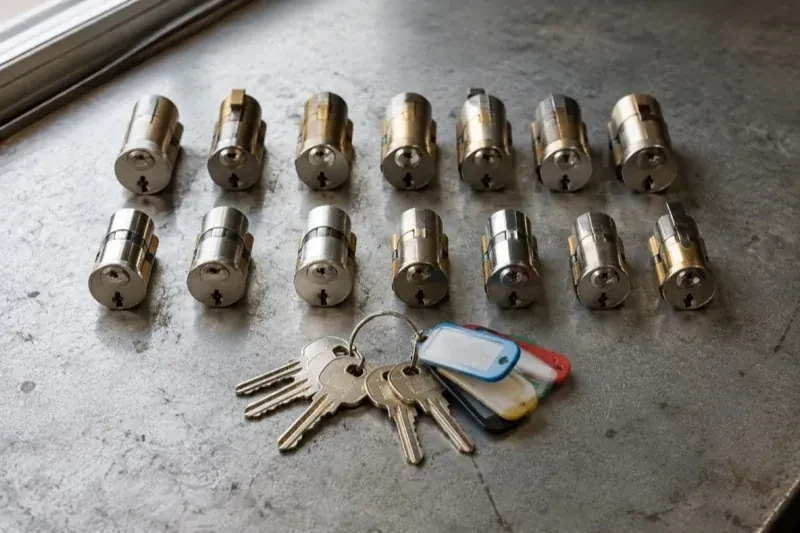
- Master Key System DesignThe new wing was built with its own brand of cylinder, so the two-year-old keys from the original building do not open a single door in the addition.
- Access Control InstallationThe team has grown past the point where one shared key still makes sense.
- Panic & Exit HardwareThe daycare wants the yard gate and the classroom door alarmed so a staff member hears the moment it opens, without turning either into something a child could be shut behind.