Change or rekey · Toronto
Vintage Mortise Lock Service
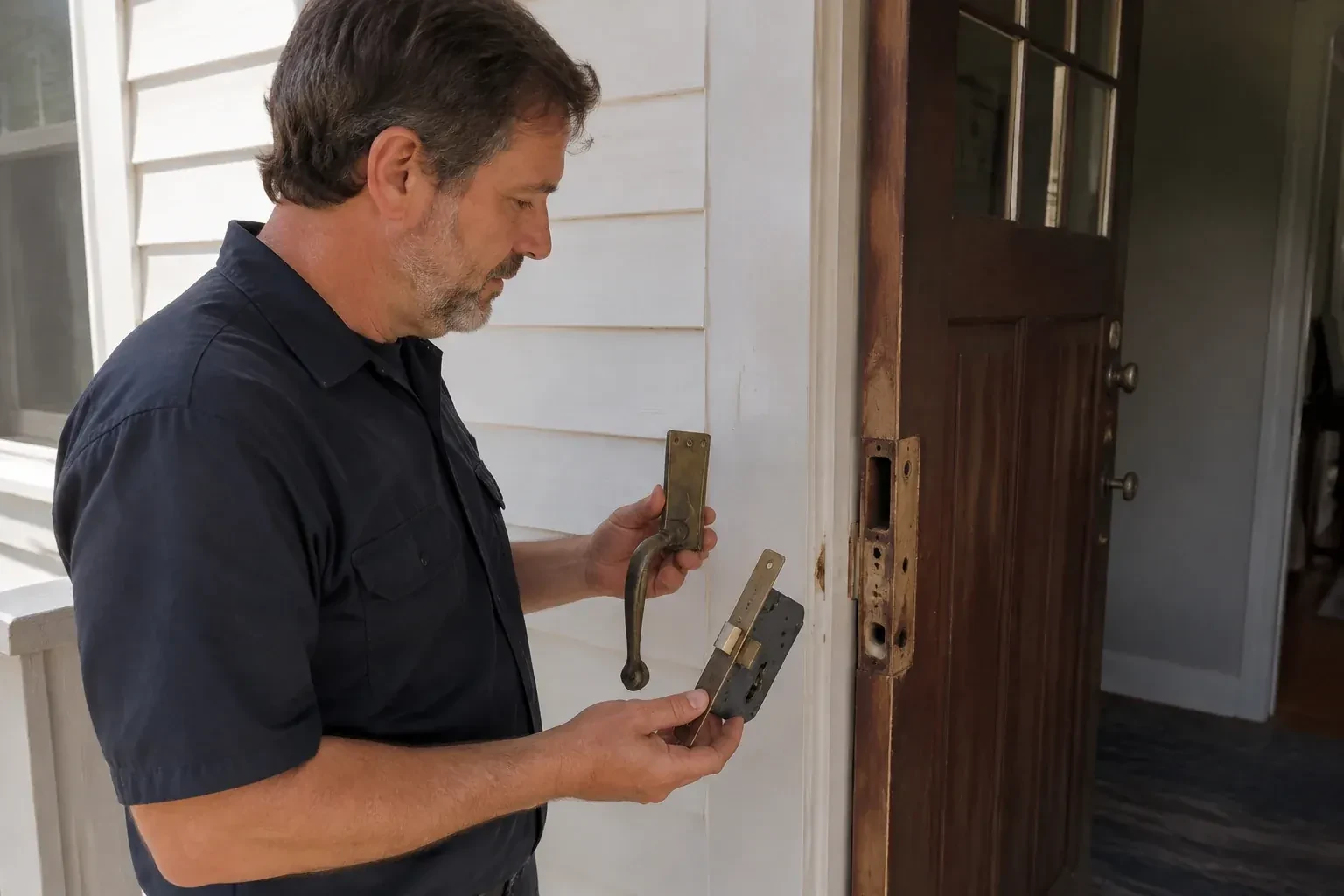
The brass knob on the front door of your century home turns, but nothing happens on the other side.
In plain words
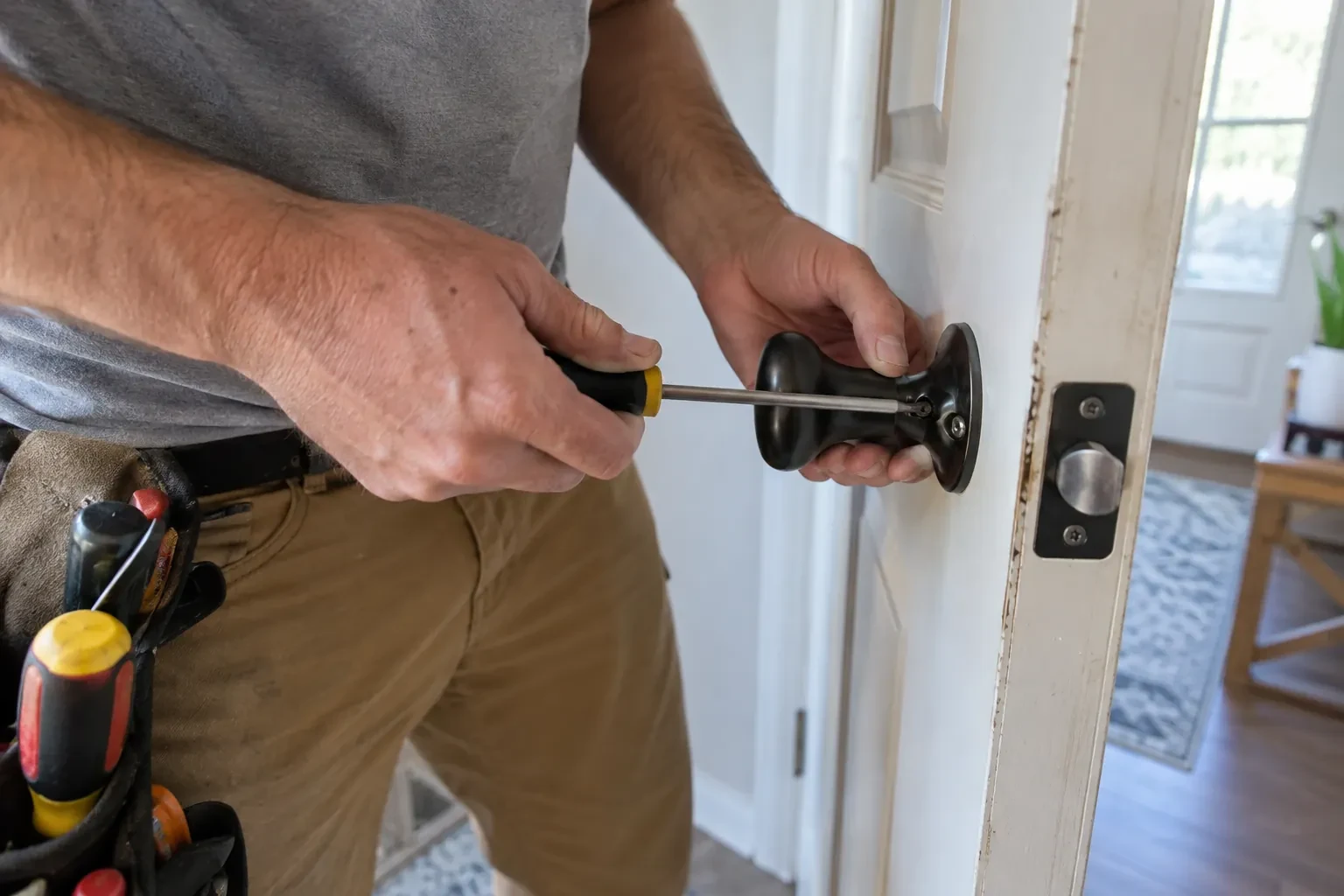
Interior doors are as much a part of this work as the entry. Bedroom, bathroom and closet doors in an older home usually carry a lighter mortise latch with a privacy turn button, and after decades without lubrication they stop catching or the turn button seizes. These small cases are short jobs on the bench: a clean, a spring, a new turn button spindle where the old one has sheared. Sets of interior locks are often serviced in one visit, and a bit key can be cut that operates all of them, which is how they were originally supplied when the house was built.
How the visit goesYou bought a house with its original hardware and a bag of loose keys. Some open interior doors, some fit nothing, and the front door lock has a keyhole shaped for a key you do not have. You would like the original lock kept and made to work.
Vintage Mortise Lock Service
How the visit goes
The door before the lock
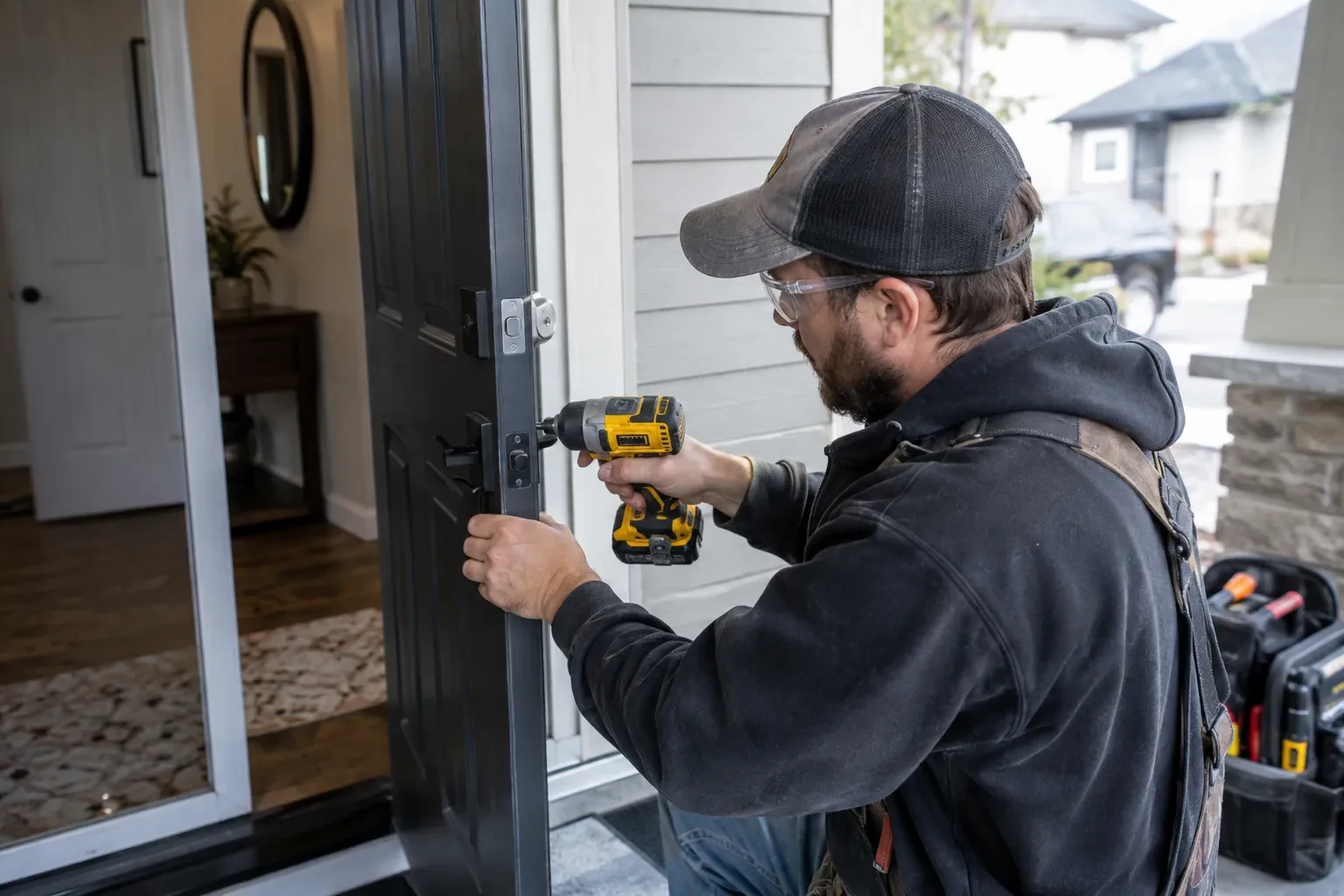
Before blaming a lock that may be perfectly sound, the locksmith looks at the door. With it open, the lock is cycled; with it closed, the latch and deadbolt are tried again. A lock that works open and fights when shut is telling you the door has moved. The gap around the door is checked top to bottom, the hinges are watched for a sag when the door is lifted, and the strike plate is inspected for bright wear marks where the bolt has been scraping past. In an older home with a solid wood door this is a routine finding, and correcting it is often most of the repair.
Cutting a bit key to the lock
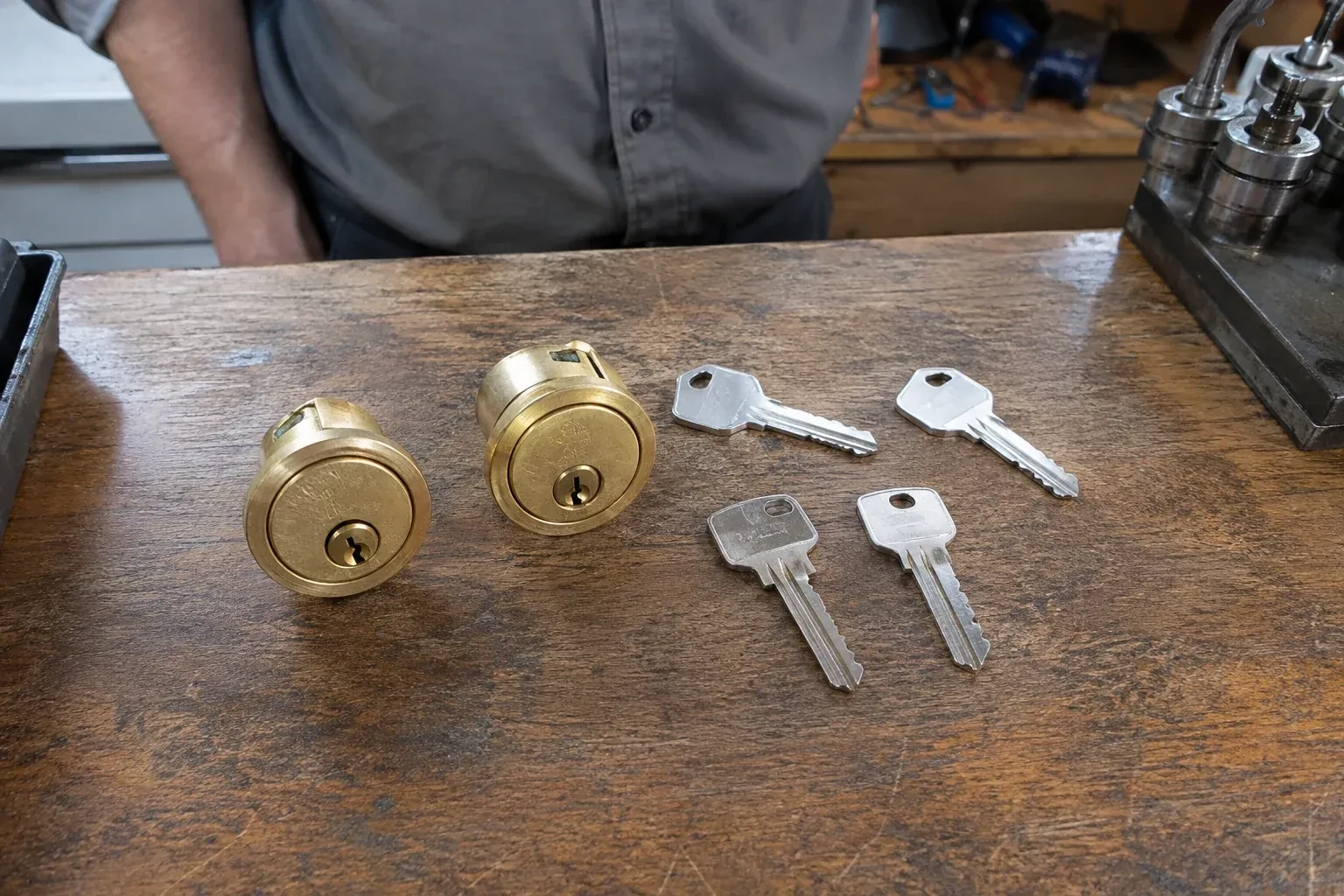
For a bit-key lock, keys are made to the case rather than copied from a pattern. A blank with the right bow, shank and bit size is chosen, then the bit is filed by hand to clear the wards inside the case and to lift each lever to the correct height. The key is tried, marked, filed again and tried again until it turns the bolt cleanly from both sides. A second key is made to match while the first is fresh. Where a working original exists, it is used as a guide and the new key is cut to it, and a worn original can itself be gently restored if the customer wants to keep using it.
How to lubricate it, and how not to
A serviced mortise case wants very little. Once a year, a single drop of light lock oil into the latch and the bolt from the door edge, with the faceplate screws briefly backed off if needed, keeps the levers gliding. If the lock has a pin-tumbler cylinder, that cylinder gets dry graphite or a PTFE lubricant in the keyway instead, because oil in a cylinder gathers grit and stiffens the pins. General-purpose spray lubricants belong nowhere on this hardware; they flush out the little oil that should stay and leave a film that dust settles into. The locksmith will show you where the drop goes so you are not guessing.
Vintage Mortise Lock Service
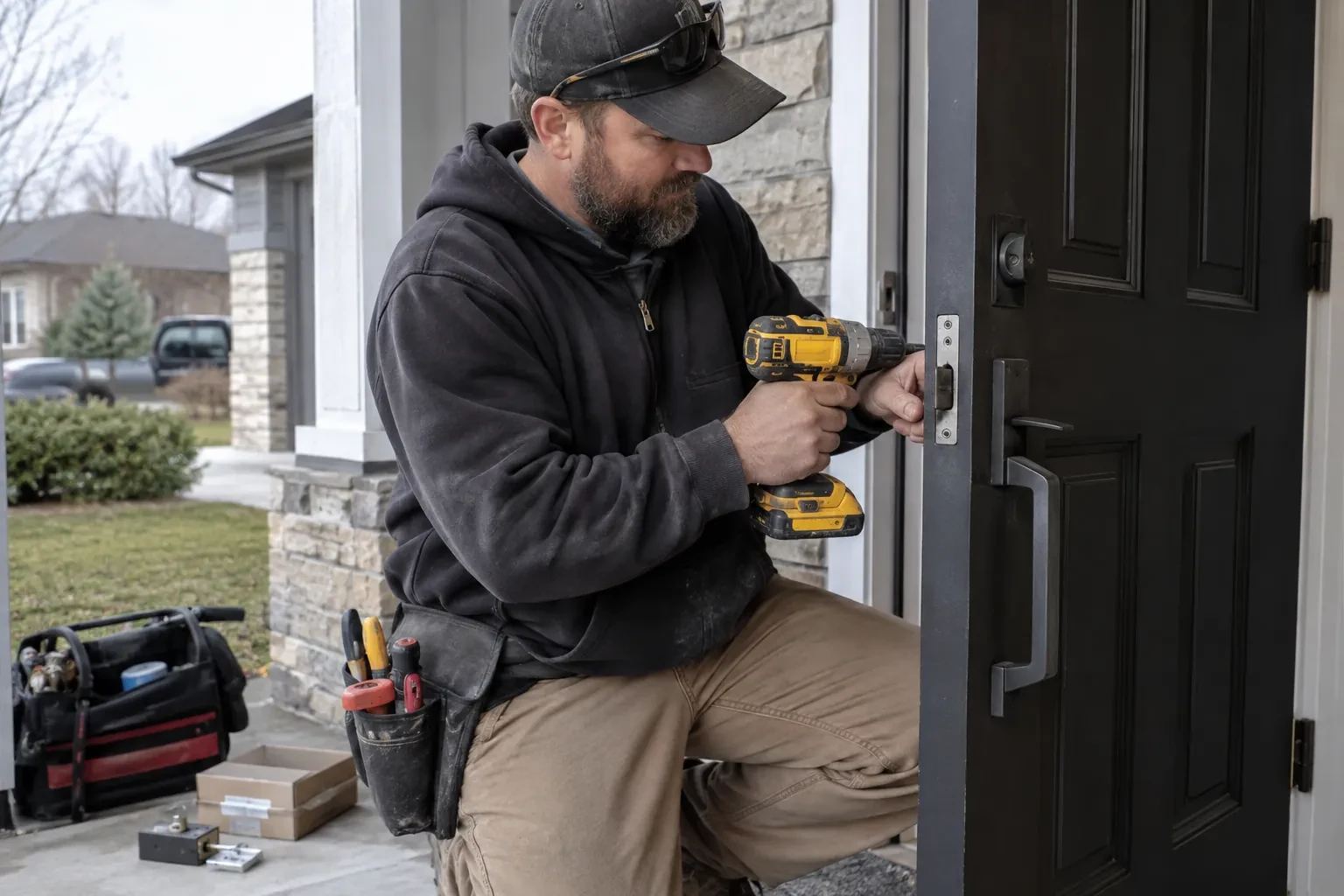
In the van
Bit key blanks
Deadbolt lever springs
Cylinder set screw
Warding files
Mortise cylinder and cam
Vintage Mortise Lock Service
What affects the quote
Strike and hinge work
Where the door has dropped or swelled, adjusting or moving the strike and tightening or packing hinges is part of the fix. It is small work but it is listed, so you see what was done to the door.
Replacement case
A case that is cracked or worn through is replaced with a reproduction or modern mortise case sized to the pocket. The case itself, any trimming of the pocket and the refitting are itemised separately from a repair.
Replacement cylinder
When a pin-tumbler cylinder is past rekeying, a new mortise cylinder of the right thread and cam is fitted. A standard cylinder and a high-security one are different hardware and are quoted as such.
What to have ready
- What does the knob do when you turn it: return, sag, or not come back?
- Do you own the home or rent it, and who should receive the keys?
- How many doors need attention, and are any of them interior doors?
Vintage Mortise Lock Service: questions
QuestionsCan you make a key for a lock that has none?
Yes. A bit key is cut to the lock rather than copied from another key: the locksmith chooses a blank of the right size and files the bit until it clears the wards and lifts the levers inside your case, testing as they go. A pin-tumbler cylinder on a later lock is decoded or rekeyed and keys cut to it. Bring any loose keys that came with the house, since one may be close enough to serve as a starting pattern.
Do I need to prove I own the house before you work on the lock?
Yes, and it is a normal part of any lock or key work. Photo identification together with something that ties you to the address is enough. If you rent, the locksmith will ask who should receive the keys, because landlords and tenants in this province are expected to agree on lock changes and share keys. This check takes a moment and it protects every household the locksmith is asked to work for.
What if the case is too worn to repair?
Then a replacement case goes into the existing pocket. Reproduction mortise cases are made in the common vintage sizes and backsets, and a modern mortise case with a cylinder fits many old pockets with minor trimming. The locksmith measures the case height, depth, backset and trim spacing before ordering, aiming for the new case to drop in with the original knobs and plates going back on, though a small pocket trim or fixing change is sometimes needed. Cutting the door for a different kind of lock is the last choice.
Related services
- Deadbolt InstallationYou bought a keypad deadbolt online and pulled the old one off, only to find the hole in the door is a different size and the bolt latch sits at a backset the new kit does not list.
- Lock Replacement & UpgradeSomeone tried the back door while you were away.
- Smart Lock InstallationHalf the evenings someone asks whether the back door got locked, and nobody is sure.