Car keys · Toronto
Car Lockout Service
You dropped the duffel bag in the trunk, closed the lid with your elbow, and heard the keys land inside a heartbeat too late.
In plain words
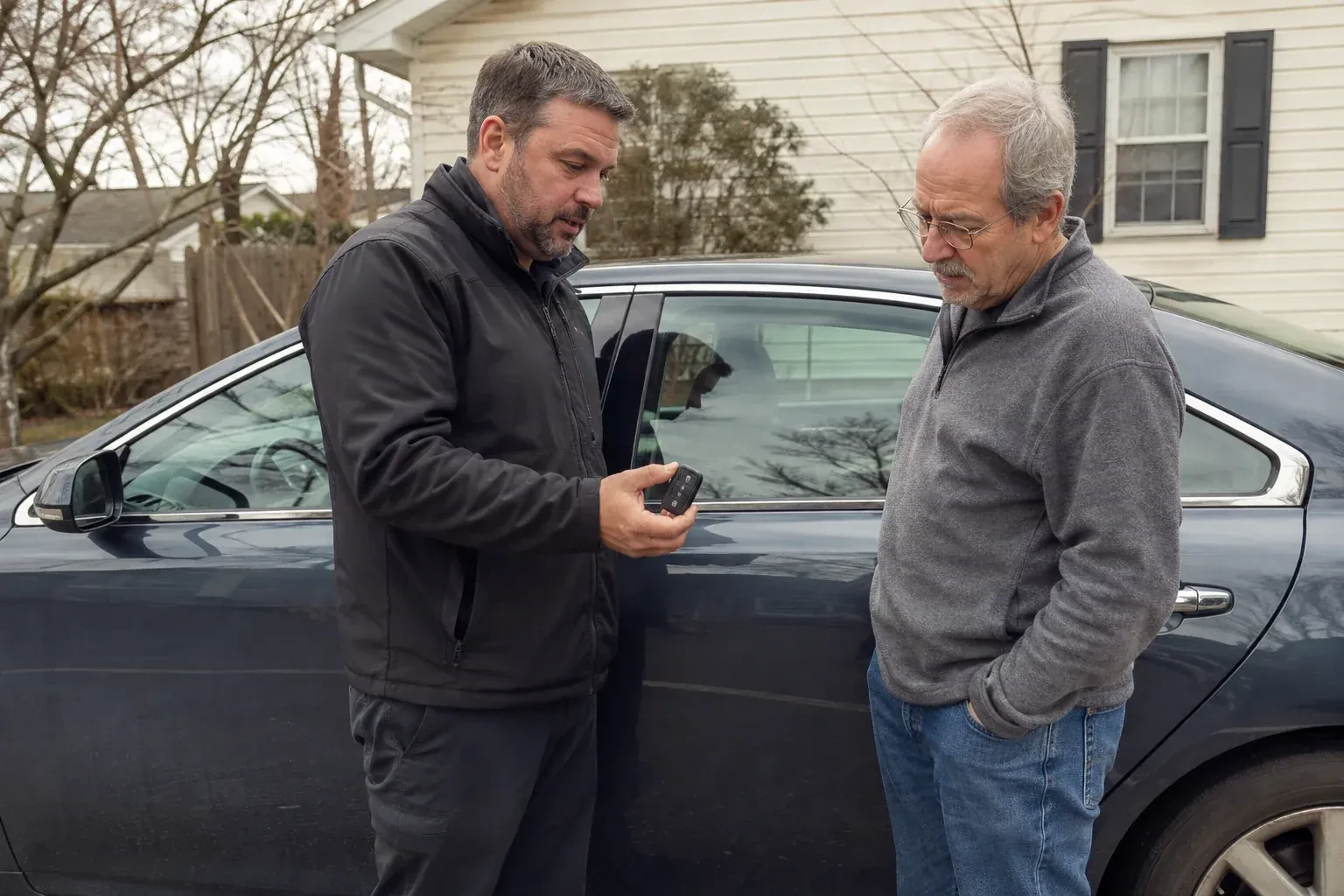
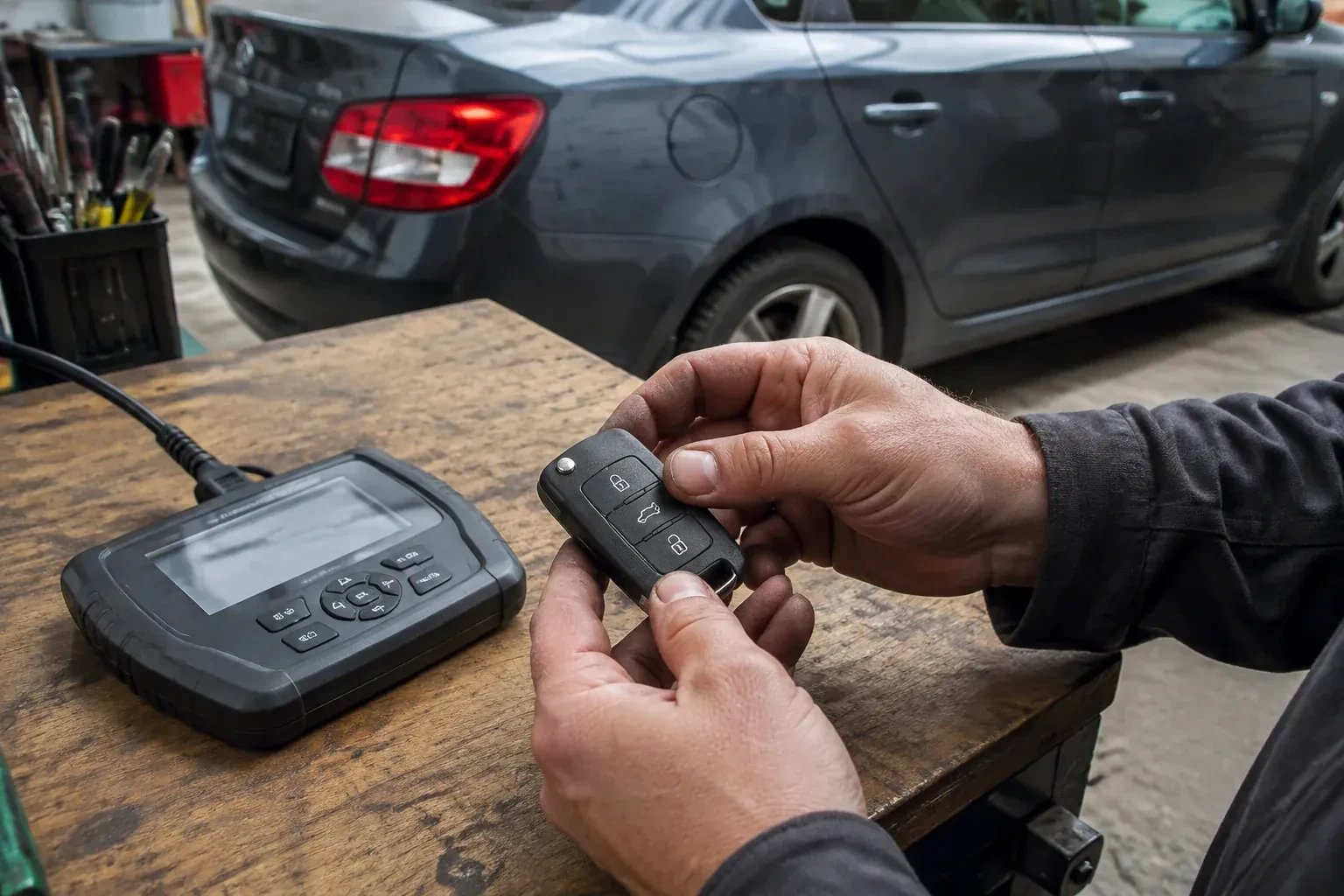
Vehicles have changed, and so have the ways of opening them. An older car with an exposed door cylinder is picked or decoded much like a house lock. A modern car with keyless entry may hide its only cylinder under a cap on the driver's handle, and its doors carry side-airbag sensors and wiring that improvised tools can damage. Push-button cars add an immobiliser and a fob that must be recognised before the engine turns. A car lockout locksmith reads all of this from the make, model and year, then chooses a wedge-and-reach opening, a matched decoder pick, or the mechanical cylinder, whichever leaves the car untouched.
How the visit goesYou reached the parking lot after a long hike and the pocket that held your car key is empty. Somewhere along ten kilometres of trail is the only key you own, and the car, your wallet and your dry clothes are all locked behind glass.
Car Lockout Service
How the visit goes
Proving the car is yours to open
Before a wedge or pick comes out, the locksmith confirms that the person asking has the right to be in that vehicle. Photo identification alongside the vehicle permit, the insurance card or a rental agreement settles it in a moment, because the permit carries the plate number and the owner's name and address. When those papers are in the glovebox, as they usually are, the locksmith notes your identification, opens the door, and matches the documents before leaving. A company vehicle is confirmed with a call to the fleet contact. Roadside clubs ask their contractors for the same thing, and it is the step that keeps your own car safe from a stranger's claim.
Working the door cylinder
Where the car keeps a keyed driver's-door cylinder, exposed or under a small cap that pops off with a fingernail or a plastic pry, the locksmith can open the lock without going through the gap at all. A two-in-one pick and decoder built for that keyway sets each wafer to its shear line under light turning pressure, and the cylinder rotates and unlocks the door. As it does, the tool reads the depths of the wafers it can reach; a door cylinder sometimes exposes only part of the cut pattern, so the reading is completed against the vehicle's key code or another lock where needed. The cylinder is left clean and lubricated with whatever product the vehicle maker specifies.
Every door and the trunk, working as before
The visit closes with a full circuit of the car. The mechanical key is tested in whichever exterior cylinder or cylinders the car actually has, the fob and interior switch are tested across every door, the trunk is opened and latched, and the door that was worked on is closed and reopened so you can hear it seat normally. The window is checked for a true fit in its channel and the seal is run with a finger for any lift. Any handle cap that came off is snapped back and the cylinder is wiped down. You watch the last lock-and-unlock yourself, so there is no doubt that the car is exactly as you left it, only open.
Car Lockout Service
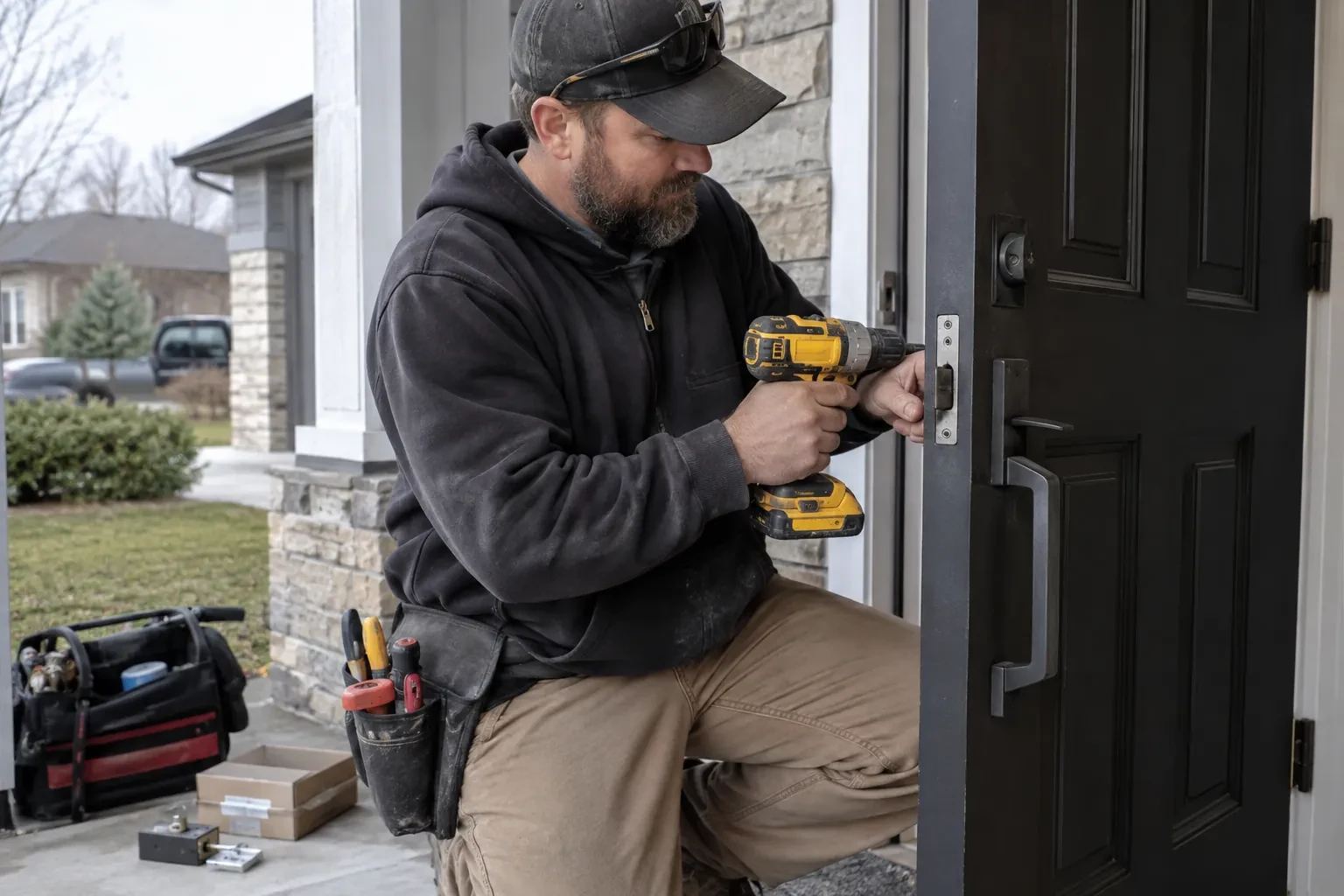
In the van
Silicone spray for door seals
Broken key extractors
Fob coin batteries
Transponder key blanks
Inflatable air wedge
Car Lockout Service
What affects the quote
Dead fob or dead car battery
Replacing a fob coin cell is a small item. Jump-starting a flat twelve-volt battery so the immobiliser wakes is another, and each is named on the quote rather than folded in.
Where the car is parked
A driveway is simple. A highway shoulder needs a shielding position and extra care, a gated lot needs access arranged, and a tight underground garage adds time for light and clearance.
Commercial, rental or fleet vehicle
Vans with separate cargo locks, rentals that need a written account for the return desk, and fleet vehicles with key records all add small steps that the quote names plainly.
What to have ready
- Exactly where is the car parked, and how does a van reach it?
- Is anyone, including a child or a pet, inside the car?
- Is the lock or the door frozen, and how cold has it been overnight?
Car Lockout Service: questions
QuestionsIs an older car easier or harder to open than a new one?
Different rather than easier. An older car usually has a cylinder in every door and simple linkages, so picking or decoding the lock is routine. A newer car may hide its cylinder, has doors full of electronics that call for wedge-and-reach rather than anything inside the door, and adds an immobiliser to any lost-key work. Either way the locksmith chooses the method by the model, not by guesswork.
What should I have ready when I call?
The make, model and year of the vehicle, the colour and plate if you can see it, exactly where the car is parked and how to reach it, and where the keys are: on the seat, in the trunk, lost, snapped, or in a fob that has gone quiet. Say whether anyone or any animal is inside, whether the car is a rental or a company vehicle, and whether your identification is on you or in the glovebox.
My car is in a gated lot or an underground garage. Does that matter?
Only for getting the van to the car. Tell the locksmith how the lot is entered, whether a code, a buzzer or an attendant is involved, and which level the car is on, so nobody loses time at the gate. In a tight garage the locksmith checks there is room to open the door fully and enough light to see the interior switches, and brings a torch if not. The opening itself is unchanged.
Related services
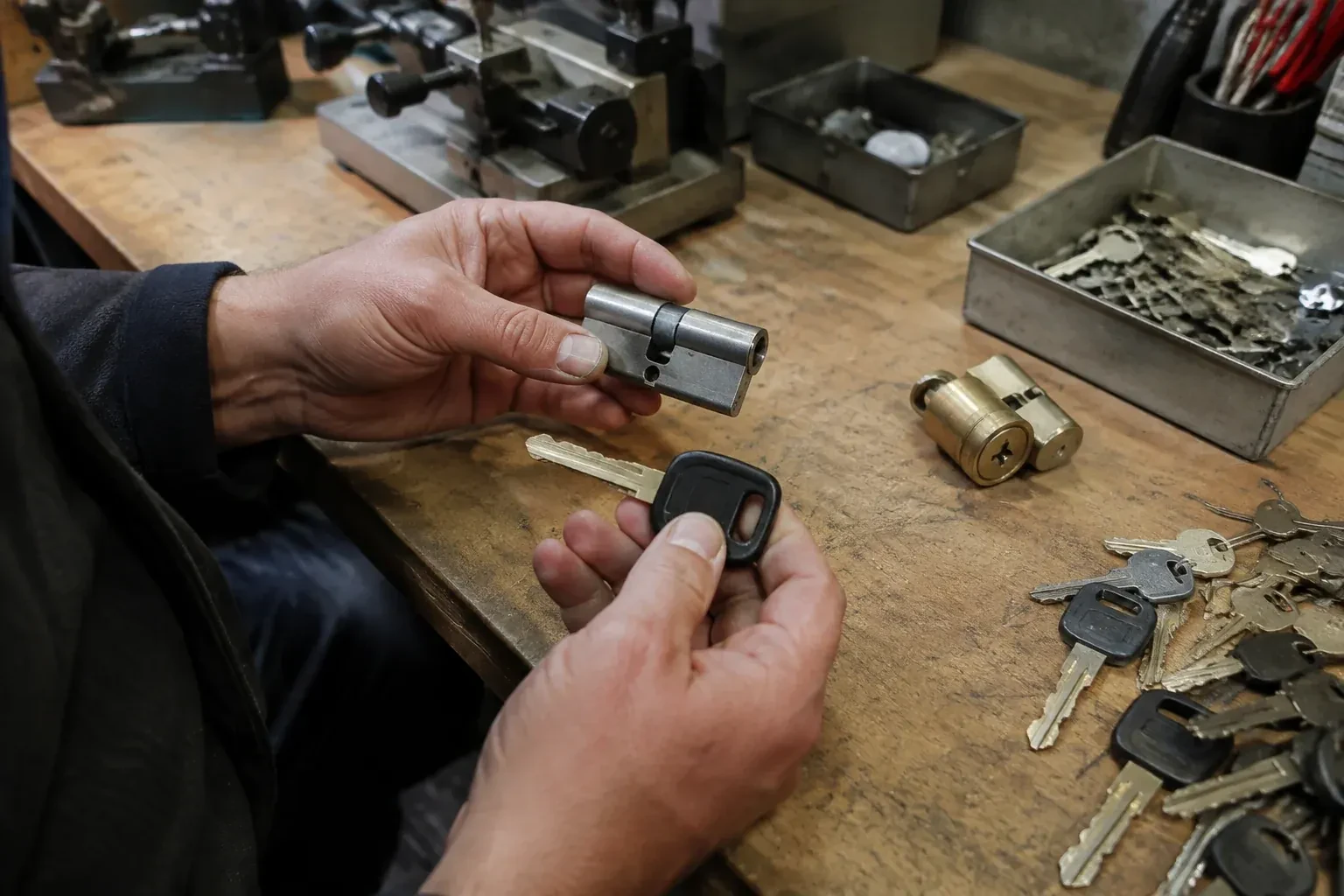
- Spare Car Key DuplicationThe paperwork for the used car changed hands last week, and the previous owner mentioned, almost as an afterthought, that a second key never turned up.
- Key Fob ProgrammingThe remote clicks the way it always has, but the vehicle no longer locks, unlocks or answers with its usual chirp.
- Transponder Key ProgrammingThe new key slides into the ignition and turns exactly the way the old one did, but the engine only cranks.