Car keys · The Annex
Car Lockout Service in The Annex
You dropped the duffel bag in the trunk, closed the lid with your elbow, and heard the keys land inside a heartbeat too late.
In plain words
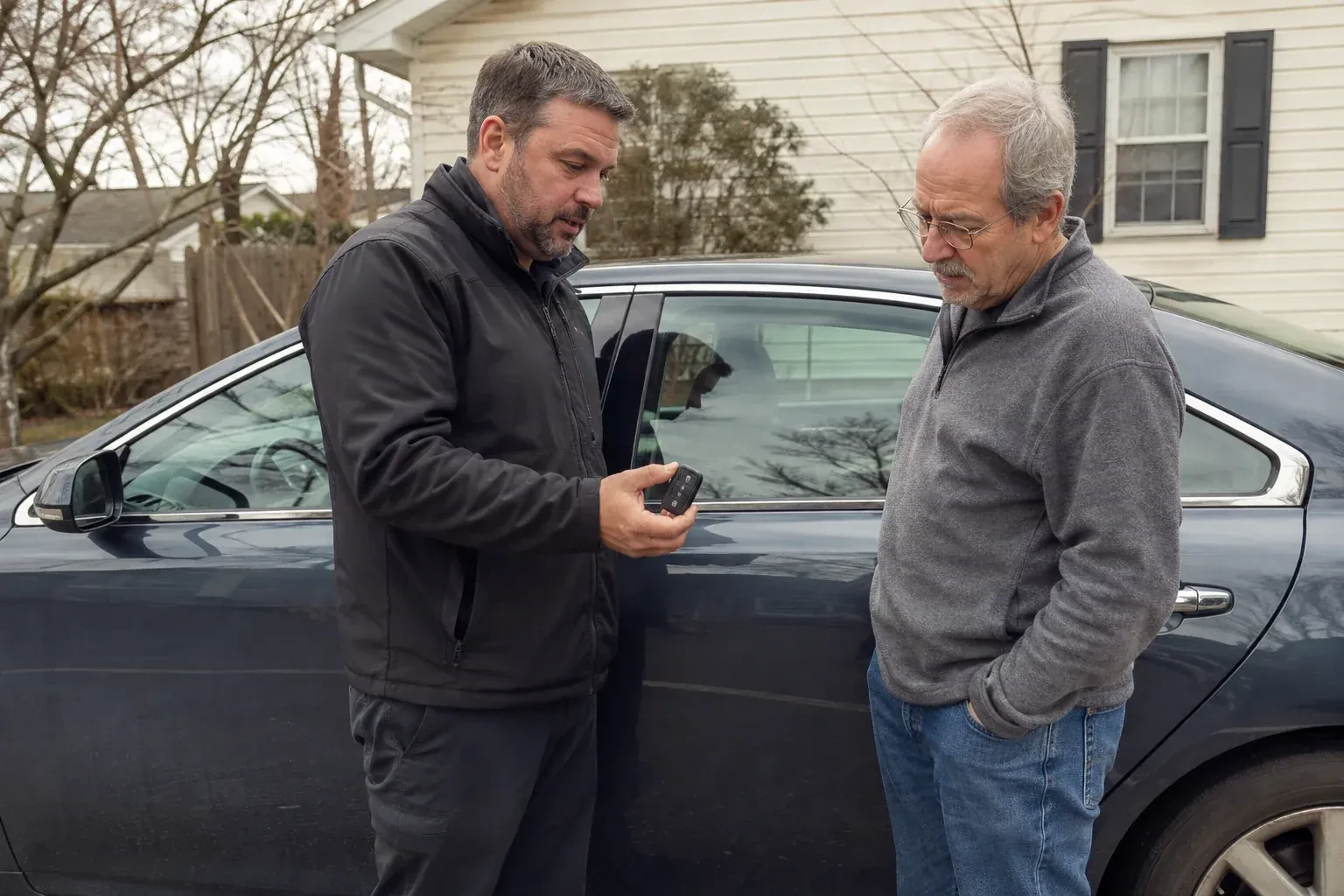
The visit follows a steady order. On the phone you give the make, model, year, where the keys are and where the car is parked, so the right tools ride in the van. If anyone or any pet is inside in heat or cold, you are sent to emergency services first. On arrival the locksmith checks the car can be worked on safely, confirms your identification and connection to the vehicle, and walks around trying every door. The opening comes next, using the gentlest method that suits the hardware. Then the alarm is silenced, the keys retrieved, and every lock cycled with your own key before the locksmith leaves.
How the visit goesYou stepped out at the pump to pay inside, the passenger locked their door out of habit, and the driver's door caught behind you. The engine is off, the keys are in the ignition, and the line of cars behind you is growing.
Car Lockout Service
How the visit goes
Proving the car is yours to open
Before a wedge or pick comes out, the locksmith confirms that the person asking has the right to be in that vehicle. Photo identification alongside the vehicle permit, the insurance card or a rental agreement settles it in a moment, because the permit carries the plate number and the owner's name and address. When those papers are in the glovebox, as they usually are, the locksmith notes your identification, opens the door, and matches the documents before leaving. A company vehicle is confirmed with a call to the fleet contact. Roadside clubs ask their contractors for the same thing, and it is the step that keeps your own car safe from a stranger's claim.
Thawing a frozen lock or door
Ice is met with patience. Lock de-icer goes into the keyway and a gentle heat source warms the cylinder face until the plug turns without resistance; hot water is never used, because it refreezes and can crack cold metal or glass. A door frozen to its seal is released by pressing along the edge to break the ice rather than yanking the handle, which can tear the rubber. Once open, the cylinder is dried and dressed with whatever lubricant the vehicle maker specifies for cold weather, the seals are wiped and treated with silicone so they do not bond again, and the fob battery is checked since cold is hard on coin cells.
Door, glass and seals checked over
A careful opening leaves nothing to repair, and the last look confirms it. The door edge is inspected where the guards sat, the top of the frame is checked for the faintest bow, the window is run up and down to make sure it tracks cleanly, and the seal is examined for any lift or tear. Anything that was already there before the visit was pointed out at the start and is confirmed now. If a bystander's earlier attempt left a stretched seal or a scuff, the locksmith tells you plainly what it is and what would put it right, so you can decide about it without any pressure.
Car Lockout Service
In the van
Silicone spray for door seals
Broken key extractors
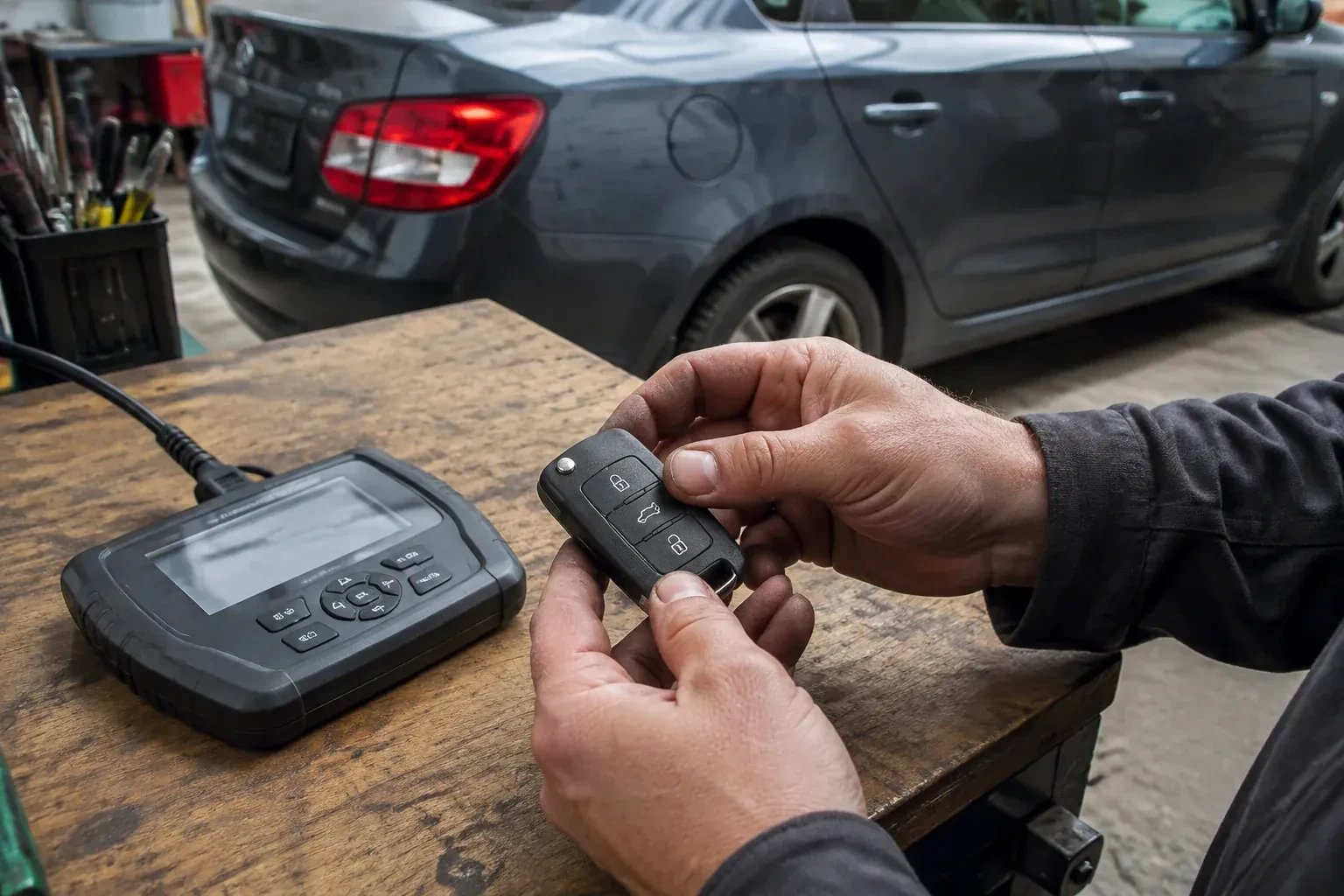
Fob coin batteries
Transponder key blanks
Inflatable air wedge
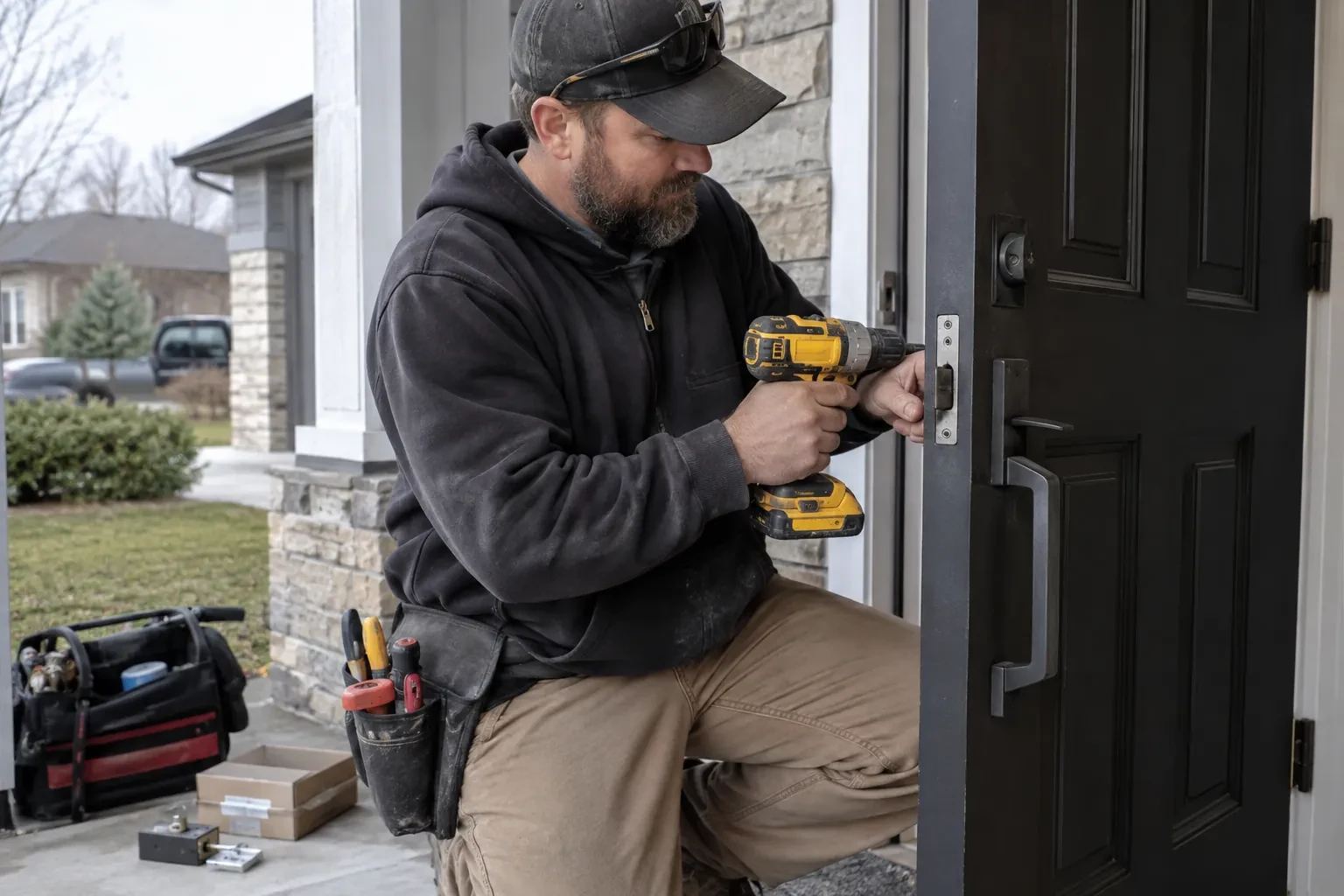
Car Lockout Service
What affects the quote
Distance to the vehicle
Travel is part of every call-out. A car in the next neighbourhood and a car on a rural road an hour away involve different driving time, and the trip is reflected in the quote.
Trunk-only or full cabin lockout
Keys in the trunk usually mean a cabin opening followed by an interior release. A car with a valet-isolated trunk means decoding the trunk cylinder as well, which is a longer job.
Make, model and year of the vehicle
A common sedan with exposed door cylinders and a luxury car with hidden cylinders and layered electronics call for different tools and different amounts of care, and the quote follows the vehicle.
What to have ready
- If the keys are lost, do you want a replacement key made in the same visit?
- What is the make, model and year of the vehicle?
- Does the car use a keyless fob or push-button start?
Car Lockout Service: questions
QuestionsIs an older car easier or harder to open than a new one?
Different rather than easier. An older car usually has a cylinder in every door and simple linkages, so picking or decoding the lock is routine. A newer car may hide its cylinder, has doors full of electronics that call for wedge-and-reach rather than anything inside the door, and adds an immobiliser to any lost-key work. Either way the locksmith chooses the method by the model, not by guesswork.
What should I have ready when I call?
The make, model and year of the vehicle, the colour and plate if you can see it, exactly where the car is parked and how to reach it, and where the keys are: on the seat, in the trunk, lost, snapped, or in a fob that has gone quiet. Say whether anyone or any animal is inside, whether the car is a rental or a company vehicle, and whether your identification is on you or in the glovebox.
My car is in a gated lot or an underground garage. Does that matter?
Only for getting the van to the car. Tell the locksmith how the lot is entered, whether a code, a buzzer or an attendant is involved, and which level the car is on, so nobody loses time at the gate. In a tight garage the locksmith checks there is room to open the door fully and enough light to see the interior switches, and brings a torch if not. The opening itself is unchanged.
Related services
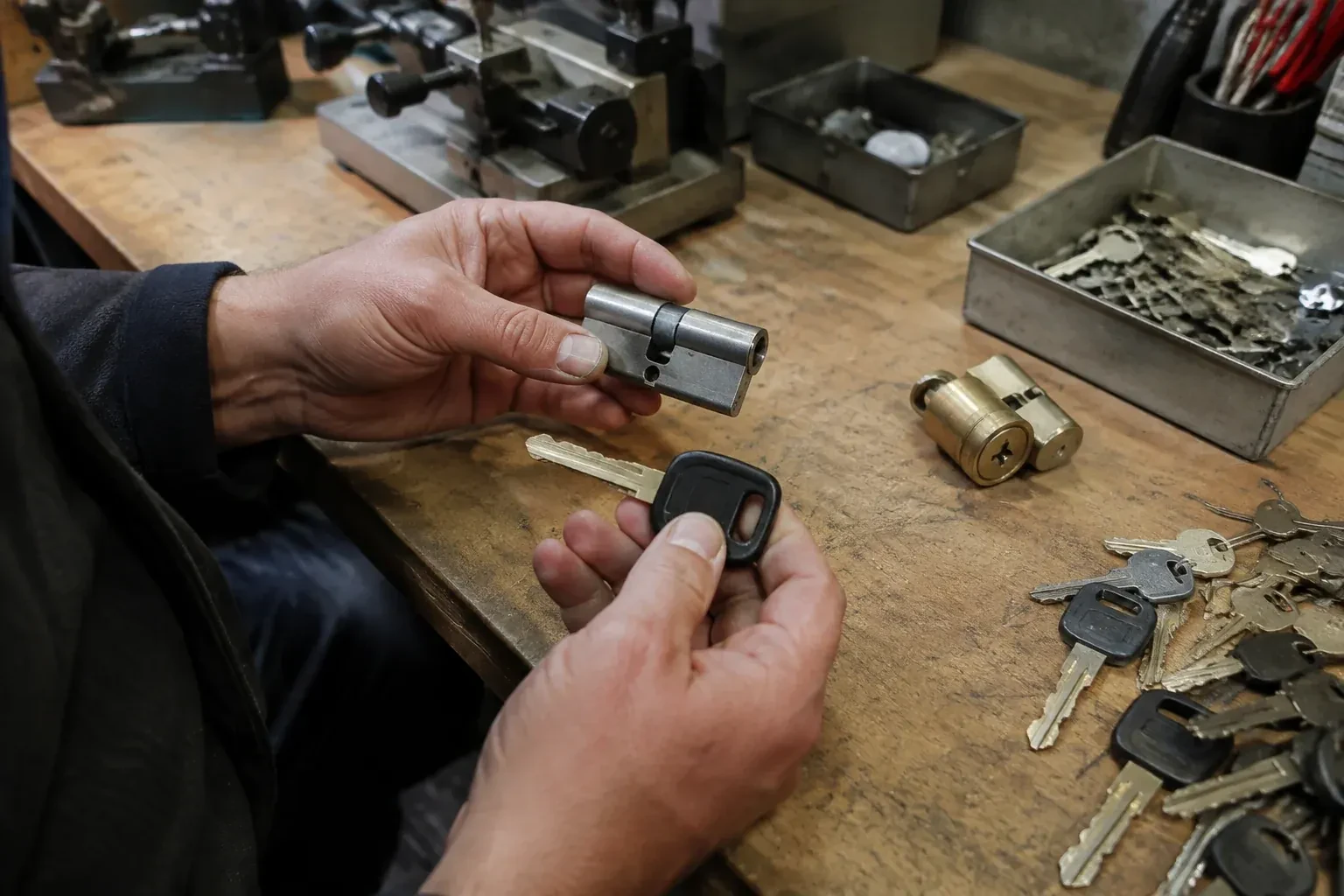
- Spare Car Key DuplicationThe paperwork for the used car changed hands last week, and the previous owner mentioned, almost as an afterthought, that a second key never turned up.
- Key Fob ProgrammingThe remote clicks the way it always has, but the vehicle no longer locks, unlocks or answers with its usual chirp.
- Transponder Key ProgrammingThe new key slides into the ignition and turns exactly the way the old one did, but the engine only cranks.