Change or rekey · Toronto
Lock Replacement & Upgrade in Toronto
Someone tried the back door while you were away.
In plain words
Lock replacement and upgrade is the service that takes tired or under-built door hardware off and puts hardware suited to the door in its place. It ranges from a like-for-like deadbolt on a back door to a complete refit of every entrance with heavier-grade locks, reinforced strikes and one key for the house. The locksmith first confirms that the person ordering the work has the right to change the lock, then examines the door, measures the existing preparation and recommends hardware that fits it cleanly. The visit ends with each lock tested from both sides, keys in your hand and the packaging and instructions left with you.
How the visit goesThe century home's original mortise lock takes a key the size of a spoon, sticks in humid weather and has worn its strike to a groove. You want a lock that works every day without giving up the old door.
Lock Replacement & Upgrade
How the visit goes
Measuring the existing preparation
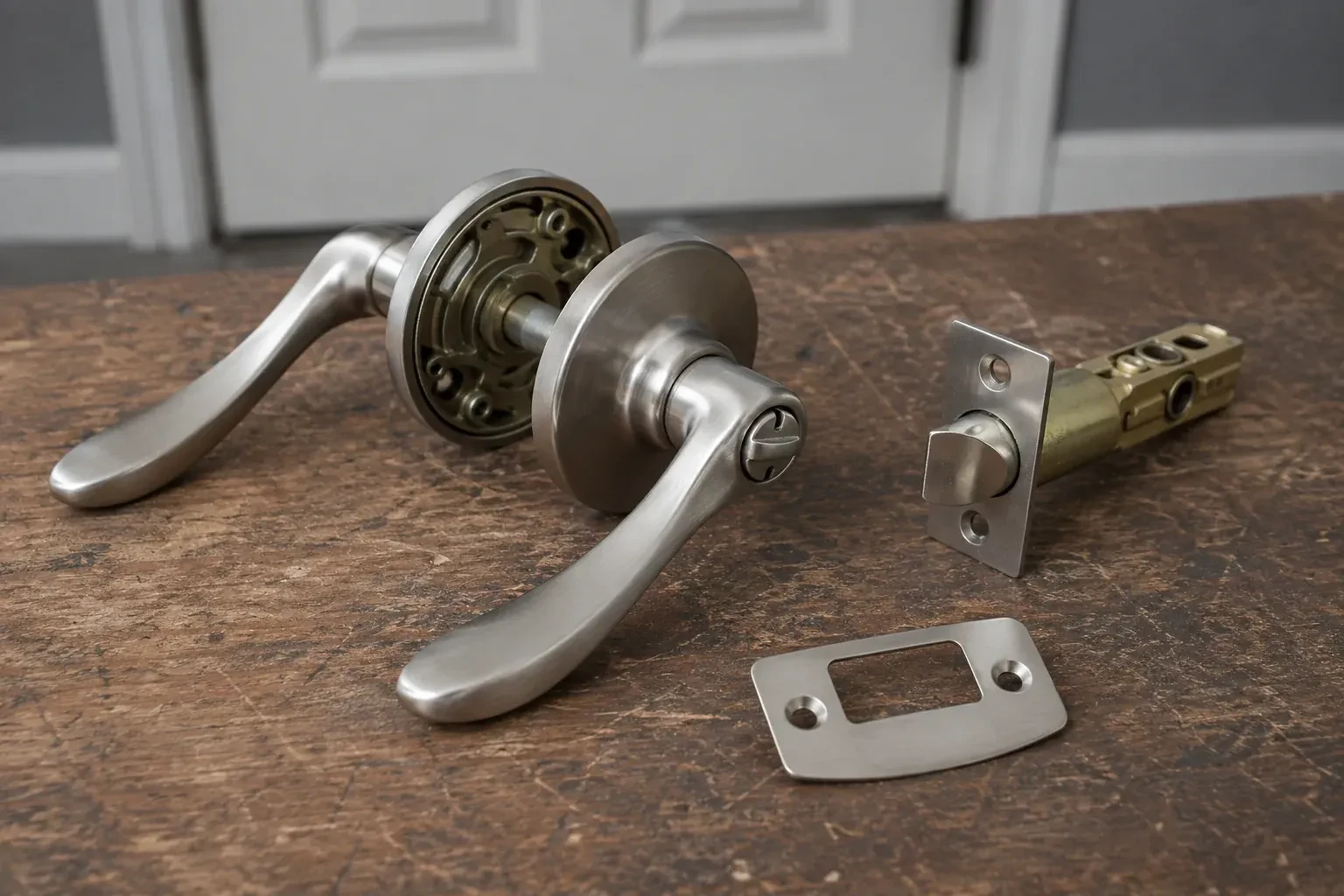
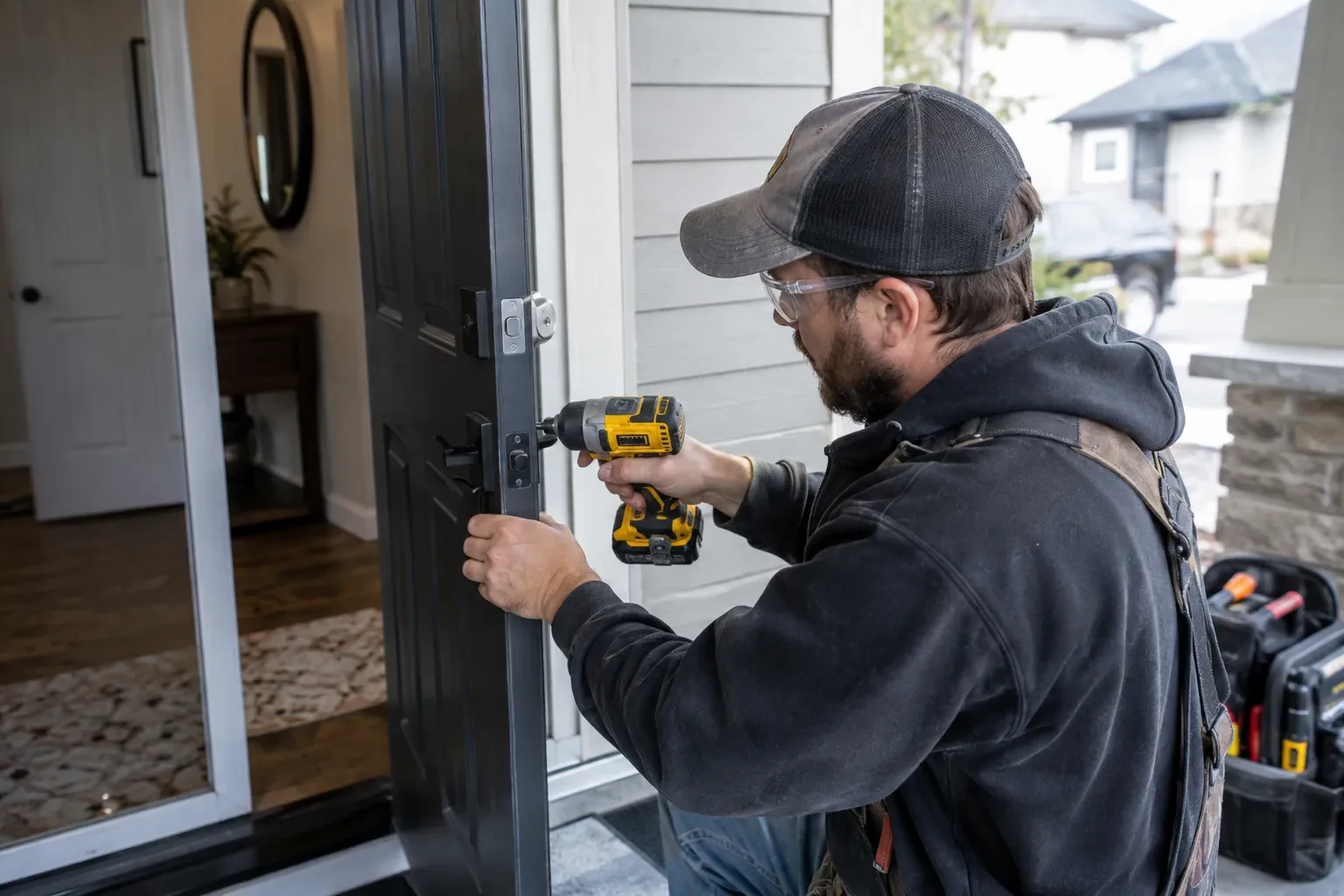
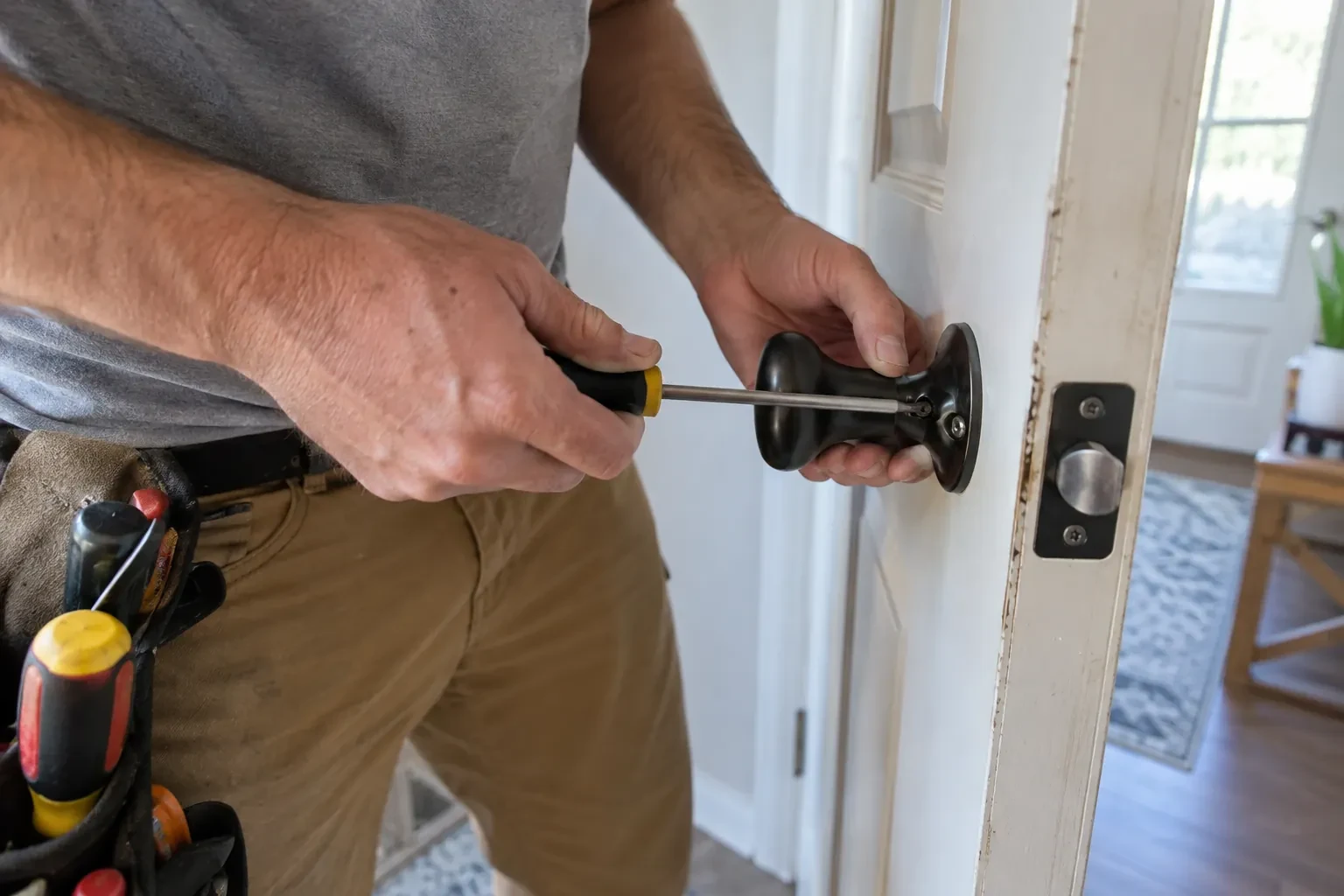
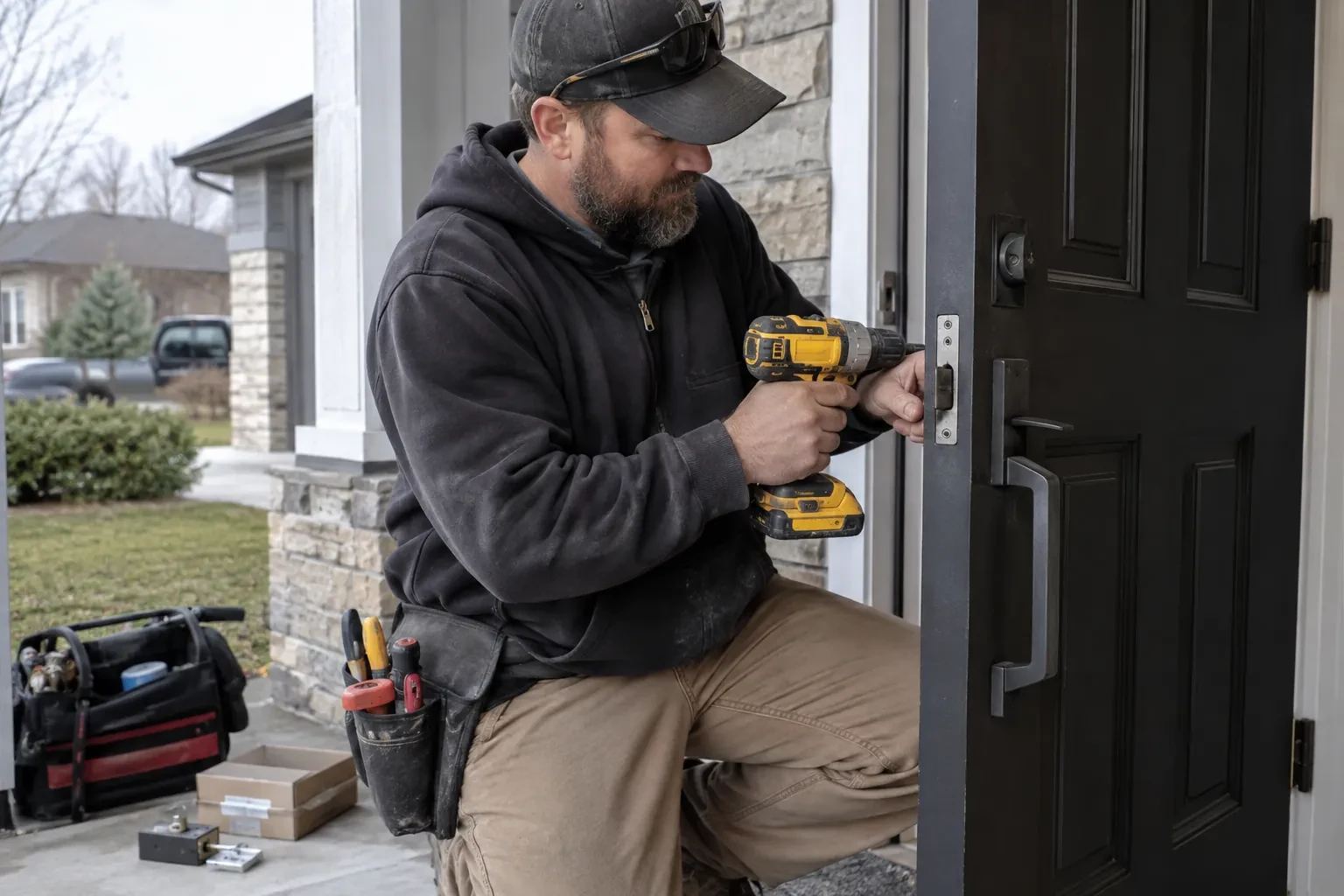
Before any product is chosen the door is measured. Backset first, the distance from the door edge to the centre of the bore, which on most doors here is 60 or 70 millimetres. Then the cross-bore diameter, the edge-bore size, the shape of the latch faceplate, the door thickness and the handing. The strike cut-out and any glass, trim or storm door that limits where hardware can sit are noted too. These few numbers decide which locks will drop straight into the door and which would need a filler plate, an extension kit or fresh drilling, so they are written down before the catalogue is opened.
Stepping up the grade of a deadbolt
When the brief is a stronger door, the new deadbolt is chosen for what is inside it: a bolt with a full 25 millimetre throw and a hardened steel insert that spins against a saw, a housing that stands low so a wrench has nothing to grip, and a cylinder with pins that resist picking and bumping. Fitting follows the normal steps, but the locksmith confirms the bolt reaches full extension with the door closed, because a high-grade bolt seated halfway into a shallow pocket behaves like a low-grade one. The strike is upgraded alongside it so both halves of the lock share the same standard.
A clear plan for the remaining doors
Most households do not replace every lock in one visit, and you leave with a short list of what is left, in order of importance. Typically the front door and the garage-to-house door come first, then the back and side doors, then the patio slider and interior sets. Because the key plan has been settled, any lock added later can be pinned to the same key, so the house stays on one key as the work continues. Finishes and styles are recorded so future hardware matches. The first visit sets the standard; the rest of the house can follow when it suits you.
Lock Replacement & Upgrade
In the van
Filler plates and thick-door extension kits
75 millimetre strike and hinge screws
Handleset with matching deadbolt
Boring jig and hole saws
Knob or lever entry set
Lock Replacement & Upgrade
What affects the quote
Condition of the old hardware
Hardware that comes off cleanly is one thing; painted-over trim, seized or stripped screws and a cylinder that has to be drilled out add time before the new lock can go on.
Older and mortise hardware
Servicing an original mortise case, sourcing a compatible cylinder or fitting a conversion plate on a century door involves more assessment and fitting time than a standard cylindrical replacement.
Grade of hardware
A light Grade 3 knob set, a residential deadbolt with a strong label rating and a Grade 1 commercial-style deadbolt are different products at different levels, and the quote follows the grade you choose for each door.
What to have ready
- Is there a sliding patio door or French door to include?
- How many keys does the household need, and should copying be restricted?
- Do you want every exterior door to open with one key?
Lock Replacement & Upgrade: questions
QuestionsCan you match the new lock to my other door hardware?
Yes. Manufacturers make deadbolts, handlesets, knobs and levers in matching finishes and styles, so a replacement deadbolt can sit above your existing handle without looking like an afterthought. Bring or photograph the hardware you want to match, including the interior side, and note whether it is a warm brass, a satin nickel, an oil-rubbed bronze or a matte black. Where an exact match is not made, the locksmith suggests the closest family.
Can every door in the house work from one key?
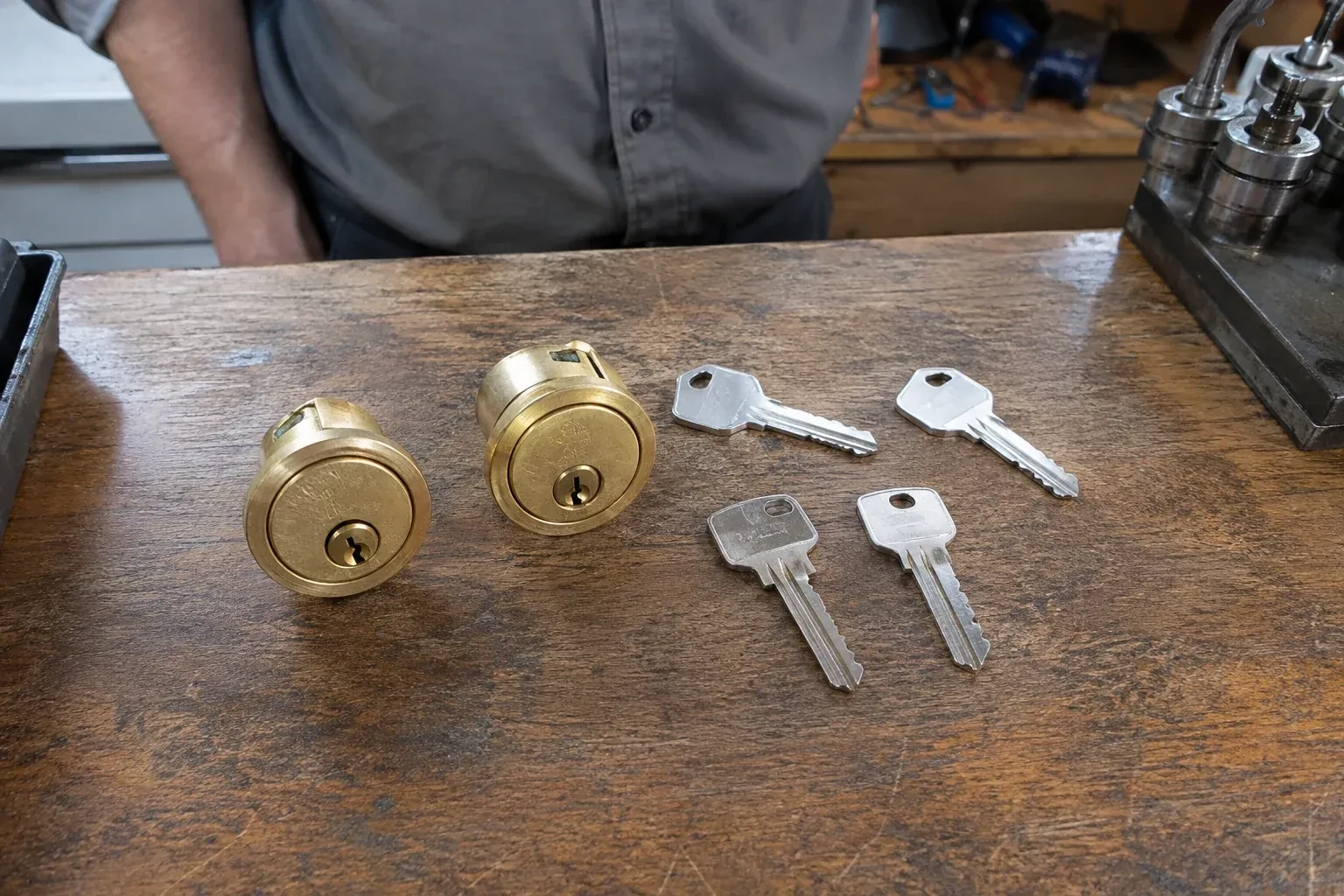
Yes, provided the cylinders share a compatible keyway, which the locksmith checks when choosing hardware. New cylinders are pinned on site to a single new key and any existing locks worth keeping are repinned to match. Front, back, side and garage doors commonly end up on one key, and a shed or gate padlock can join them. You then decide how many copies exist and who holds each.
Can I replace only the deadbolt and keep my existing knob?
Yes. The deadbolt and the knob or lever are separate locks in separate bores, so one can be replaced while the other stays. The new deadbolt can be pinned to work on the same key as the knob if the keyways are compatible, and its finish can be matched to the knob so the door looks intended. Replacing the deadbolt first is a sensible order, since it does most of the securing.
Related services
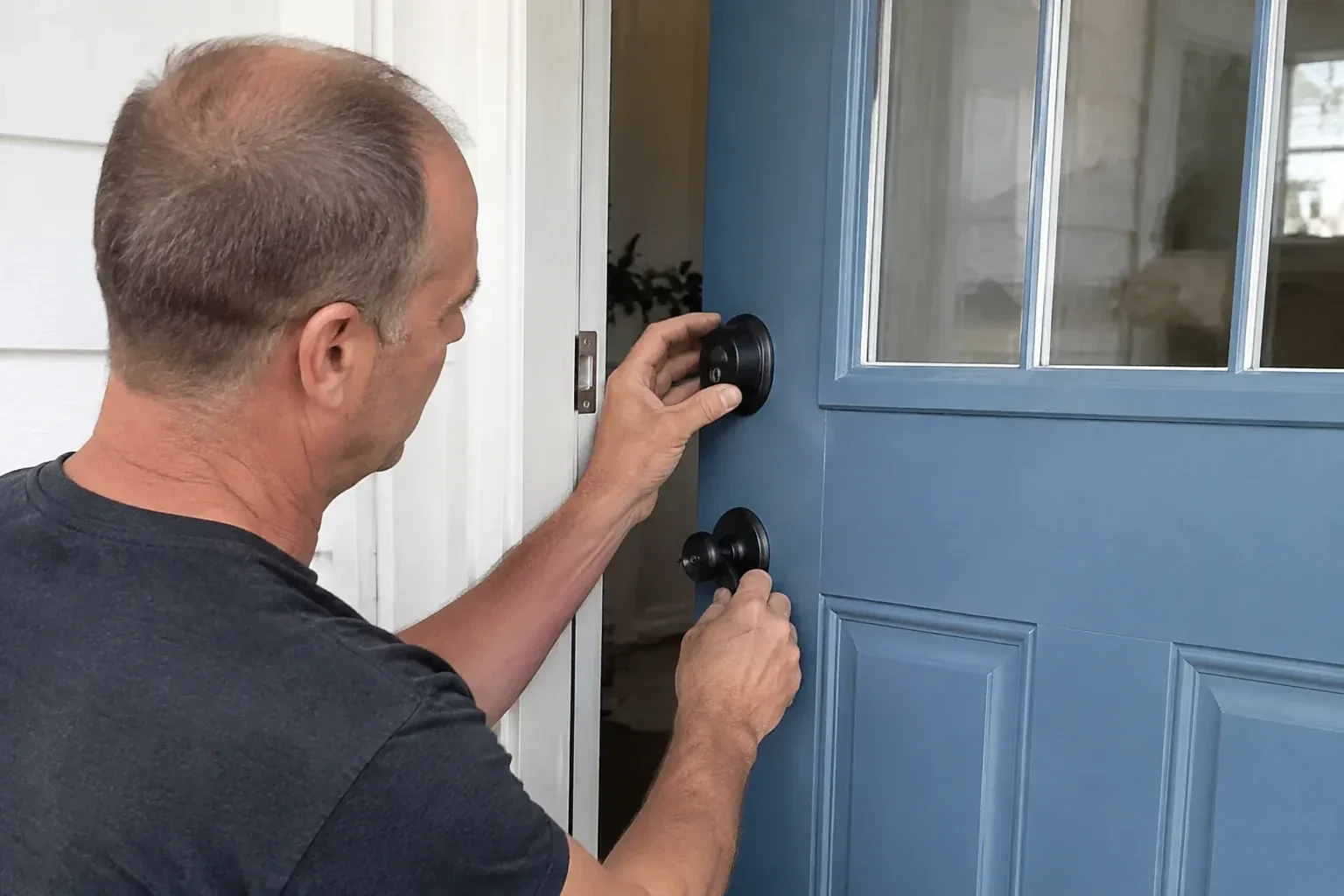
- Deadbolt InstallationYou bought a keypad deadbolt online and pulled the old one off, only to find the hole in the door is a different size and the bolt latch sits at a backset the new kit does not list.
- Vintage Mortise Lock ServiceThe brass knob on the front door of your century home turns, but nothing happens on the other side.
- Smart Lock InstallationHalf the evenings someone asks whether the back door got locked, and nobody is sure.