Lockouts · Cedarvale
Lost Keys — Same-Visit Rekey in Cedarvale
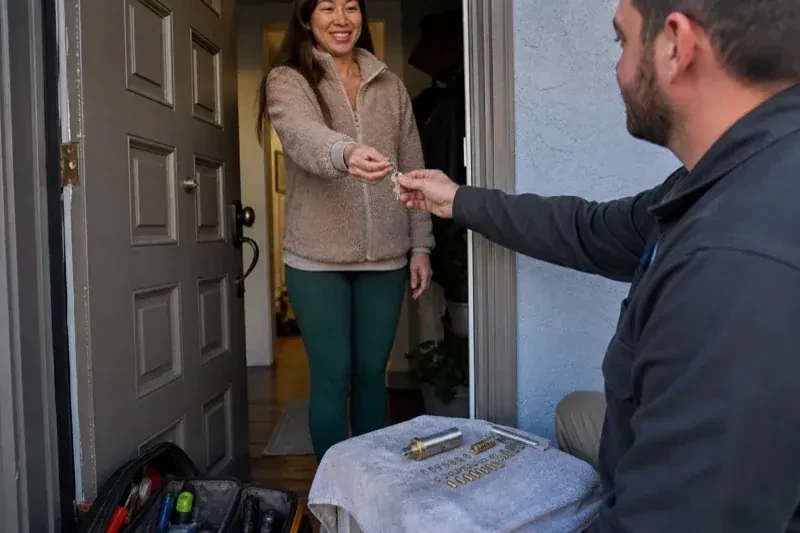
The lawyer's envelope held two keys for the new house.
In plain words
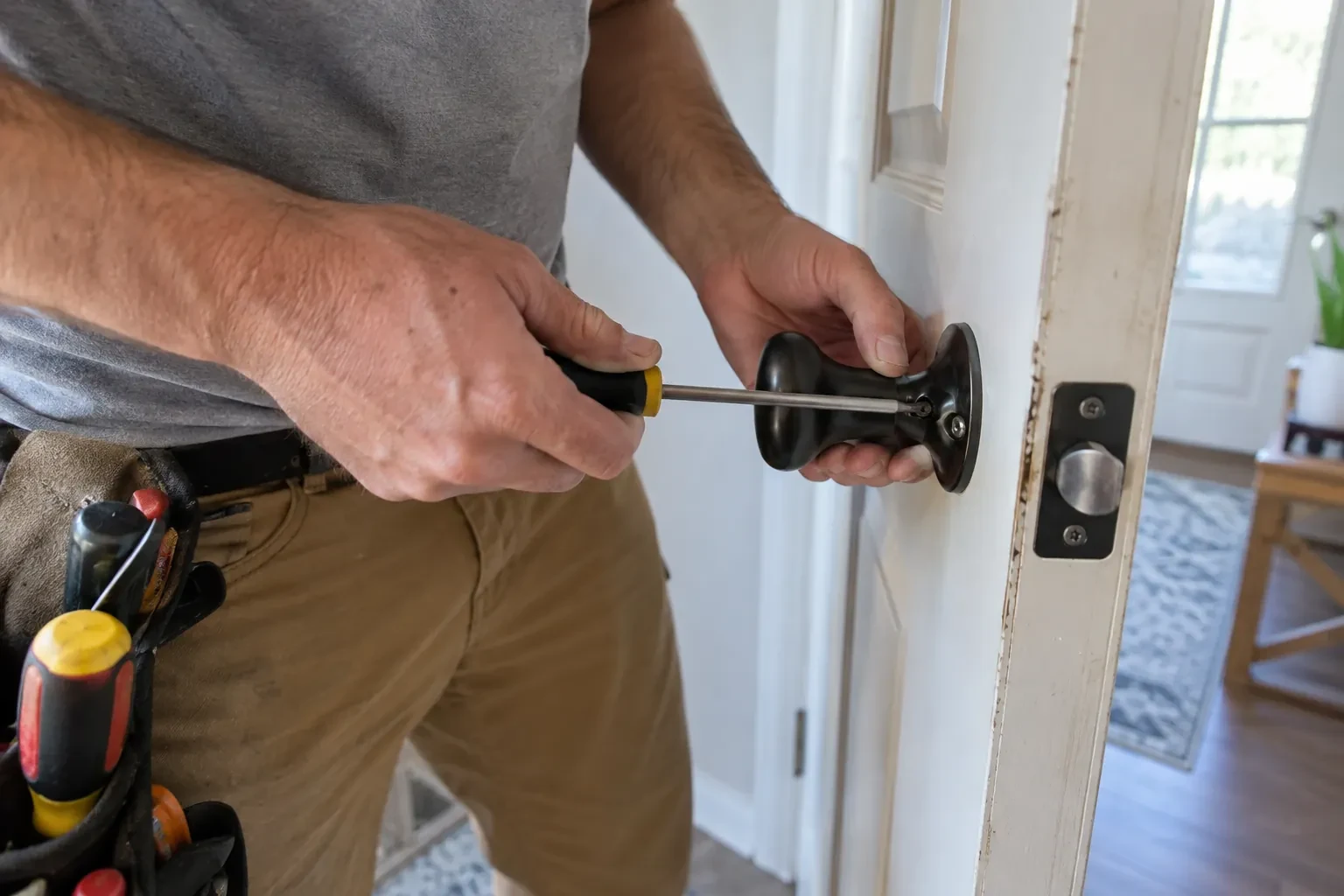
The visit runs in a steady order. On the phone you describe what was lost, which doors it opened and whether you have a way in. At the door the locksmith confirms your connection to the property, then walks it with you listing every cylinder. Each one comes off in turn, is repinned to the new key and refitted. The first key is cut to the new combination and checked in every lock, and the remaining copies are cut from it. Then every key is tried in every door with you watching, the count is agreed, and the new key code is written down for future copies.
How the visit goesA roommate moved out on bad terms and says the key was left on the counter. It was not. You have already changed the Wi-Fi password, but the front door still opens for a key that could be anywhere.
Lost Keys — Same-Visit Rekey
How the visit goes
How many keys, and who gets them
Before pins are touched, the number of keys is agreed, because that number is the whole point of key control. The locksmith asks who in the household or business needs one: each adult, a teenager, a caregiver, the neighbour who feeds the cat, the landlord, the cleaner. Each name gets a key and the total is written down. Anyone who had a copy of the old key but is not on the new list is, from that moment, simply someone without a key. Knowing the count on day one is what makes it possible, years later, to say with confidence exactly how many keys to this property exist.
Cutting the new keys on site
Common keys are cut on the van rather than ordered in, though some restricted systems need the blank from an authorised distributor first. The first key is cut on a code machine, a crisp, original-depth key rather than a copy of a copy, and tried in the first repinned cylinder before another is touched, so any adjustment happens once. The rest are cut to the same code, deburred, and tested in turn. Keys cut this way run smoothly from the start and stay accurate through years of copying, because every later duplicate can be made from the code rather than from a worn blade.
The code written down for next time
The new combination is recorded as a short code, either on a card the locksmith gives you or on the key tag, and a copy stays in the locksmith's job notes if you wish. That code is what makes future copies accurate: a key cut to code has fresh, original depths, while a copy of a worn key inherits every rounded edge. It also means a lost key years from now is met with a different code, never a repeat. Keep the card with the house papers, and when a new key is needed, ask for it to be cut from the code rather than traced from a tired one.
Lost Keys — Same-Visit Rekey
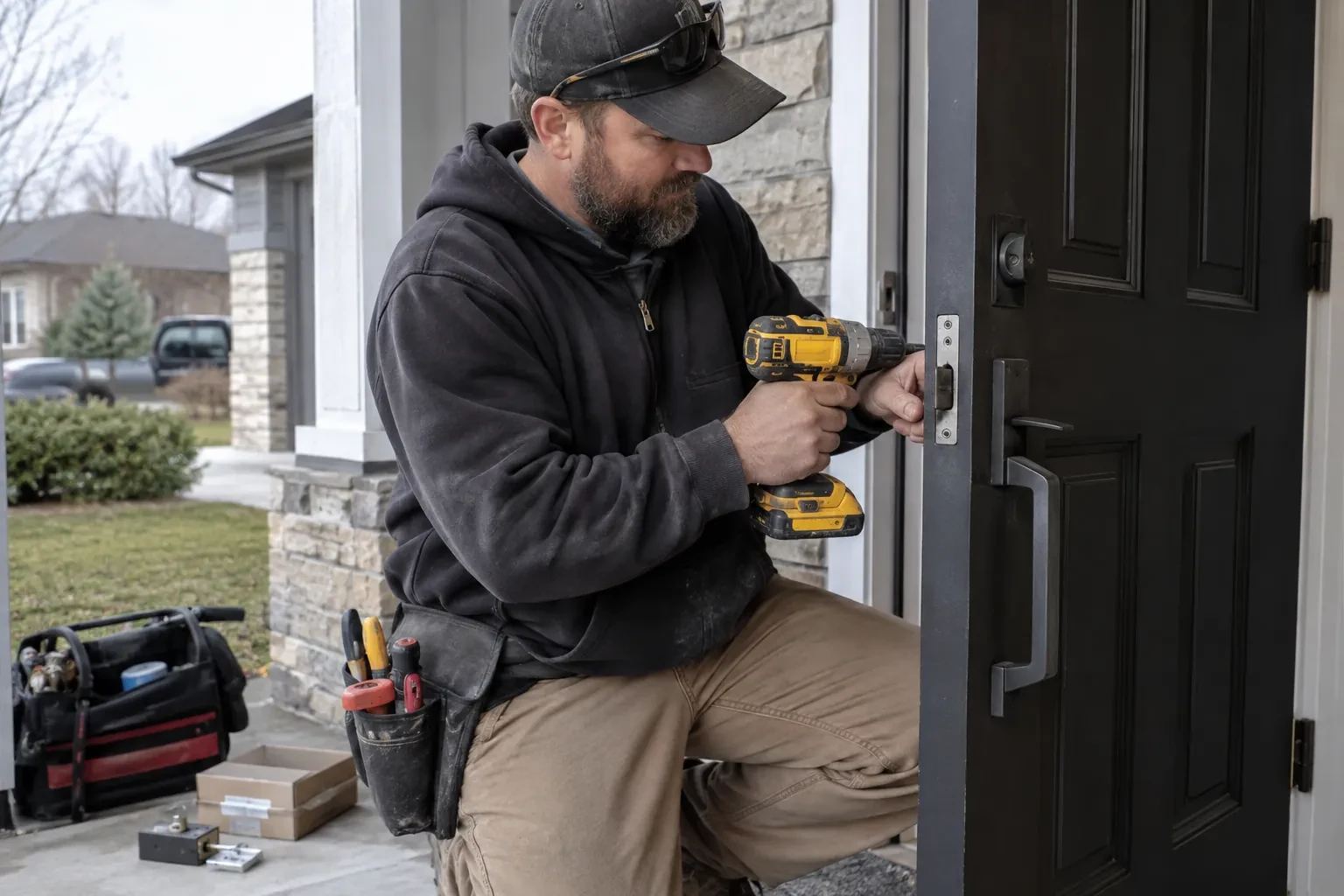
In the van
Rekeyable-cylinder reset tool
Key tags and a key register
Plug follower set
Replacement cylinders
Rekeying pin kit
Lost Keys — Same-Visit Rekey
What affects the quote
Homeowner-rekeyable cylinders without a working key
Resetting a homeowner-rekeyable cylinder when its key is gone uses that system's own reset fixture, where the installed lock supports one, and a few extra minutes per cylinder, which shows as a small line on the quote.
Number of keys cut
New keys are cut on site and counted individually. Two for a couple or six for a household with teenagers and a sitter: name the number and the quote reflects it.
Entry as well as rekeying
If the lost key was your only key and you are locked out too, the door is opened first and that opening is quoted as its own step ahead of the rekey.
What to have ready
- Are the door locks all the same brand, or a mix?
- How many people will need a key afterwards?
- Do you currently have a way inside, or are you locked out as well?
Lost Keys — Same-Visit Rekey: questions
QuestionsDo I need to be there for the whole visit?
An authorised adult should be present at the start, for identification and to agree the list of doors and the number of keys, and at the end, to test every key and take the count. In between, the work happens at the doors and on the van, so you are free to get on with your day inside. A property manager or a family member with your authorisation can stand in if you cannot be there.
What should I do before the locksmith arrives?
Walk the property and note every door the missing key opened, including the garage, shed and gate. Gather any keys you still have, since a working key helps in reading each cylinder. Have identification and, for tenants, something showing the tenancy. Decide roughly how many keys you want and whether you would like all doors on one key. If a garage remote or building fob was lost too, mention it when you book.
Can all my doors work on one key afterwards?
Usually, yes. Cylinders that share a keyway family accept the same blank, so they can be pinned to one combination during the rekey. The front door, back door, garage entry and a gate padlock of the same family become a single key. Where a door uses a different family, the locksmith can swap its cylinder for a compatible one in the same visit, or you can choose to keep two keys for that door.