Lockouts · Cedarvale
Seized & Jammed Lock Opening in Cedarvale
It is the coldest morning of the winter and the key goes halfway into the side door and stops.
In plain words
The visit runs in a set order. On the phone you describe what the key does: refuses to turn, spins freely, or works only when the door is pushed. That description tells the locksmith what to bring. At the door, identification and your connection to the property are confirmed. The key, keyway, door fit and strike are examined before anything is forced. The opening uses the least disruptive method the condition allows. Then the failed part is serviced or replaced, the door is adjusted if it caused the jam, and the lock is tested open and closed with every key before the locksmith leaves.
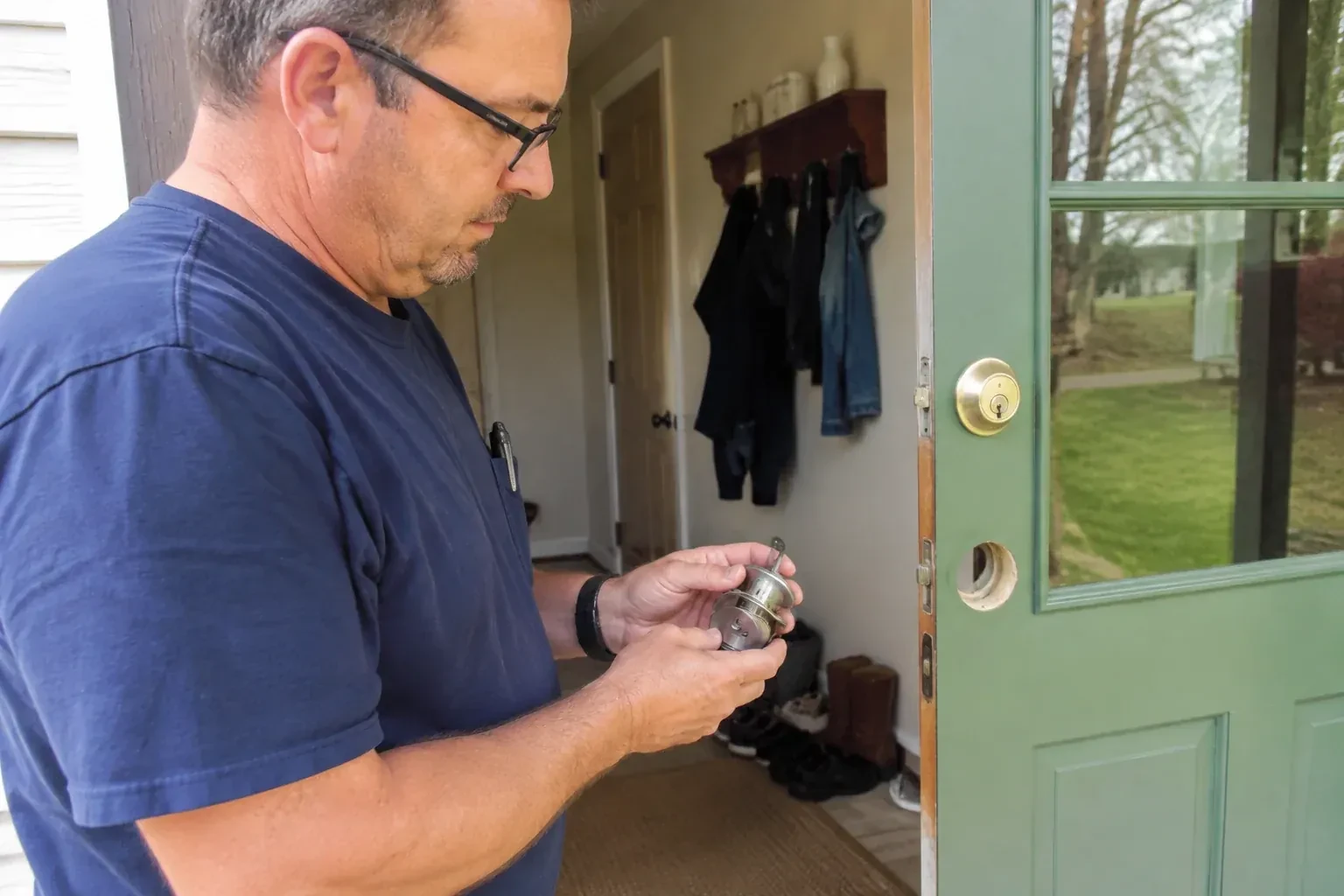
How the visit goesIt is the coldest morning of the winter and the key goes halfway into the side door and stops. There is frost on the face of the cylinder, and the door on the shaded side of the house has done this before.
Seized & Jammed Lock Opening
How the visit goes
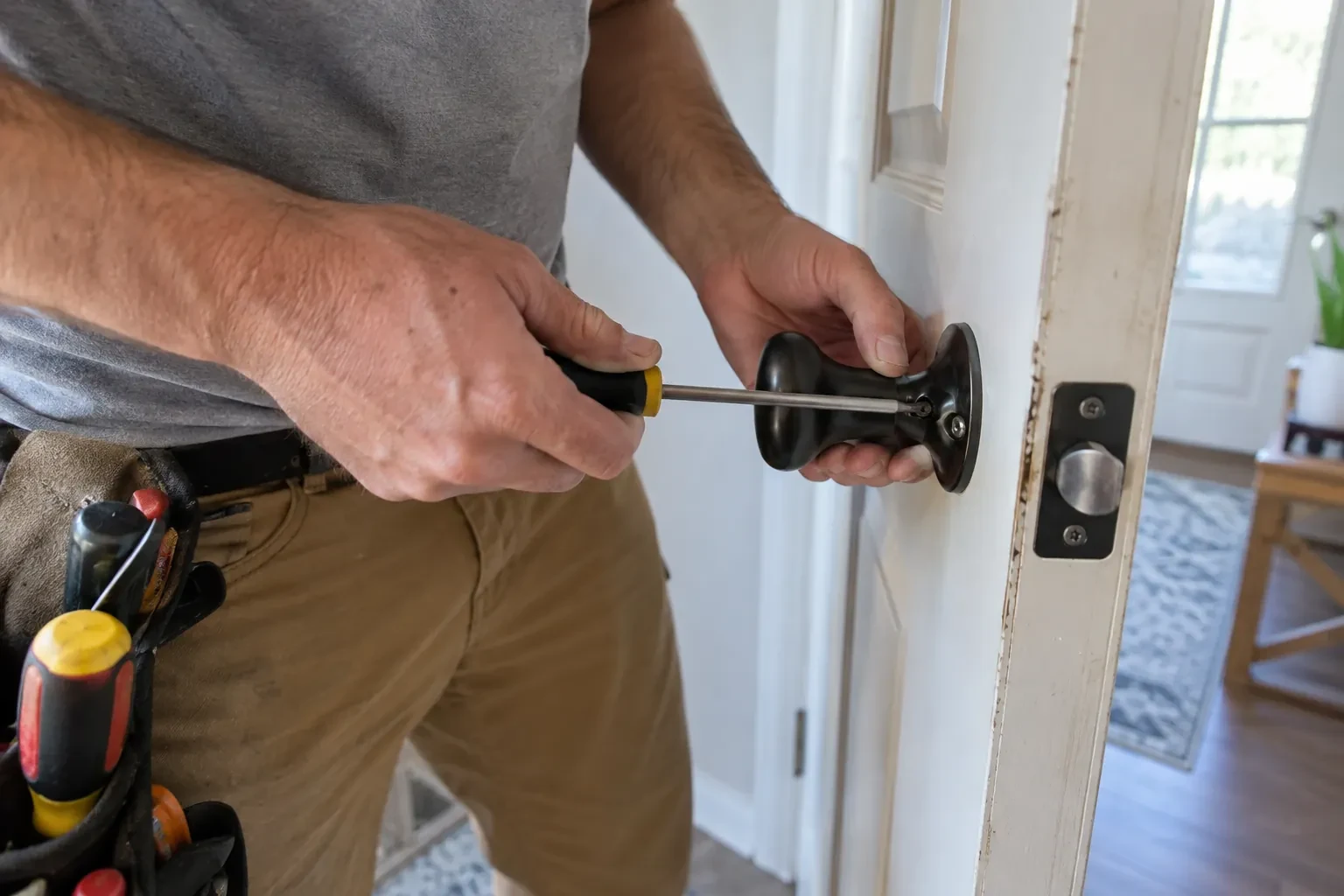
What is inside the keyway
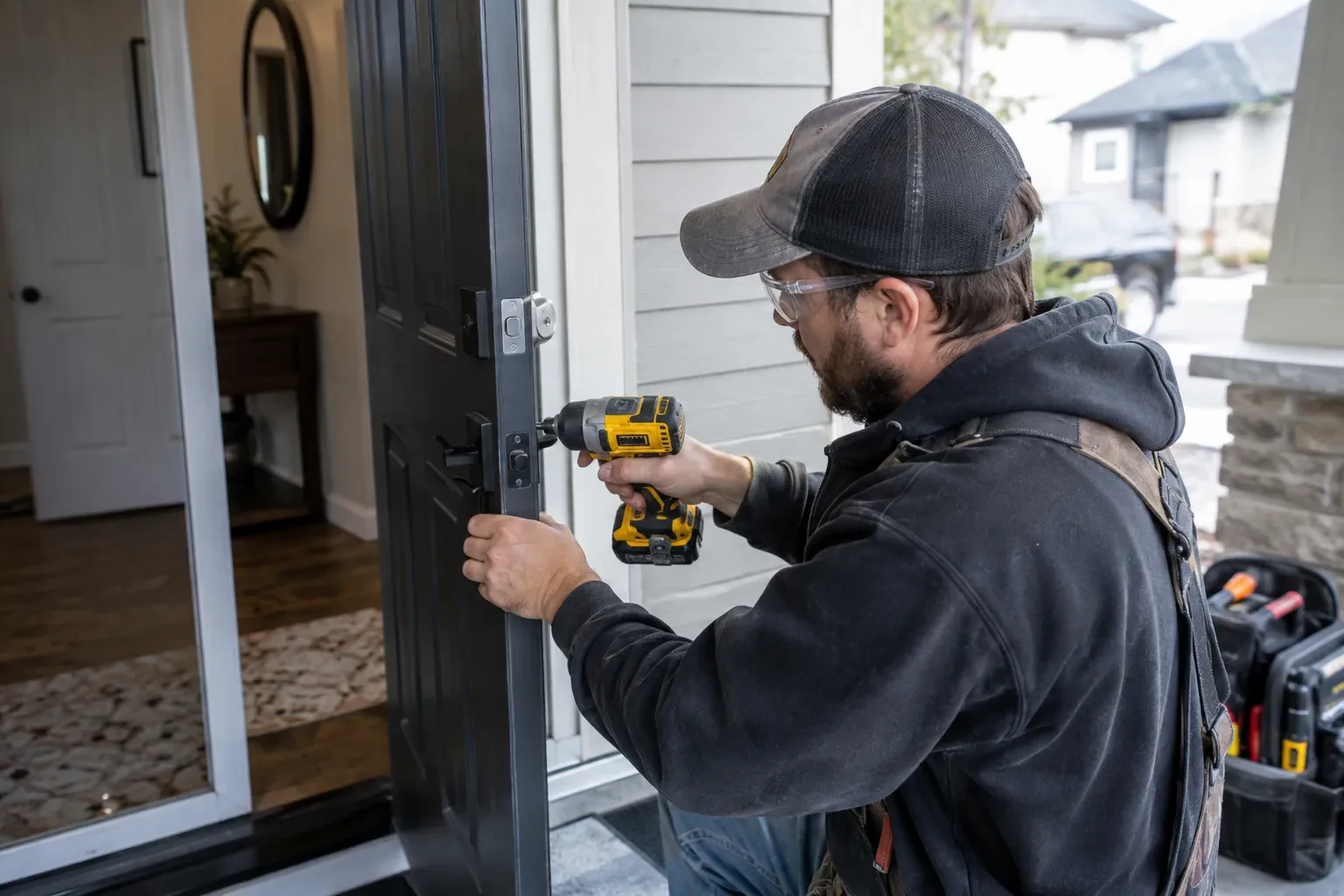
A small mirror and a bright light show what the keyway has collected. Salt crust, sand, metal filings, sawdust from a renovation and the gummy residue of household spray oils are all common, and each reads differently: a dry gritty feel, a sticky drag, or a plug that will not accept the key to full depth. Ice shows as frost on the cylinder face and a key that stops short. A cylinder cap that has loosened lets the plug sit crooked so the pins never line up. This look decides whether the cylinder needs a flush and dry lubricant, a thaw, a re-tightened cap, or a full strip on the bench.
Thawing ice and clearing salt
Ice is melted, never chipped. A lock de-icer or gentle warmth on the cylinder face turns the frozen meltwater back to liquid so it can drain, and the key is then worked until the plug turns. Boiling water is kept well away, because it refreezes inside and can crack cold brass. Salt crust is flushed out with contact cleaner and the plug is dried thoroughly before any lubricant goes in, since salt and moisture sealed under lubricant keep corroding. The cylinder is then dressed with the lubricant specified for that product, applied once everything is dry. If the weatherstrip has frozen to the door, that bond is released and the seal wiped.
For a business: a door the staff can rely on
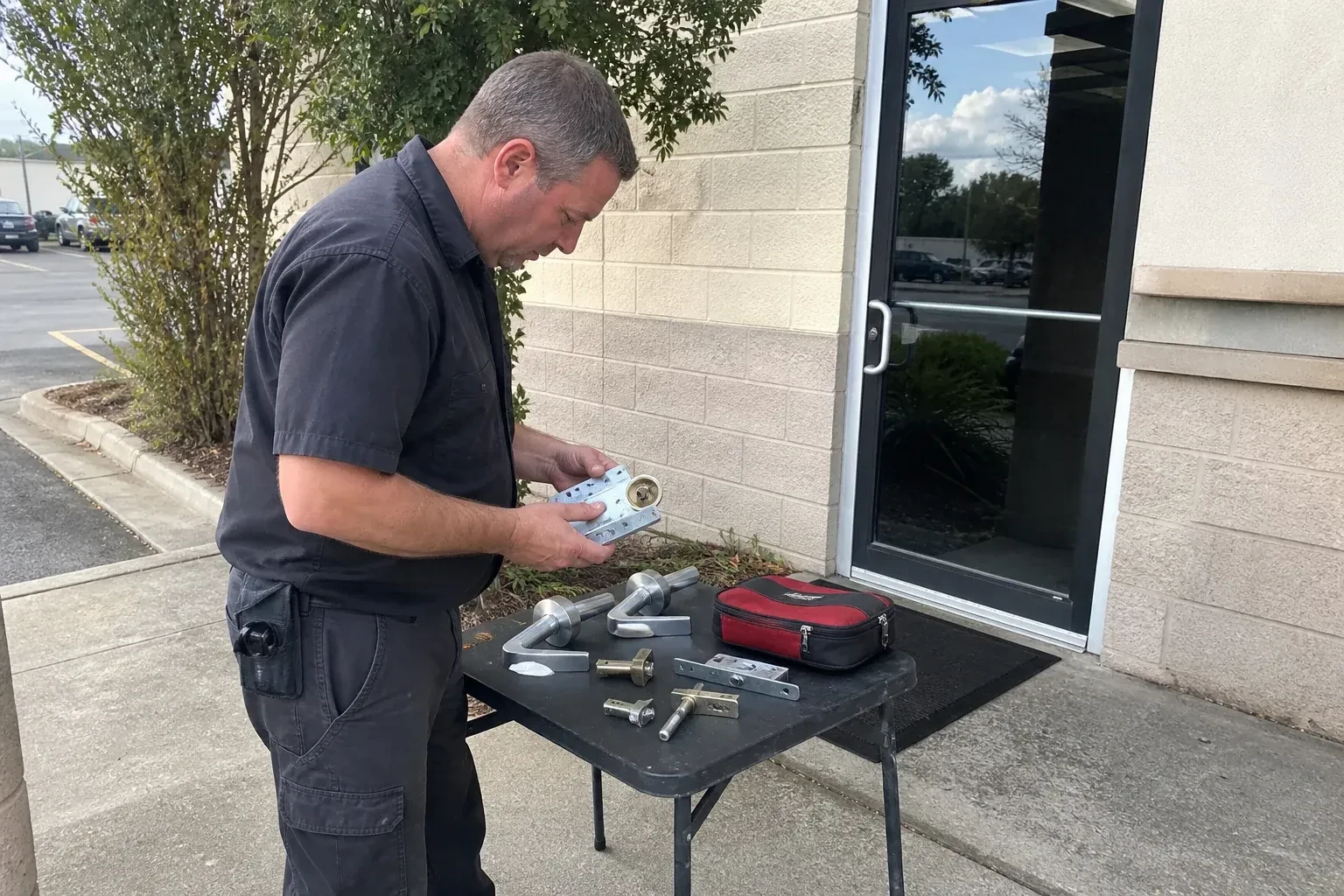
On a commercial door the handover includes the people who use it. Whoever opens in the morning is shown how the lever, key and cylinder now behave, and the exit side is demonstrated so everyone knows the door opens from inside with one motion. If the mortise case was serviced, the parts that were replaced are named so a future locksmith knows what is in there. A note of which keys were tested and who holds them supports whatever key control the business runs. Spare keys are checked in the lock before they go back in the safe.
Seized & Jammed Lock Opening
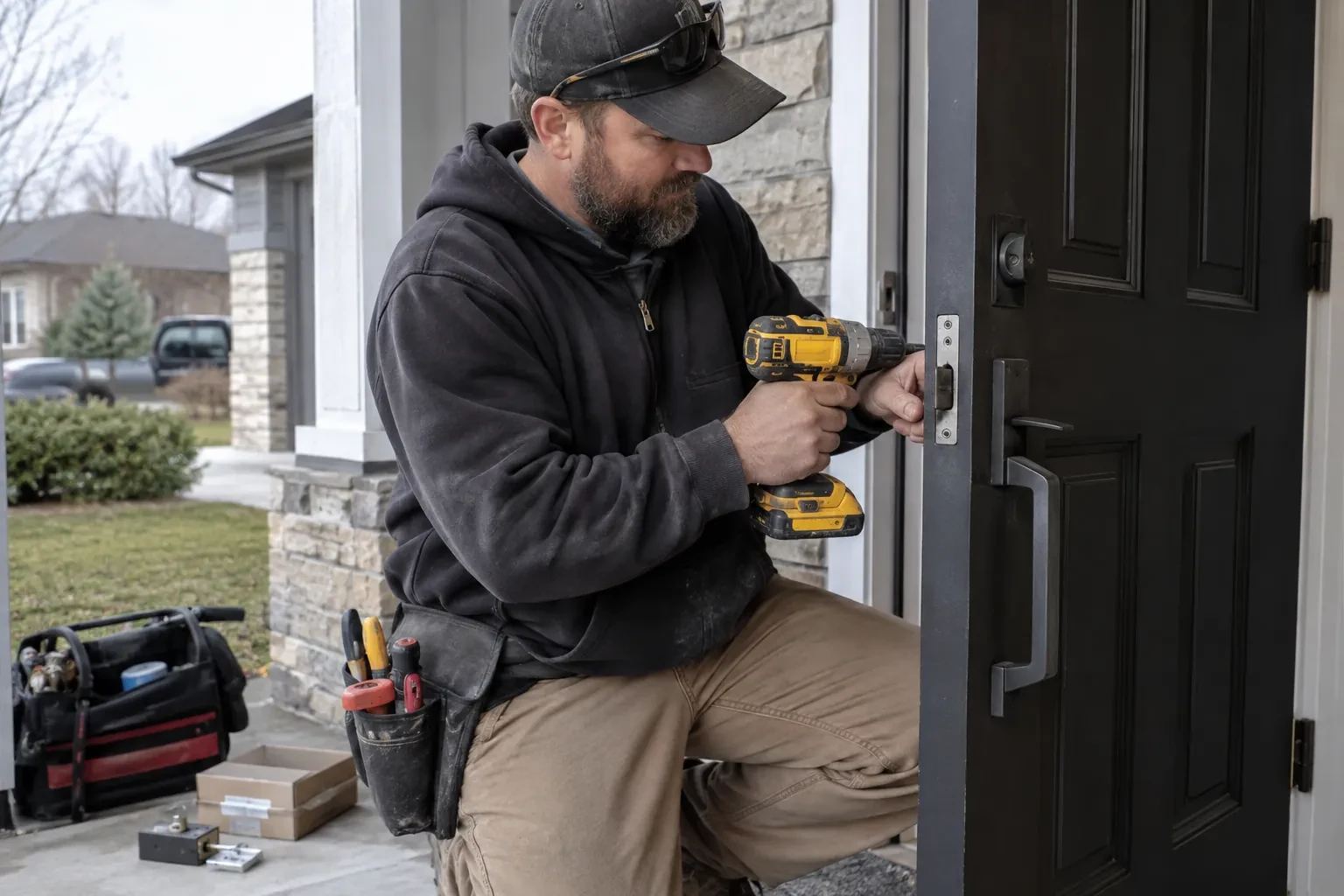
In the van
Long hinge screws
Replacement cylinder
Replacement tailpiece or cam
Mortise case spring and hub
Strike plate and hinge shims
Seized & Jammed Lock Opening
What affects the quote
Ice and salt on the day
A cylinder frozen solid or crusted with salt needs thawing, flushing and drying before it can even be diagnosed, and a winter call is quoted with that time in mind.
Type of lock on the door
A residential deadbolt, a knob latch, a lever set, a mortise case in an older house and a high-security cylinder each take different tools and time to open and to service.
Matching finish and keyway
A replacement that has to match an unusual finish or a restricted keyway takes a specific part rather than a stock one, and the quote reflects the part.
What to have ready
- Is there another door you can use in the meantime?
- Has anyone sprayed oil or another product into the keyway?
- Has there been a thaw and freeze, or a stretch of humid weather, this week?
Seized & Jammed Lock Opening: questions
QuestionsWill I need a whole new lock?
Usually not. Most jammed locks are saved by cleaning the cylinder, fitting a small part such as a tailpiece or spring, or adjusting the door so the bolt has room. A new cylinder is fitted when the plug or shell is corroded through or twisted by forcing, matched to your finish and, where possible, pinned to your current key. A complete new lockset is usually a choice you make rather than a requirement, though some internal failures cannot be serviced in place and call for a full replacement.
The thumb-turn is stuck from inside and we need that door to get out. What should we do?
Use another exit for now and call. From the inside the fault is usually a bolt pinned by the frame or a bent spindle, both of which the locksmith frees without damage. A main exit door should open from inside without a key or special knowledge, so the repair leaves the door doing exactly that, and if the hardware on it was the wrong type for an exit, a thumb-turn deadbolt is suggested.
What lubricant should I use afterwards, and how often?
Whatever lubricant and interval the cylinder's manufacturer specifies, applied with a few turns of the key. Stay with that one product, because mixing different lubricants can make a paste. Oil, hinge silicone and general-purpose penetrating sprays are kept out of the keyway. Lock manufacturers describe cleaning the cylinder with an electronic contact cleaner before lubricating, and that is the order the locksmith follows on a service too.